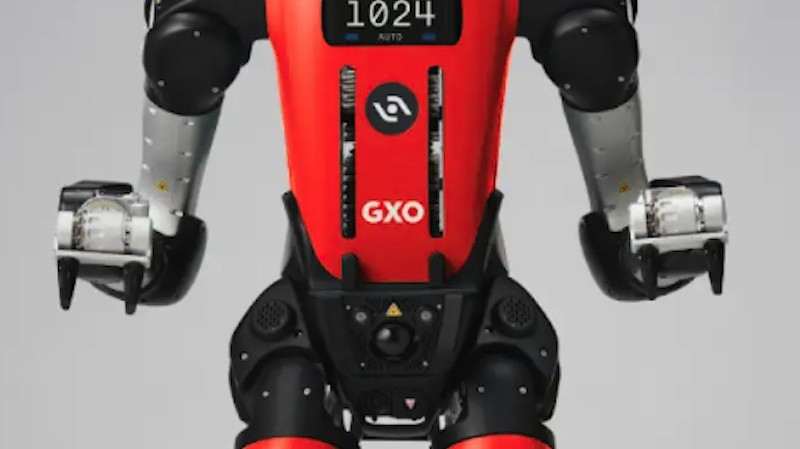
Faraday Future plans to bring a US robot factory online by the end of 2026 and assemble its first US-built robot in February 2027, according to an interview with global executive chairman Jerry Wang published by roboticsandautomationnews.com. The California EV maker, which now calls itself a physical AI ecosystem company, aims to introduce three to five new or next-generation robotics products in the US each year and to shift from "Assembled in USA" to "Made in USA" by 2028. Wang said new FCC rules reinforce the localization strategy, that no US-content percentage has been disclosed, and that higher US manufacturing costs are offset by supply-chain security, quality control and faster customer response.
According to roboticsandautomationnews.com, Faraday Future is working to build a US robotics business around technology and products that currently depend substantially on Chinese manufacturing partners, with plans to bring a US robot factory online by the end of 2026 and to assemble its first US-built robot in February 2027.
The California-based company, best known as an electric vehicle maker, now describes itself more broadly as a “physical AI ecosystem company.” It outlined the roadmap at its recent “Built in USA” conference in Los Angeles, where executives said the goal is to move beyond domestic assembly toward greater US manufacturing while introducing three to five new or next-generation robotics products in the country each year.
The strategy lands at a sensitive moment for the sector. Chinese manufacturers have established a commanding position in the fast-growing humanoid robotics market, while US regulators are paying increasing attention to foreign-made connected technologies and their supply chains.
Regulatory pressure shapes the localization push
In an interview with Robotics & Automation News, Jerry Wang, global executive chairman of Faraday Future, said the company holds FCC certification for all products it currently produces and sells in the US market and will keep working with US regulators on certification of future embodied AI robotics products.
Wang framed the new FCC rules as reinforcement for the company’s localization strategy rather than a rupture. He said the changes create additional incentives for robotics companies to build more resilient, compliant and domestically supported supply chains while still meeting customer needs in the US market.
Faraday Future has participated in the FCC public-comment process, announced efforts to localize production and compliance capabilities in the United States, and hired advisors focused on FCC, ICTS and NDAA compliance, according to Wang.
“For Faraday Future, the policy reinforces the importance of our localization strategy and ‘Built in USA’ roadmap.” — Jerry Wang, global executive chairman of Faraday Future
No fixed US-content target as assembly starts
The company has not publicly provided a specific percentage of US-manufactured content for future robotics products, Wang said. What it has disclosed is that the “Built in USA” strategy covers local assembly and production, development of US suppliers for key components, and expanded domestic manufacturing and service infrastructure.
Wang described the objective as building a broader US-based robotics ecosystem — suppliers, manufacturing partners, software developers, system integrators and customer support infrastructure — rather than simply relocating final assembly. The company has said it aims to move from “Assembled in USA” to “Made in USA” by 2028.
On which components are hardest to bring onshore, Wang declined to disclose the specific localization mix or which parts would remain imported by 2028. He said Faraday Future is exploring domestic supply sources for key robotics components and subsystems, and expects localization to be a phased process across the industry.
Cost gap offset by resilience, service and speed
US robot manufacturing is likely to cost more than sourcing from China. Wang argued the comparison should be broader than manufacturing cost alone, pointing to supply-chain security, regulatory certainty, faster customer response times, improved quality control, and reduced geopolitical and logistics risks.
He acknowledged that overseas production may offer certain cost advantages, but said US-based manufacturing can deliver benefits in reliability, service, security and operational flexibility that enterprise customers increasingly value.
“Manufacturing cost is only one part of the equation.” — Jerry Wang, global executive chairman of Faraday Future
Hanford EV plant eyed for retrofit
Faraday Future is evaluating both a retrofit of its existing Hanford, California facility, where it builds EVs, and the potential development of a dedicated robotics production site, according to Wang. The company has not publicly quantified how much of the Hanford infrastructure would be reused.
Wang said many core capabilities required for robotics production overlap with advanced EV manufacturing: industrial assembly operations, quality-control systems, supply-chain management, testing processes, manufacturing engineering, logistics and production management.
He also rejected the idea that electric vehicles and robots are unrelated businesses, saying AI, perception, sensor fusion, computing, connectivity and data can form a common foundation for both, with robotics potentially becoming a significant new growth business alongside the automotive operations.
Source: Robotics & Automation News
Compiled from international media by the SCI.AI editorial team.