Agility Robotics is expanding its Digit humanoid robot program with GXO, adding deployments at facilities in Statesville, North Carolina, and Lebanon, Tennessee, after more than 100,000 totes were moved at a Georgia site since June 2024. The company reports a pipeline of more than 30 prospective customers and three paid manufacturing programs, including a global automaker selling over 3 million vehicles a year. Agility has disclosed more than $300 million in committed multi-year orders for Digit 5, with early customer access in the first half of 2027 and general availability at year-end.
According to Robotics & Automation News, Agility Robotics is widening its Digit humanoid robot deployment with logistics operator GXO while reporting an active pipeline of more than 30 prospective customers across manufacturing, automotive, logistics and other sectors.
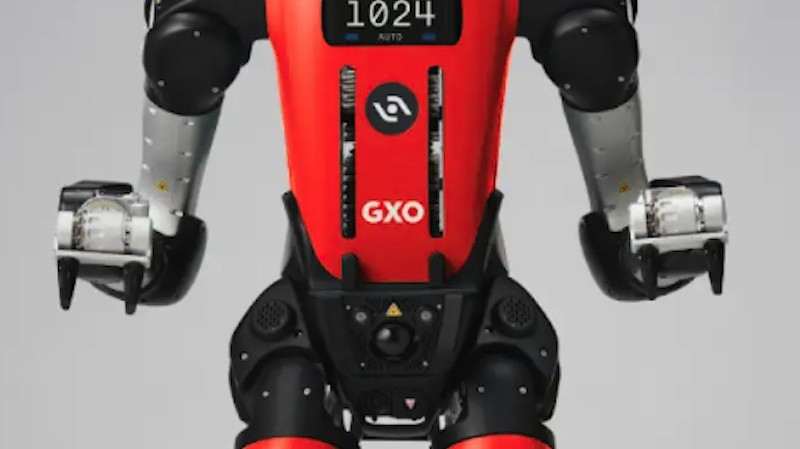
GXO has signed a new commercial agreement to place Digit at two additional US facilities, in Statesville, North Carolina, and Lebanon, Tennessee. The move extends a relationship that began with a multi-year commercial agreement in June 2024 at the logistics company’s Georgia site.
At that Georgia operation, Agility says Digit has moved more than 100,000 totes since the partnership started. The figure is the company’s main proof point that the robot delivers real industrial throughput rather than laboratory demonstrations.
Two new sites to start on Digit 4
Operations at the Statesville and Lebanon facilities are expected to begin in early 2027 using Digit 4, before transitioning to the newly unveiled Digit 5 as the newer robot becomes commercially available.
Agility frames the sequence as its core commercialization playbook: prove value in one specific operation, then scale the same application across additional customer sites. The GXO expansion is the clearest example of that approach to date.
“The expansion illustrates its approach to commercializing humanoid robots: initially demonstrating their value in a specific operation before expanding their use across additional customer facilities.” — Agility Robotics
Three paid manufacturing programs underway
Alongside the GXO deal, Agility says it is running paid programs with three additional manufacturing customers, each focused on specific industrial applications. The companies have not been named.
Agility describes them as a major global automaker selling more than 3 million vehicles annually, one of the world’s largest automotive technology and component suppliers, and a global consumer products manufacturer. The programs are intended to evaluate applications that could lead to larger installations.
Other publicly disclosed customers include AGCO, which recently agreed to run a Digit pilot at its Hesston, Kansas manufacturing facility beginning in 2027, and Toyota Motor Manufacturing Canada, which signed a commercial agreement following an earlier pilot. Schaeffler, also an investor in Agility, is introducing Digit into automotive manufacturing operations, while Mercado Libre is another named customer.
Pipeline spans defense and aerospace
Agility says it is in active discussions with more than 30 prospective customers, or working with them through its Customer Acceleration Program, which lets companies test Digit against their own operational requirements before deciding on wider deployment.
The prospective customers span manufacturing, automotive, aerospace, defense, logistics and consumer products. The pipeline also includes two potential subcontractor engagements supporting a branch of the US Armed Services, though those talks are at an early stage and no agreements have been signed.
Digit 5 orders exceed $300 million
Agility is preparing to introduce Digit 5, the latest generation of its humanoid robot, which was unveiled in September. The company has previously disclosed more than $300 million in committed multi-year orders for the robot.
Agility cautions that the figure represents potential value expected to be realized over time and is subject to contractual milestones, product features and specifications rather than current revenue. Digit 5 is designed to work cooperatively in close proximity to people and to handle a broader range of industrial workflows.
Early customer access is expected during the first half of 2027, with general availability targeted for the end of that year.
RoboFab capacity and Nasdaq listing
Agility has built a 70,000 sq ft manufacturing facility, RoboFab, in Salem, Oregon, designed for annual production capacity of up to 10,000 robots. The company has also developed Agility Arc, a cloud-based platform for managing robot fleets and integrating them with customer operations.
Agility is preparing to become a publicly traded company through its previously announced business combination with Churchill Capital Corp XI. The transaction is expected to close during the fourth quarter of 2026.
Following completion, the combined company is expected to operate as Agility Robotics and trade on Nasdaq under the ticker “AGLT”.
Source: Robotics & Automation News
Compiled from international media by the SCI.AI editorial team.