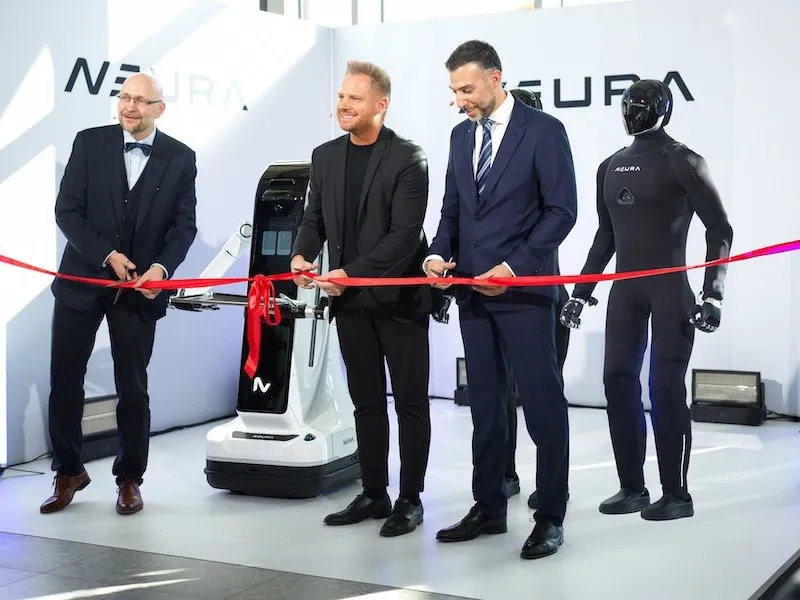
According to roboticsandautomationnews.com, Neura Robotics and the Technical University of Munich have opened a €17 million robotics research and training center near Munich Airport while unveiling the latest generation of Neura’s 4NE1 humanoid robot.
The TUM RoboGym powered by Neura covers more than 2,300 square meters at LabCampus and combines robotics research, training and industrial applications. It was built in partnership with TUM’s Munich Institute of Robotics and Machine Intelligence (MIRMI), and the report states the facility lets companies bring real industrial tasks into a research environment where robots can learn and test new skills.
Companies from more than ten industries are already involved, spanning automotive, pharmaceuticals, medical technology, packaging, logistics, agriculture and care. Tasks being trained include handling cardboard boxes, filling bottles and loading and unloading wooden components.
Three data streams feed physical AI training
The RoboGym combines three approaches to generating physical AI training data: real-world robot operation, human demonstrations and simulation. Human workflows can be captured using sensor-equipped data suits, motion capture and teleoperation, while virtual environments provide additional variations that can subsequently be validated using physical robots. Neura’s Neuraverse connects the training infrastructure with the company’s software and AI tools.
“Our companies hold knowledge that has been built up over generations. People know how to work materials, assemble components and master difficult processes. This knowledge is one of our greatest strengths in the age of physical AI. With TUM, we are building a powerhouse for physical capabilities, where this knowledge becomes the foundation for new possibilities. The Mittelstand, in particular, should be able to help shape this future.”
That was David Reger, founder and CEO of Neura Robotics, who added that the launch of the 4NE1 Gen 4 shows which robots are ready: designed for series production, built for productive work and powered by Neuron AI, the company’s own foundation model that learns from experience in the NEURA Gyms.
4NE1 Gen 4 is 20 percent lighter
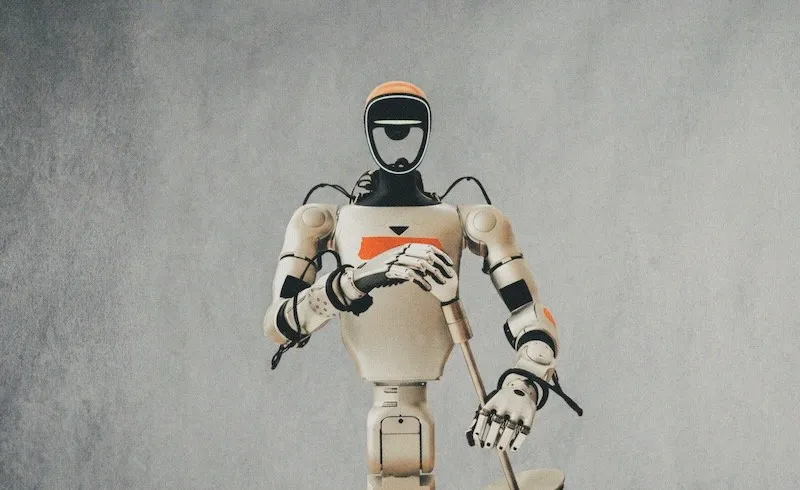
Neura used the opening to introduce the 4NE1 Gen 4, the latest version of its humanoid robot. According to the company, the new model is 20 percent lighter than its predecessor and features a slimmer body, sensorized textile outer skin, more advanced hands and “Smart Limbs” capable of responding independently to their surroundings.
The 4NE1 Gen 4 runs Neuron AI, Neura’s Perception-Language-Action model, which uses inputs including vision, touch, force and sound to translate perception into movement. The humanoid is being prepared for series production and is already being used at Neura Gym facilities, according to the report.
Prof. Thomas Hofmann, president of the Technical University of Munich, framed the collaboration as a statement of national intent. The source quotes him saying the TUM RoboGym robotics center is unique in Germany and Europe, and that partnering with a German-based robot manufacturer sends a clear signal for Germany as an industrial location in geopolitically uncertain times.
Three-year plan, €11 million from Neura
The TUM RoboGym initiative is initially planned to run for three years. Neura and TUM are investing around €17 million, with approximately €11 million coming from Neura, according to the report.
“TUM MIRMI and NEURA Robotics have found two partners that can achieve great things together. Building on our world-leading scientific expertise, we are now able, together with a strong industry partner, to prepare concrete applications for the market and make industrial robotics an important factor in the German economy.”
That was Prof. Lorenzo Masia, executive director of TUM MIRMI and head of the TUM RoboGym. The Munich facility is intended to become the first in an international network of Neura Gyms, with further locations being established in Europe, the United States and China, and another German facility is being developed with RWTH Aachen.
Reger said Neura wants companies to carry their experience into the next industrial era, to develop capabilities, protect their know-how and decide for themselves where and under what conditions they make it available to others. He added that what is opening in Munich is meant to have an impact far beyond that location, from Europe and together for the world.
Source: Robotics & Automation News
Compiled from international media by the SCI.AI editorial team.