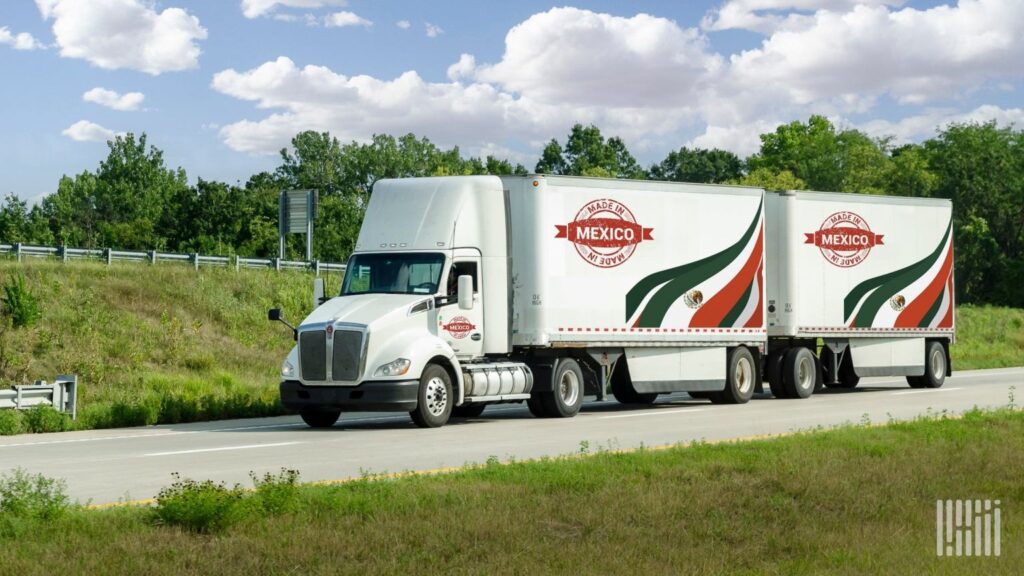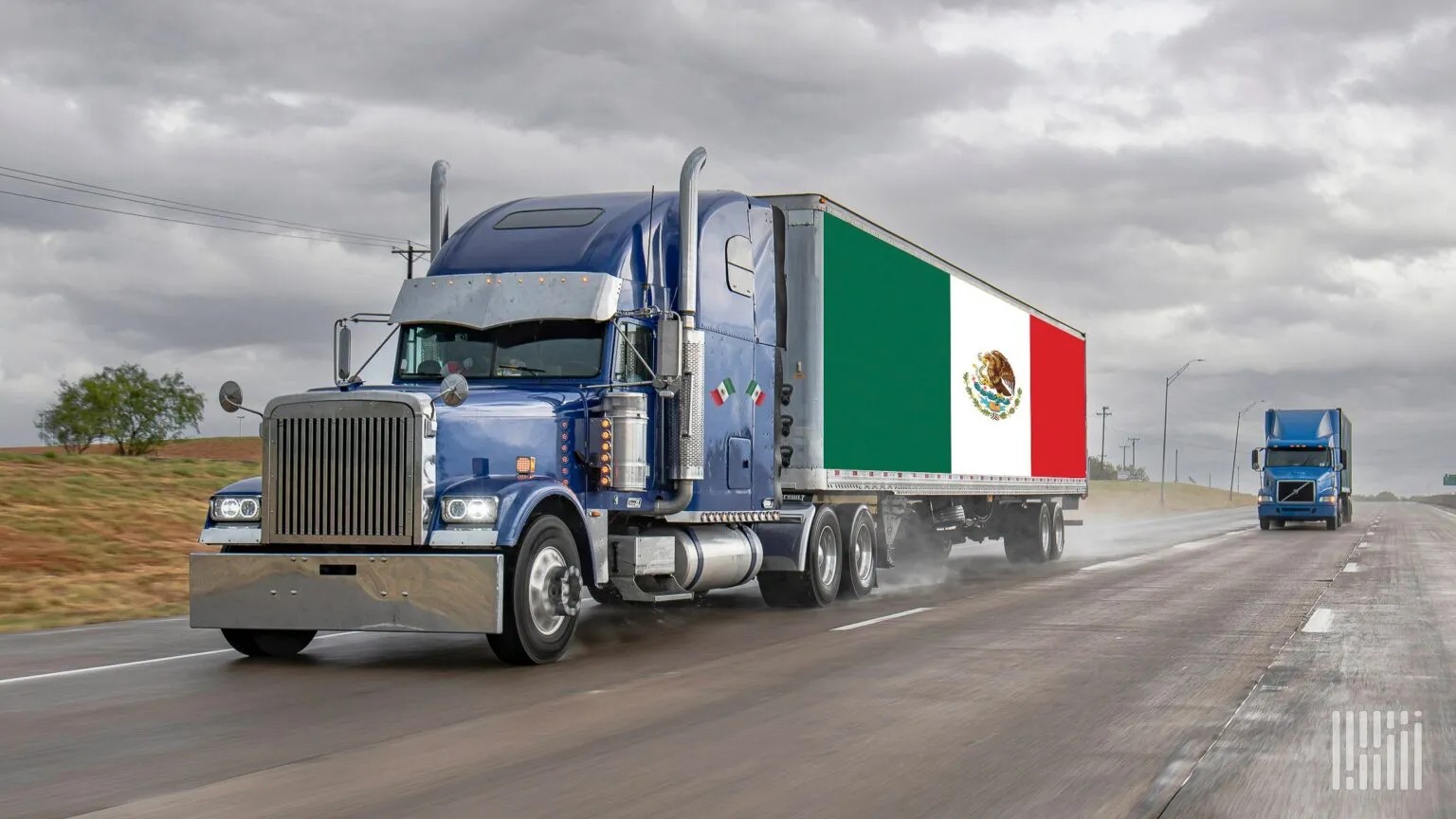
Mexican trucking organizations agreed Tuesday to begin negotiations with the Interior Ministry (Segob) aimed at ending a nationwide strike that disrupted highways across 19 states. The deal, involving CANACAR and other groups, calls for four high-level working sessions on highway security, infrastructure, tax incentives and regulations. The Interior Ministry reported demonstrations at 38 locations involving 691 vehicles and 858 participants, while CANACAR said the movement spanned all 32 states. Protest activity hit corridors serving Monterrey, Nuevo Laredo and Reynosa. Supply chain experts warn the recurring disruptions are adding costs and uncertainty to cross-border freight.
Mexican trucking organizations reached an agreement with federal officials Tuesday to begin negotiations aimed at resolving a nationwide strike that disrupted highways across 19 states.
The agreement between Mexico’s Interior Ministry (Segob) and trucking groups, including the National Chamber of Freight Transport (CANACAR), calls for four high-level working sessions addressing highway security, infrastructure, tax incentives, regulations and other issues affecting the country’s freight transportation industry.
Truckers launched nationwide demonstrations on Monday, demanding government action against cargo theft, highway robberies with violence, extortion and rising operating costs.
The agreement arises after trade and freight transportation officials raised concerns about freight transportation and supply chain delays, by La Jornada, T21 and Revista Transportes y Turismo.
Government counts 858 participants at 38 protest sites
Mexico’s Interior Ministry reported demonstrations at 38 locations across 19 states Monday morning, involving 691 vehicles and 858 participants. The protests included truck convoys, roadside gatherings and highway blockades.
CANACAR disputed the government’s assessment of the demonstrations, saying the protest movement extended across all 32 Mexican states.
Augusto Ramos Melo, president of CANACAR, met Tuesday with Interior Ministry officials alongside Carlos García Álvarez, president of the Honorable Mexican Alliance of Transport Organizations (HAMOTAC), and Lauro Rincón Hernández, president of the Mexican-American Federation of Transporters (FEMATRAC).
Following the meeting, Ramos Melo announced that four negotiating sessions would be established to address the industry’s demands. However, the organizations had not confirmed that all demonstrations had ended.
Earlier Tuesday, CANACAR and other trucking organizations had called on participants to continue peaceful demonstrations at strategic highway locations while negotiations were being arranged.
Corridors serving Monterrey, Nuevo Laredo and Reynosa hit
The protests have highlighted longstanding concerns among Mexican trucking companies over cargo theft, violence against truck drivers, extortion and the costs of operating commercial vehicles.
The demonstrations have affected major freight transportation corridors connecting Mexico’s industrial centers, manufacturing regions and international trade gateways.
Protest activity has been reported in Nuevo León, Tamaulipas, Veracruz, Guanajuato, Jalisco and the State of Mexico, among other regions.
In northern Mexico, demonstrations were reported around Nuevo Laredo and Reynosa, Tamaulipas, as well as along major highways serving Monterrey, Nuevo León.
Those corridors are critical to commercial truck movements between Mexico and the United States, including shipments of automotive components, manufactured goods, agricultural products and consumer merchandise.
Experts warn recurring protests becoming ‘cost of doing business’
Supply chain experts warn that recurring highway protests in Mexico are creating additional costs and uncertainty for manufacturers, importers and transportation providers that depend on cross-border freight movements.
“This is the third major trucking protest in Mexico in about a year. At that frequency it stops being an event and becomes a cost of doing business.”
Andrew Rader, managing director at supply chain consulting firm Maine Pointe, told FreightWaves in an emailed statement that companies running cross-border freight through a single lane keep paying for it in expedites and idle lines.
Joseph Esteves, CEO of Charlotte, North Carolina-based Maine Pointe, said the recurring disruptions should prompt companies to reconsider how they structure their North American supply chains.
“For any company with cross border operations, the safe harbor assumption that anchored two decades of North American network design no longer holds. Products crossing the border in either direction need the math rerun.”
Why it matters: Mexico’s nationwide trucking protests underscore the vulnerability of freight corridors supporting U.S.-Mexico trade, while the new negotiations could determine whether carriers face additional disruptions in the coming days.
Source: FreightWaves
Compiled from international media by the SCI.AI editorial team.