New U.S. law signed by President Donald Trump on Sept. 18 authorizes tariffs of up to 100% on goods from countries that are major buyers of Russian oil or facilitators of sanctions evasion. With 2025 U.S. imports from China at about $308.7 billion and from India at $103.8 billion, more than $400 billion in annual trade is exposed. India's Russian crude imports fell 16.5% in August to roughly 2.1 million barrels per day, while Chinese demand pushed ESPO Blend above $120 a barrel. The report warns that energy, shipping and manufacturing shocks compound across supply chains.
According to Supply Chain Brain, U.S. President Donald Trump signed the Lindsey O. Graham Sanctioning Russia and Iran Act of 2026 into law on Sept. 18, granting Washington authority to impose tariffs of up to 100% — on top of other applicable duties — on goods from countries that rank among the largest purchasers of Russian oil or natural gas, or that are identified as major facilitators of sanctions evasion.
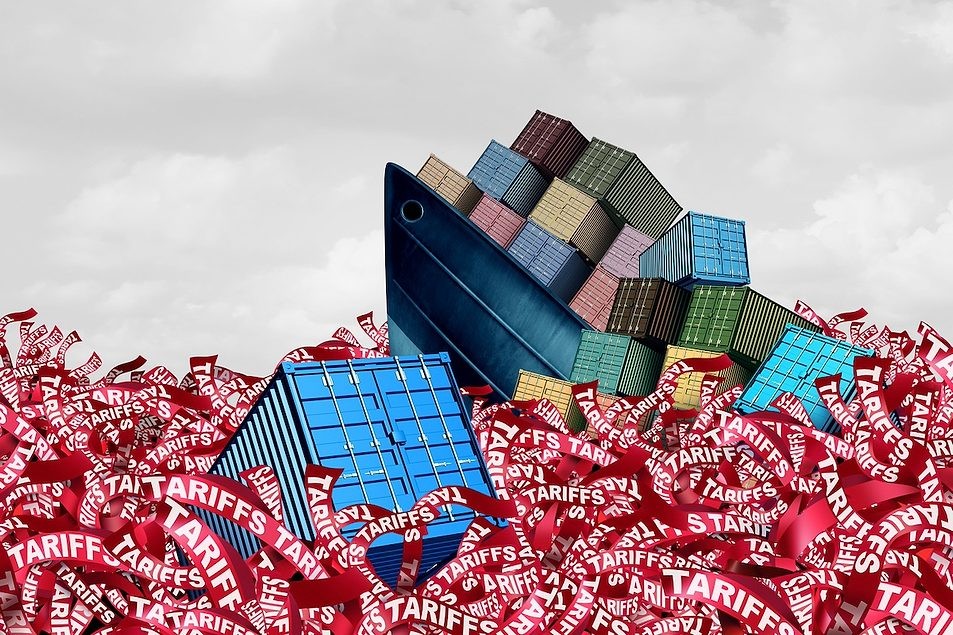
The measure is designed to raise the cost of continued Russian energy purchases. But if the tariffs are applied to large economies such as China or India, the effects would not stay confined to global energy markets, the report states. Oil, transportation and manufacturing are interconnected, so a secondary tariff could trigger a far more complicated response than an ordinary duty.
Most companies ask what a 100% tariff would cost them. The source suggests a better question: what happens if tariffs rise while energy prices climb, shipping becomes more expensive, and thousands of companies simultaneously hunt for alternative suppliers?
Over $400 billion in annual imports exposed
China and India are not simply purchasers of Russian crude. In 2025, the U.S. imported approximately $308.7 billion in goods from China and $103.8 billion from India, according to the report — more than $400 billion in annual imports exposed, directly or indirectly, to changing trade conditions.
The first impact would surface in the oil market. India remains one of Russia’s largest crude customers, though its purchases are already shifting. India’s Russian oil imports fell about 16.5% in August to roughly 2.1 million barrels per day, according to Reuters, with preliminary September volumes around 1.9 million.
Chinese refiners have continued buying Russian crude, and in September their demand helped push ESPO Blend prices above $120 per barrel as Middle East disruptions tightened supply, Reuters reported. If major buyers reduce Russian purchases, refiners must find replacements from the Middle East, Africa, Latin America or the U.S. Each shift changes voyage distances, tanker requirements, port calls, insurance arrangements and transportation costs.
Energy shipping is already under strain: the cost of moving crude on some very large crude carriers has exceeded $30 per barrel, the source states.
Manufacturing feels the second shock
The second impact would be felt in manufacturing, through products that have nothing to do with oil. China remains an important source of electronics, machinery, industrial components, chemicals and consumer products for U.S. businesses, while India plays a growing role in pharmaceuticals, chemicals, engineering products, electronics and textiles.
If imports from either become significantly more expensive, companies must absorb the cost, pass it to customers or find another supplier — and none of those options is instantaneous. Replacing a supplier can require months of qualification, tooling changes, testing, quality approval and contract negotiations, and is considerably more complicated in regulated industries such as pharmaceuticals, medical devices and aerospace.
“Supplier diversification” sounds simple.
In practice, a company might find the product available elsewhere, but not at the required volume, price, quality or delivery schedule, according to the report.
Businesses move before tariffs arrive
The third impact comes from companies themselves. Businesses do not wait for tariffs to arrive: they accelerate imports, build inventory, reserve transportation capacity and search for suppliers in countries they believe will be less exposed. Individually these decisions can be rational, but when thousands of companies make them at once, factories in alternative sourcing countries receive more orders, ocean bookings increase, warehouses fill, lead times grow and prices rise.
During previous tariff changes, trade policy did not simply change prices; it changed when goods moved, where they moved from, and how much inventory businesses were willing to hold, the source notes. A U.S. company sourcing components from China with an alternative supplier in India may find that switching between them does not reduce exposure if both countries face trade pressure over Russian energy.
Moving toward Vietnam, Mexico or another Southeast Asian market may not help either. A product assembled in one of these countries might still depend on Chinese components, Indian chemicals, Russian-origin energy or raw materials sourced through the same regional network — the country printed on the shipping document does not always reveal the full supply chain behind the product.
Mapping the tiers behind the shipping document
That is why knowing the Tier 1 supplier is no longer enough, according to the report. Companies need to understand where critical components originate, which suppliers share the same upstream producers, where energy-intensive manufacturing occurs, and which transportation routes could become constrained.
Through more advanced operations research approaches, firms can stress-test their most important supply chains against several shocks occurring at once, identifying components with only one qualified supplier, products with long replenishment times and markets where alternative capacity is limited. Strategic inventory might make sense for some critical products, while dual or regional sourcing might be better for others.
None of this means secondary tariffs will necessarily produce a major U.S. supply-chain disruption. The law leaves considerable room in how tariffs are applied, and countries may reduce Russian purchases or negotiate exemptions first. Supporters argue that restricting the value of Russian energy exports strengthens pressure on Moscow and discourages sanctions evasion — benefits that are part of the policy calculation.
But the chain is real. A sanction on Russian energy can change where India buys crude; that shift can influence tanker demand; a tariff tied to China’s Russian purchases can change the economics of importing manufactured goods, sending orders to alternative factories, ports and shipping lanes. The shock moves through the network until it reaches an American factory, hospital or retailer. Businesses do not decide foreign policy, but they must prepare for its operational impacts.
Source: Supply Chain Brain
Compiled from international media by the SCI.AI editorial team.