
Skip to content

Disruptions

Analysis

Houthi Attacks Raise Red Sea Geopolitical Risk Amid $3,800 FEU Rates

Houthi missile and drone attacks on Saudi infrastructure—including King Khalid International Airport (closed until October 17) and Aramco’s headquarters—have escalated regional tensions and raised Red Sea shipping risks ahead of 2027 contract negotiations. Asia-Europe spot rates remain above $3,000 per FEU—70% higher than October 2025—while Asia-Mediterranean rates jumped 7% to $3,800 per FEU last week. Trans-Pacific rates dipped 2% to $8,150 per FEU, signaling potential post-peak softening. The National Retail Federation projects November U.S. ocean arrivals down 11% MoM, though full-year 2026 imports are forecast only 1.4% above 2025.

Original source: freightwaves.com

Houthi Attacks Raise Red Sea Geopolitical Risk Amid $3,800 FEU Rates

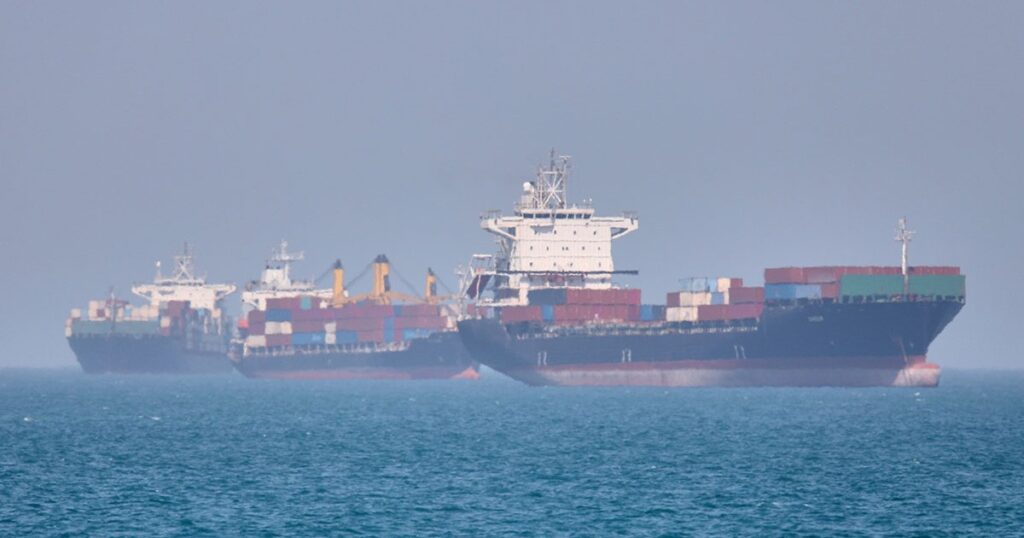
According to FreightWaves, repeated Houthi missile and drone attacks on Saudi Arabia’s airports and energy infrastructure have sharply escalated the Saudi-Houthi conflict, raising the prospect of renewed disruption to Red Sea shipping just as the 2027 contract-tendering season begins.

Saudi Infrastructure Under Fire

Saudi Arabia has vowed a “serious response” after strikes on Riyadh’s King Khalid International Airport killed at least 14 people and injured more than 300. The airport remains closed until at least October 17, airlines have canceled flights, and the Houthis have threatened further attacks on Saudi airports and military targets. Overnight, the Yemen-based militia struck the headquarters of Aramco—the Saudi oil producer—with missiles.

The attacks follow Houthi attempts beginning in July to close the Bab el-Mandeb Strait to Saudi-linked traffic, including vessel attacks into August after nearly nine months of relative quiet. That strait guards the Red Sea’s southern entrance to the Gulf of Aden. Though no broad closure of the waterway has been confirmed, the latest escalation increases the likelihood that Red Sea transits could again become more dangerous.

Analyst and SONAR data contributor Freightos (NASDAQ: CRGO) noted that for container lines, the immediate effect is uncertainty rather than a confirmed capacity shock. Carriers had gradually increased Asia-Europe transits through the Red Sea since June, helping expand effective vessel supply—a trend that could reverse under renewed attack pressure.

Asia-Europe Rates Remain Elevated

Asia-Europe spot rates have fallen steadily since July, driven primarily by post-peak demand slowdown and carriers’ gradual return to Red Sea routings. Yet prices remain well above year-ago levels: both major Asia-Europe trades were above $3,000 per FEU last week, roughly 70% higher than in October 2025.

Some carriers have already announced October general rate increases. Asia-Mediterranean spot prices rose 7% to $3,800 per FEU last week—a move that could help establish a higher benchmark ahead of annual contract negotiations. Lingering congestion in Northern Europe and the Far East has absorbed capacity, while a threatened German port strike—recently averted—had risked worsening European delays.

Shippers and carriers are entering tendering season for 2027 annual contracts with conflicting signals. Carriers enter talks with rates still historically elevated, but shippers may resist locking in current levels due to newbuild deliveries expected next year and continued growth in Red Sea transits—which would further increase effective capacity by shortening Asia-Europe voyages.

Trans-Pacific Peak May Be Ending

The trans-Pacific trade has held near peak-season levels since July, supported by sustained demand and Asia congestion. But the first signs of easing are emerging: Far East–U.S. West Coast rates dipped 2% to $8,150 per FEU, potentially signaling the start of a post-Golden Week decline.

The National Retail Federation’s latest U.S. import forecast points to a sharp seasonal slowdown, projecting November ocean arrivals to fall 11% month over month. Even so, full-year 2026 imports are projected to be just 1.4% above 2025 and 1.2% above 2024, approaching the record volume set in 2021.

Rates may continue to soften through the remainder of the quarter as peak-season cargo tapers. The principal upside risk is geopolitical: A sustained Houthi campaign against Saudi targets—or renewed attacks on commercial shipping in the Red Sea—could tighten effective capacity and complicate carriers’ efforts to defend rate levels heading into 2027 contract talks.

Source: FreightWaves

Compiled from international media by the SCI.AI editorial team.
Ask SCI.AI Finished reading? Continue with SCI.AI. Explore the related policy, route, company and historical context. Continue asking
GFS Pride sinks in Strait of Hormuz after projectile strike
Disruptions

GFS Pride sinks in Strait of Hormuz after projectile strike

The Singapore-flagged cargo ship GFS Pride sank in the Strait of Hormuz on October 13, 2026, after being struck by unknown projectiles, prompting the evacuation of all 21 crew members without injury. A second Singapore-registered vessel, the GFS Giselle, was hit on October 14, sustaining hull damage but reaching safe anchorage under its own power with its 22-person crew unharmed. The Maritime and Port Authority of Singapore confirmed both incidents in an official statement released October 14, 2026. These events underscore acute supply chain risks in one of the world’s most geopolitically sensitive maritime corridors.

HKPC Air Trade Index Hits Two-Year High in Q4 2026
Disruptions

HKPC Air Trade Index Hits Two-Year High in Q4 2026

The DHL Hong Kong Air Trade Leading Index (DTI) hit its second-highest reading in two years during Q4 2026, staying above the 40-point mark. Supported by stronger imports and improving activity across Asia Pacific and Europe, the index outperformed most of 2026. Over half of air traders expect stable peak-season volumes, while nearly a quarter anticipate growth. New U.S. tariffs introduced in July 2026 raised logistics costs and trade uncertainty, especially for Americas-bound exports. The EU’s November 2026 B2C handling fee is expected to trigger pricing adjustments and margin pressure. Food & Beverage reached a three-year high; Electronics hit a two-year high. The DTI draws from over 600 Hong Kong air-trading firms.

Fake broker redirects $273K seafood shipment in NJ
Disruptions

Fake broker redirects $273K seafood shipment in NJ

A fraudulent scheme in North Arlington, New Jersey, nearly diverted $273,000 worth of frozen seafood — including shrimp, salmon, conch meat, and branzino — after a truck driver followed fake instructions from an impersonator posing as a freight broker. The unauthorized October 3 diversion brought 29,000 pounds of cargo to an unauthorized site, where two individuals began loading it into a 26-foot box truck. Police intervened before removal, arresting 18-year-old Jonathan Pollaguari and a juvenile. Pollaguari faces second-degree theft by deception, conspiracy, and a first-degree charge for employing a juvenile in the crime, plus motor vehicle violations. Authorities confirmed the impersonator had no ties to the legitimate brokerage.

Welcome Back!

Login to your account below

Create New Account!

Fill the forms below to register

Retrieve your password

Please enter your username or email address to reset your password.

Scan to share via WeChat

Open WeChat and scan the QR code to share

QR Code

Add New Playlist