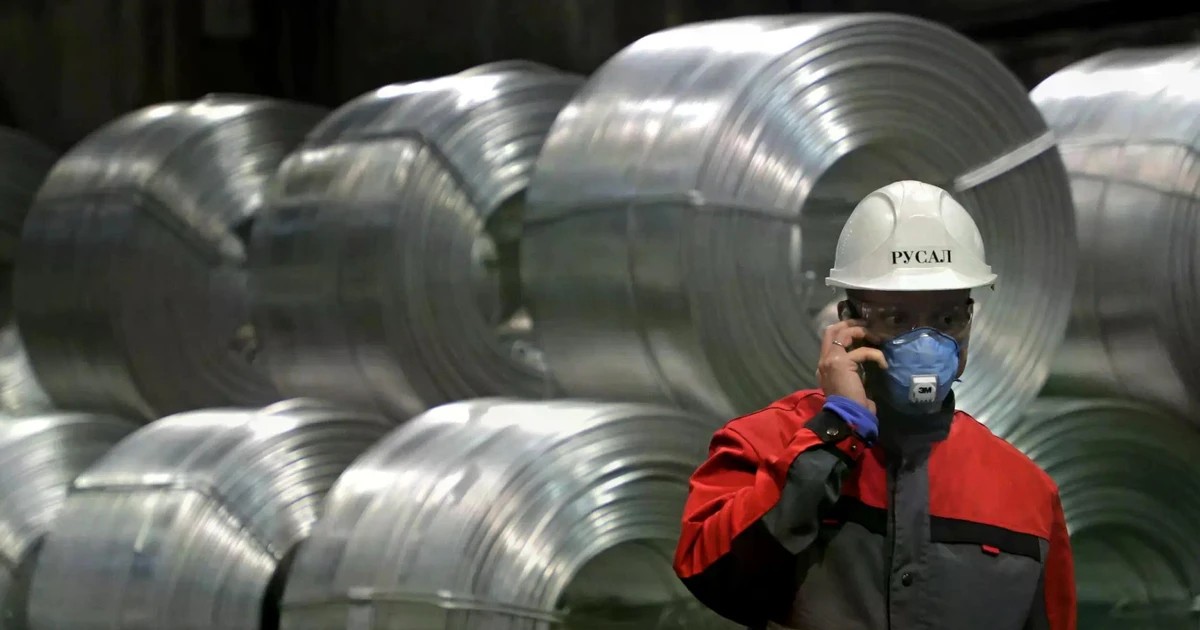
Vietnam’s Vietnam Chamber of Commerce and Industry (VCCI) urges cutting aluminum export taxes to 0%, citing urgent need to clear inventory and secure 2027 sales contracts. Proposed reductions include slashing rates from 5% to 0% for six HS groups, and from 20% to 0% for aluminum coil used in beverage cans. However, VCCI notes draft rules only cut some aluminum products from 5% to 1% — not to zero — creating competitive disadvantages versus duty-free imports into export processing zones. It recommends full 0% application for HS codes 76.01, 76.04, and 76.05, aligned with the Party’s 8/8/2026 Conclusion 83-KL/TW on self-reliant materials industry.
According to vietnam.vn, the Vietnam Chamber of Commerce and Industry (VCCI) has formally recommended reducing export taxes on several aluminum products to 0%, citing urgent needs to clear large inventory backlogs and support domestic smelters’ 2027 sales contracts.
Proposed tariff reductions across six HS groups
VCCI commended the Ministry of Finance’s expedited drafting of a revised decree, noting its alignment with directives from the Prime Minister and Deputy Prime Minister. The draft proposes lowering the statutory minimum export tax rate from 5% — set in the 2016 Export and Import Tax Law — to 0% for six aluminum and wood product groups: HS codes 76.01, 76.03, 76.04, 44.02, 44.07, and 44.08. VCCI stated that the 5% floor had become inflexible amid rapid global supply chain shifts over the past decade.
Targeted cuts for deep-processed goods
The draft amendment to Decree 26/2023/NĐ-CP also proposes slashing export duties on specific industrial items. Aluminum coil for beverage cans (HS 7606.12.32.10) would see its rate drop from 20% to 0%, directly easing bottlenecks in metal packaging and beverage export supply chains. Similarly, thin sliced veneer wood (HS 4408.10.30, 4408.39.20, 4408.90.10, 4408.90.90) would be cut from 10% to 0%, supporting value addition in Vietnam’s wood processing export chain.
Critical gap: aluminum products still face 1% tax
Despite these proposals, VCCI flagged an unresolved mismatch: the draft only reduces export taxes on certain aluminum products — including unwrought aluminum (HS 7601.10.00, 7601.20.00), aluminum bars and profiles (HS 7604.10, 7604.21, 7604.29), and aluminum wire (HS 7605.11, 7605.19, 7605.21, 7605.29) — from 5% to 1%, not 0%. According to the Government’s submission, this adjustment aims to resolve sales difficulties for electrolytic aluminum projects, including the Dak Nong Metallurgical Plant, to release large inventories and secure supply contracts for 2027.
Competitive disadvantage for domestic aluminum
VCCI emphasized that the 1% levy creates administrative burdens without meaningful revenue: businesses must still file declarations, pay taxes, provide bank guarantees, and undergo post-clearance inspections. This complicates long-term supply negotiations with foreign buyers targeting 2027 delivery. More critically, domestically produced aluminum sold to enterprises in export processing zones or non-tariff areas is taxed at 1% as if exported, while imported aluminum slabs and bars from China, South Korea, and Malaysia enter those same zones duty-free under 0% import tariffs. This disparity undermines domestic supplier competitiveness and weakens industrial support linkages.
VCCI’s formal recommendation
Citing the Party Central Committee’s Conclusion No. 83-KL/TW dated 8/8/2026, which prioritizes self-reliant materials industry development and circular economy goals, VCCI urged full alignment. It formally requested the Ministry of Finance lower export tax rates for all HS codes under groups 76.01, 76.04, and 76.05 from 1% to 0%. It further recommended explicitly stipulating in Article 1 of the draft decree that aluminum made in Vietnam and sold to export processing zone enterprises for production purposes shall be subject to a 0% export tax rate.
Source: vietnam.vn
Compiled from international media by the SCI.AI editorial team.