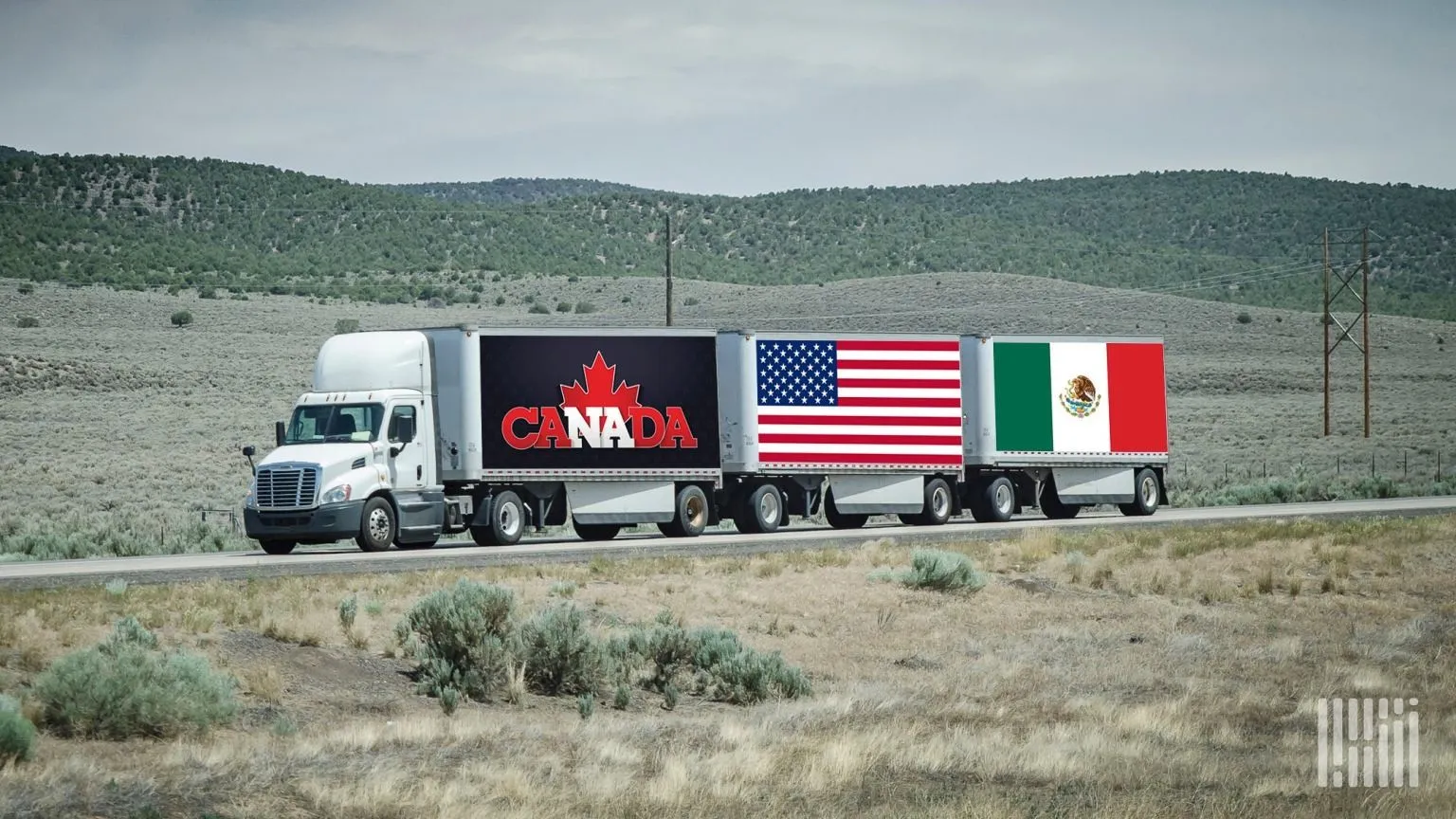
According to FreightWaves, Mexico’s cross-border trucking capacity is under acute pressure from driver shortages, U.S. visa restrictions, and structural bottlenecks—conditions expected to persist through 2026 and into 2027.
Driver Shortages and Regulatory Barriers
Patricio Gutierrez, TRAFFIX’s Manzanillo, Mexico-based carrier sales manager, identified a critical deficit of qualified drivers as the core constraint. He emphasized that Mexican drivers must hold valid B-1 visas and operate trucks authorized for U.S. service—requirements that sharply limit eligible carriers. Many drivers are in their 50s and 60s, while younger workers avoid the profession due to security concerns and low compensation. “The shortage of drivers in Mexico is a real problem,” Gutierrez said.
Border delays compound this: longer dwell times keep trucks occupied longer, reducing usable capacity even when shipment demand remains stable. These constraints are especially acute at Laredo, Texas—the largest commercial land gateway—where route viability hinges on precise alignment of driver availability, equipment compliance, and crossing efficiency.
Gutierrez noted that rising diesel costs and tightening capacity are pushing Mexican carriers to seek higher rates, straining relationships with shippers accustomed to lower contract pricing. Both executives stressed these are structural—not cyclical—challenges, citing insufficient new entrants to the industry amid tight financing conditions.
U.S. Visa Withdrawals and Border Disruptions
A C.H. Robinson Edge Report confirmed that U.S. authorities have withdrawn visas from approximately 25,000 Mexican freight drivers, per data from the Mexican trucking association CANACAR. These withdrawals, combined with temporary border disruptions in September, reduced usable truck capacity despite stable load-to-truck ratios and freight volumes at major Texas crossings.
Specifically, southbound empty-truck crossings at Eagle Pass and Brownsville, Texas were restricted from Sept. 9–14. During that period, daily commercial crossings fell from roughly 1,000 to between 300 and 400, stranding nearly 700 tractors on the U.S. side. Some carriers rerouted equipment through Laredo, adding mileage, fuel costs, and transit time.
C.H. Robinson warned that qualified driver availability could tighten further as fourth-quarter shipping volumes increase—reinforcing TRAFFIX’s outlook that capacity constraints will extend beyond year-end.
Imbalance and Rate Pressures on U.S.-Canada Corridors
On the U.S.-Canada border, Lance Halliday, TRAFFIX’s Toronto-based regional director of carrier sales, described severe freight flow imbalances. Demand for Canadian exports remains strong, but south-to-north return loads are scarce. “There’s still a severe lack of inbound,” Halliday said. “So there’s not a lot of freight coming in from the U.S. into Canada right now.”
This imbalance has made some carriers unwilling to accept shipments into certain U.S. markets without significantly higher compensation. Halliday singled out Florida as a “no-go zone,” noting drivers risk waiting days for return freight or driving hundreds of miles empty. Carriers increasingly reject lanes where empty-mileage costs would erase profitability.
Halliday reported rate increases of 25% to 35% on select corridors over the past month to month and a half—driven by limited carrier alternatives and worsening equipment utilization. He added that transactional freight volume on the Canadian side has surpassed levels seen during the COVID-19 freight market peak.
Contract Freight Erosion and Structural Constraints
TRAFFIX executives observed a growing shift from contract to spot-market freight as carriers reject previously negotiated rates. Halliday stated, “We’re seeing a lot of that contractual freight handed back by their primary carriers,” because older rates no longer cover rising operating costs—including higher driver wages, insurance expenses, and reduced access to financing.
Gutierrez confirmed similar dynamics in Mexico, where carriers are seeking rate adjustments amid diesel cost spikes and capacity limits. Neither executive attributed the situation solely to fuel prices; instead, they pointed to systemic barriers preventing fleet expansion, including financing scarcity and demographic aging in the driver workforce.
Halliday projected no meaningful relief over the next three to six months, citing persistent driver shortages, trade uncertainty, and seasonal capacity reductions. Fuller, another TRAFFIX executive, noted that absent new capacity entering the market, elevated freight rates may persist even without a demand recovery—unlike the pandemic-era boom, which spurred equipment investment amid favorable financing.
Source: FreightWaves
Compiled from international media by the SCI.AI editorial team.