Skip to content

Manufacturing

Analysis

AMD scales Taiwan capacity with $10bn commitment, 3- to 5-year planning

AMD is extending its Taiwan supply chain engagement from component procurement to full AI system manufacturing, adopting three- to five-year capacity planning to meet rising demand for EPYC CPUs and Instinct GPUs. CEO Lisa Su’s October 6 visit included TSMC, Foxconn, Quanta, Asus, and Acer. The company confirmed increased supply in 2026 and a 'substantial' further increase expected in 2027. AMD’s more than $10bn commitment to Taiwan’s tech ecosystem remains on track, with plans to expand it as demand grows. A post by Su on Oct 7, 2026 affirmed strong partnership momentum.

Original source: tspasemiconductor.substack.com

AMD scales Taiwan capacity with $10bn commitment, 3- to 5-year planning

According to tspasemiconductor.substack.com, AMD is shifting from one- or two-year procurement cycles to three- to five-year capacity planning across Taiwan’s semiconductor supply chain — a strategic pivot aligned with surging demand for EPYC CPUs and Instinct GPUs.

Strategic Shift in Capacity Planning

Lisa Su, AMD’s chief executive, led a high-priority visit to Taiwan on October 6, meeting key partners including TSMC, Foxconn, Quanta, Asus, and Acer. The itinerary spanned advanced chip manufacturing, server assembly, and PC branding — effectively mapping Taiwan’s full computing supply chain. This was not a ceremonial tour but a coordinated negotiation to secure long-term capacity, as Su confirmed AMD increased supply during 2026 and expects to increase it “substantially” again in 2027.

$10 Billion Ecosystem Commitment Underway

AMD reaffirmed that its more than $10bn commitment to Taiwan’s technology ecosystem — first announced in May — is proceeding as planned. The company stated the amount will increase further as demand rises, though no revised figure has yet been disclosed. This investment supports infrastructure scaling beyond discrete chips: AMD now requires Taiwan to manufacture entire AI systems, from silicon through substrates, packaging, server ODMs, and rack integration — reflecting how procurement has evolved into core strategy at scale.

From Components to Complete AI Infrastructure

The significance lies not only in higher order volumes but in systemic integration. As AMD’s business reaches new scale, its needs extend across the full stack — from TSMC’s advanced nodes to final-system integration by Quanta and Foxconn. Su underscored this interdependence in a social media post dated Oct 7, 2026:

“Always wonderful to be back in Taiwan spending time with our customers and partners this week. Thank you for the warm welcome and the tremendous partnership!” — Lisa Su, CEO of AMD

That message signals deepening operational entanglement — where capacity planning now spans three to five years and covers every layer required for AI infrastructure deployment.

Source: tspasemiconductor.substack.com

Compiled from international media by the SCI.AI editorial team.

Ask SCI.AI Finished reading? Continue with SCI.AI. Explore the related policy, route, company and historical context. Continue asking
6 Trucking Firms File RICO Suit Against C.H. Robinson, TQL
ESG & Regulation

6 Trucking Firms File RICO Suit Against C.H. Robinson, TQL

Six U.S. trucking companies — Stevens Trucking, Western Flyer Express, Freymiller, IWX Motor Freight, Christenson Transportation, and E.O.S. — filed a civil RICO lawsuit against C.H. Robinson and Total Quality Logistics in Texas federal court on September 23. They allege the brokers used carriers employing forced labor and falsified logs to submit artificially low bids, costing plaintiffs over $120 million in lost revenue across multiple shippers including Ford, Driscoll’s, and Graphic Packaging. The case hinges on whether lost contracts constitute a direct injury under the Racketeer Influenced and Corrupt Organizations Act — a question shaped by the Supreme Court’s 2006 Anza v. Ideal Steel precedent. Plaintiffs seek treble damages, citing revenue drops up to 30%, $51 million in lost sales, and $21 million in missed linehaul revenue.

India’s SEZ Duty Rules Make Imports Cheaper Than Domestic Ferrochrome
Manufacturing

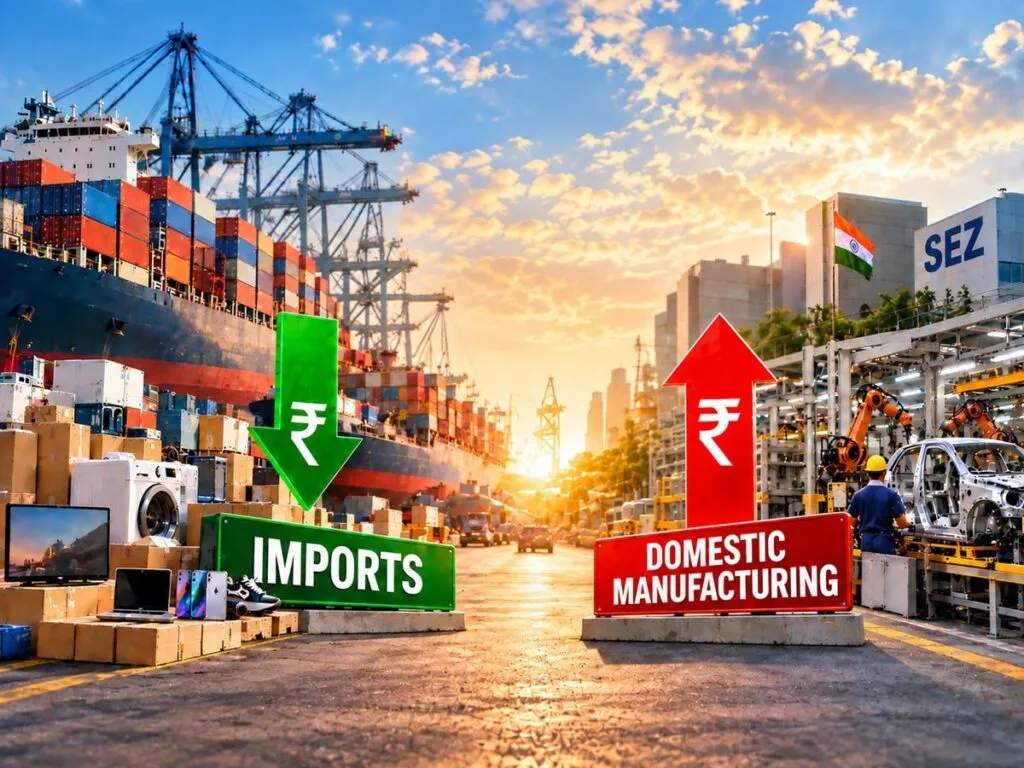
India’s SEZ Duty Rules Make Imports Cheaper Than Domestic Ferrochrome

India’s current SEZ-to-DTA customs rules tax domestically manufactured goods as imports—even when they use imported inputs—creating a cost disadvantage versus ferrochrome imported under PTAs. TUF’s Low Carbon Ferro Chrome (tariff item 72024900) is excluded from the temporary concessional-duty window running from April 1, 2026 to March 31, 2027. Experts argue for extending the duty-recovery model used in EOUs and MOOWR schemes to SEZs. Prof. Rajesh Babu Ravindran of IIM Calcutta stresses urgency: "the issue is worth fixing before the furnace goes cold, not after."

Lucid cuts production, Q3 deliveries fall 6.7%
Manufacturing

Lucid cuts production, Q3 deliveries fall 6.7%

Lucid Group delivered 3,806 EVs in Q3 2024 — a 6.7% drop year-over-year — after cutting production to one shift in Arizona amid slower demand. Output fell to 2,954 vehicles from 3,891 a year earlier. Cumulative deliveries rose 3.4% YTD, while production increased 33% overall. The company aims to secure $1.4 billion in cash flow improvements this year, including $600M–$800M from inventory, $500M from capex, and $200M from operating expenses. Shares closed at $4.17, down over 60% in 2024.

Welcome Back!

Login to your account below

Create New Account!

Fill the forms below to register

Retrieve your password

Please enter your username or email address to reset your password.

Scan to share via WeChat

Open WeChat and scan the QR code to share

QR Code

Add New Playlist