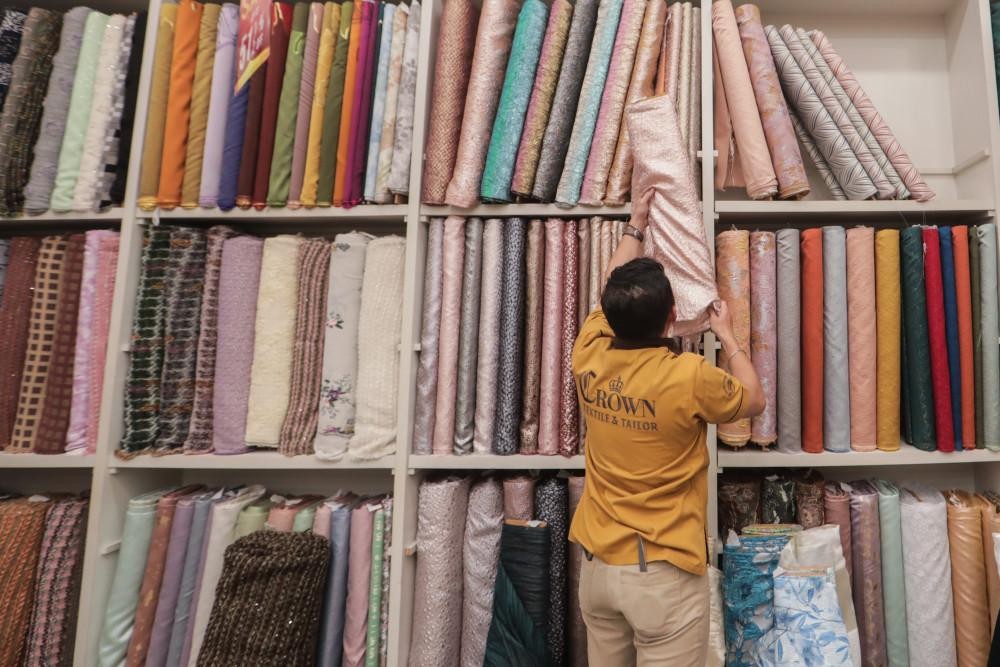
According to ekonomi.bisnis.com, Indonesia’s textile and textile products (TPT) exports are projected to grow up to 4% in 2027, driven by supply chain strengthening, production modernization, and enhanced export financing support.
Export Growth Outlook and Global Context
The Indonesia Eximbank Institute forecasts that national textile export growth will reach 2%–3.2% in 2026, rising from a current realized growth rate of 1.3%. That trajectory accelerates further in 2027, with projections ranging from 3.5% to 4%. This outlook is anchored in three interlinked global dynamics: improving global economic growth, anticipated international interest rate cuts that could stimulate consumer demand, and rising demand for sustainable textile products — particularly in premium market segments.
The recovery trend is already visible in upstream textile categories: global demand for yarn, woven fabric, and knitted fabric has shown signs of rebound throughout 2025. However, Indonesian exporters continue to face intense competition from established producers in China, India, and Vietnam.
LPEI’s Strategic Intervention
To bolster competitiveness, the Lembaga Pembiayaan Ekspor Indonesia (LPEI) convened the LPEI Export Forum (LEF) Bandung at the end of July 2026. Themed “Building a Competitive and Sustainable Garment Supply Chain for Global Markets,” the forum brought together textile and garment manufacturers, exporters, suppliers, industry associations, and government stakeholders to align on export strategy and market intelligence.
LPEI provides a suite of financial and risk-mitigation instruments, including pre-shipment and post-shipment financing, Trade Credit Insurance (TCI) to cover buyer default risk, and Marine Cargo Insurance for transit protection. These tools directly support industrial transformation, as directed by Purbaya Yudhi Sadewa, Minister of Finance, who previously called for revitalizing the textile and footwear sectors through more affordable liquidity via LPEI — specifically to fund machinery upgrades and enhance global product competitiveness.
Rethinking Competitiveness Beyond Price
Anton Herdianto, Director of Business Operations I at LPEI, emphasized that Indonesia’s current export strength rests largely on finished fabric, which accounts for approximately 74% of total TPT exports. Yet he stressed that long-term resilience depends on the entire value chain — not just garment makers.
“Global buyers today consider far more than competitive pricing: they evaluate product quality, on-time delivery, traceability, compliance with international standards, and use of sustainable materials. Therefore, strengthening the supply chain is essential to sustaining Indonesia’s export competitiveness.” — Anton Herdianto, Director of Business Operations I, LPEI
He noted Indonesia holds structural advantages — notably competitive labor costs and a vertically integrated textile industry spanning upstream to downstream — but must urgently address productivity gaps, accelerate machine modernization, and meet tightening sustainability requirements now standard across major export markets.
Industry Adoption and Operational Impact
Practical implementation is already underway. Maniwanen, CEO of PT Ungaran Sari Garments, confirmed that LPEI’s financing and insurance facilities have materially improved export continuity and risk management. The company reported reduced financing burdens and stronger confidence in expanding into new overseas markets.
“LPEI’s facilities greatly support our export operations. In addition to lowering financing costs, their insurance products protect us against multiple international trade risks — enabling us to pursue export expansion with greater confidence,” said Maniwanen.
LPEI’s role extends beyond capital provision: it offers advisory services and market insights designed to help exporters anticipate and meet evolving global buyer expectations — reinforcing the need for public-private collaboration across policy, finance, and operations.
Source: ekonomi.bisnis.com
Compiled from international media by the SCI.AI editorial team.