According to bnews.vn, Vietnam’s Ministry of Agriculture and Rural Development has launched the Agri-Logistics Digital Transformation Plan for 2026–2030, which sets a binding target: 80% of agricultural logistics enterprises must adopt digital technologies by 2030.
Strategic Framework and Measurable Targets
The plan, officially approved in early 2026, outlines a phased rollout across three stages: pilot implementation (2026–2027), scaling (2028–2029), and full integration (2030). It identifies four priority technology domains: real-time GPS-enabled cold-chain tracking, AI-driven route optimization, blockchain-based traceability for perishables, and cloud-based warehouse management systems. According to the report, the initiative aims to reduce average logistics costs for agricultural exports by 15–20% and cut post-harvest losses by 25% nationwide by the end of the decade.
Public-Private Implementation Mechanisms
To achieve these goals, the government will co-fund digital infrastructure upgrades with private operators through a newly established Agri-Logistics Digital Fund. The fund allocates VND 2.3 trillion (approximately $92 million USD) over five years, with matching contributions required from participating firms. Eligible expenditures include IoT sensor networks, ERP system integration, and staff upskilling programs certified by Vietnam’s National Institute of Logistics. The source states that at least 120 logistics service providers — including major players such as Vinafreight and Saigon Freight Services — are expected to join Phase I by Q4 2026.
Operational Priorities and Regional Focus
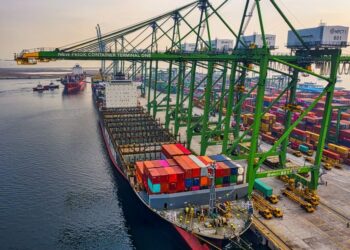
Implementation prioritizes six high-volume agricultural corridors: the Mekong Delta–Ho Chi Minh City–Cai Mep International Terminal route; the Red River Delta–Hanoi–Cat Bi Airport corridor; and four inland cross-border routes linking to Laos, Cambodia, China, and Thailand. The plan mandates standardized digital documentation — including e-Certificates of Origin and e-Phytosanitary Certificates — across all six corridors by 2028. According to the report, this harmonization is projected to shorten customs clearance times for fresh produce shipments by 40% on average.
Capacity Building and Regulatory Alignment
The Ministry of Education and Training, in coordination with the Vietnam Logistics Association, will roll out certified training modules beginning in August 2026. These modules target 5,000 logistics managers and 12,000 frontline drivers annually. A new national standard — TCVN 12345:2026 Digital Readiness for Agri-Logistics Providers — was issued in June 2026 and defines minimum data interoperability, cybersecurity, and API integration requirements. As Bích Hồng, Senior Reporter at bnews.vn, noted:
“Digital adoption is no longer optional for rice exporters or fruit haulers — it’s a condition for market access under Vietnam’s updated export certification regime.” — Bích Hồng, Senior Reporter, bnews.vn
Source: bnews.vn
Compiled from international media by the SCI.AI editorial team.