According to www.kompas.com, China has formally offered industrial assistance to Indonesia to strengthen domestic manufacturing capacity and add value to locally mined minerals — a move analysts say is strategically aimed at securing long-term access to Indonesia’s nickel supply chain.
Strategic mineral integration
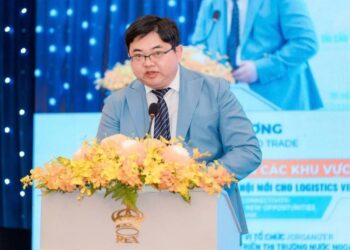
Wang Lutong, China’s Ambassador to Indonesia, stated that deeper industrial and supply chain integration between the two nations supports their shared economic development goals. He emphasized that Indonesia’s downstream mineral policy — which mandates onshore processing of raw ores — can be “combined with China’s manufacturing capabilities to increase commodity value addition.” This alignment comes amid Indonesia’s longstanding export ban on unprocessed nickel, bauxite, and copper ore, first enforced in 2014.
Indonesia holds the world’s largest nickel reserves — a critical input for stainless steel and electric vehicle (EV) batteries — and previously supplied roughly half of China’s nickel ore imports before the ban took full effect. The U.S.-based National Bureau of Asian Research documented that Chinese firms faced severe, costly disruptions when Indonesia tightened its export restrictions.
$65 billion in Chinese investment
Over the past decade, Chinese enterprises have invested more than $65 billion in Indonesia’s mining and energy sectors, according to two Singapore-based academics who published their findings in June 2026. These funds have financed smelter construction, integrated industrial zones, and battery material processing facilities — enabling Chinese firms to comply with Indonesia’s export rules while embedding themselves in the upstream-to-midstream value chain.
This investment allows Beijing to maintain reliable access to Indonesian minerals without violating export bans — and simultaneously facilitates technology transfer in metallurgical processing. As Jayant Menon, Visiting Senior Fellow at Singapore’s ISEAS Yusof Ishak Institute, explained:
“I think they want to secure as much of that supply chain as possible.” — Jayant Menon, Visiting Senior Fellow, ISEAS Yusof Ishak Institute
Geopolitical positioning and sectoral focus
Menon noted that Indonesia’s strategic position has intensified amid U.S.-China supply chain competition, particularly as Washington seeks to “kick China out of the supply chain.” In this context, Jakarta’s flexibility is evident: last year, Indonesia and the U.S. issued a joint statement committing to lift export restrictions on critical minerals destined for American markets.
Ambassador Wang identified three priority collaboration areas where mineral inputs and manufacturing intersect: electric vehicles, battery materials, and steel processing. Through these partnerships, China aims to reinforce its role in the global green energy supply chain while supporting Indonesia’s industrialization ambitions.
Indonesia’s domestic market — home to over 30% of its population under age 18 — offers strong demand potential for finished goods. Meanwhile, processed outputs from Indonesian-China joint ventures meet international export standards, allowing entry into global markets beyond Southeast Asia.
Industry implications for supply chain professionals
For supply chain practitioners, this deepening bilateral integration signals a structural shift in critical mineral sourcing. Unlike traditional extract-and-export models, the new paradigm emphasizes co-location of refining, battery component production, and final assembly — reducing transit risk and customs friction but increasing dependency on host-country regulatory stability.
Logistics planners must now account for multimodal coordination across smelter sites, industrial parks, and port terminals — especially in regions like Sulawesi and Maluku, where major nickel projects are concentrated. Procurement teams face tighter scrutiny on origin-of-materials compliance, particularly as the EU’s CBAM and U.S. IRA requirements tighten traceability for battery-grade nickel.
The $65 billion investment figure reflects not only capital volume but also geographic dispersion: projects span at least seven provinces, including Central Sulawesi, East Kalimantan, and West Papua — locations where PT Gag Nikel recently resumed operations under strict environmental oversight.
Source: kompas.com
Compiled from international media by the SCI.AI editorial team.