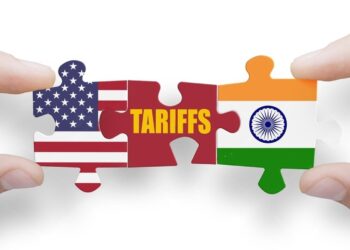
According to www.scmp.com, a recent leak involving Apple’s supply chain data has raised serious questions about India’s credibility as a manufacturing alternative to China — just as Beijing intensifies efforts to secure critical mineral access in Indonesia.
Apple data breach triggers supply chain credibility concerns
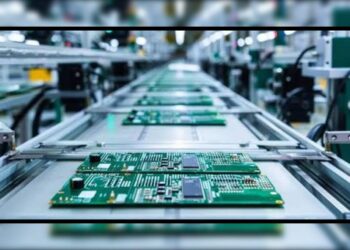
The South China Morning Post reported that confidential Apple supply chain information was exposed in India, prompting scrutiny of the country’s ability to safeguard sensitive industrial data. While the article does not specify the exact nature or volume of the leaked data, it underscores growing investor unease over data governance and operational transparency in India’s rapidly expanding electronics manufacturing ecosystem. According to the report, this incident coincides with India’s aggressive push to attract global electronics assembly — including Apple’s planned expansion of iPhone production to five contract manufacturing hubs by 2026.
The leak has cast doubt on whether India can reliably replace China as a high-trust node in global tech supply chains. As one industry analyst observed:
“Trust is built over decades, not months — and data security failures erode that trust faster than any tariff or subsidy can rebuild it.” — Anil Gupta, Senior Supply Chain Advisor at FreightWaves
This sentiment reflects broader practitioner concerns: supply chain professionals now weigh not only cost and capacity but also institutional reliability when evaluating nearshoring or friend-shoring options.
China pivots to Indonesian mineral diplomacy
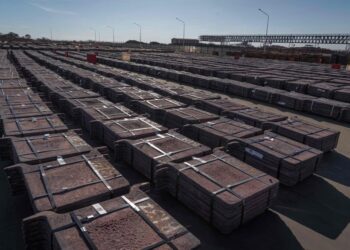
While India contends with reputational fallout, China has accelerated diplomatic and commercial engagement with Indonesia to secure access to nickel, cobalt, and other battery-critical minerals. The source states that Chinese state-owned enterprises and private firms have inked at least seven new memoranda of understanding with Indonesian provincial governments since early 2024. These agreements focus on joint processing facilities, downstream battery material plants, and infrastructure co-investment — all aimed at bypassing export restrictions and securing vertically integrated supply lines for electric vehicles and energy storage.
Indonesia holds 22% of the world’s known nickel reserves and has banned raw nickel exports since 2020 to force domestic value addition. China now accounts for over 65% of Indonesia’s refined nickel exports — up from 38% in 2021. This rapid consolidation illustrates how mineral access has become a core pillar of geopolitical supply chain strategy, not merely an input procurement issue.
Broader regional implications for Asia-Pacific sourcing
The juxtaposition of India’s data vulnerability and China’s mineral diplomacy reveals divergent strategic priorities across Asia’s manufacturing landscape. India’s $10 billion Production Linked Incentive (PLI) scheme for electronics — launched in 2020 — remains active, yet its effectiveness hinges on trust architecture as much as fiscal incentives. Meanwhile, Indonesia’s mineral sovereignty framework has attracted over $30 billion in foreign direct investment since 2022, with China contributing more than half.
For supply chain professionals, these developments signal a shift from geography-based risk models to multi-layered trust assessments: data integrity, regulatory predictability, and resource control must now be evaluated in tandem. As lead time compression and just-in-time inventory practices persist, vulnerabilities in any one layer — like India’s recent data lapse — can cascade across tiers, affecting component availability, compliance audits, and ESG reporting timelines.
Source: South China Morning Post
Compiled from international media by the SCI.AI editorial team.