India and the U.S. signed a critical minerals framework on May 26, 2026, paving the way for a $20 billion Quad-led investment initiative. While India holds vast reserves—including the world’s third-largest ilmenite deposits—it processes less than 5% of its rare earth output domestically. Analysts stress India is unlikely to challenge China’s dominance—accounting for over 60% of global rare earth processing—anytime soon due to infrastructure gaps and regulatory delays averaging 7–10 years for new mining approvals.
According to www.scmp.com, India and the United States signed a bilateral framework agreement on May 26, 2026 to secure joint access to critical minerals and rare earths — including mining and processing — as part of broader efforts to diversify supply chains away from China.
Quad Launches $20 Billion Critical Minerals Framework
The India-US pact served as a precursor to a larger multilateral initiative: the Quad countries — Australia, India, Japan, and the United States — jointly announced in New Delhi the launch of a US$20 billion critical minerals framework. This coordinated investment vehicle aims to finance exploration, extraction, refining, and recycling infrastructure across participating nations. According to the South China Morning Post report, the fund is intended to bolster collective resilience against single-source dependencies, particularly in light of Beijing’s tightening export controls on strategic metals.
The framework explicitly targets materials essential for clean energy and defense technologies — including lithium, cobalt, nickel, graphite, and neodymium — all of which are currently dominated by Chinese production. China accounts for over 60% of global rare earth element processing and more than 80% of magnet manufacturing capacity, according to publicly available industry data cited by U.S. Geological Survey reports referenced in the source context.
Strategic Rationale Behind the Agreement
U.S. Secretary of State Marco Rubio underscored the long-term strategic imperative during his visit to New Delhi, stating that reliable access to critical minerals is foundational to both national security and technological leadership. Indian Foreign Minister Subrahmanyam Jaishankar described the agreement as
“something very timely and critical” — Subrahmanyam Jaishankar, Indian Foreign Minister
. The accord also includes provisions to counter what the U.S. embassy statement termed “coercive market practices”, referencing recent Chinese restrictions on exports of gallium and germanium — two metals vital for semiconductor and radar systems — imposed in August 2023.
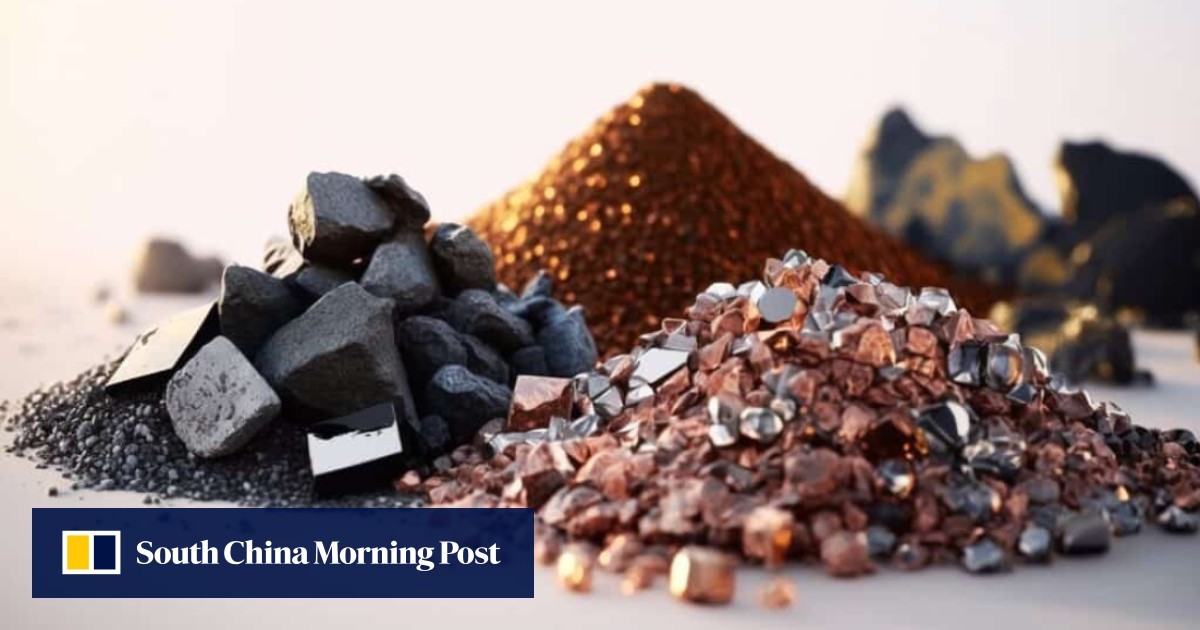
The bilateral deal enables joint technical assistance, regulatory alignment, and co-investment in downstream processing facilities. India holds substantial untapped reserves — including the world’s third-largest ilmenite deposits and significant monazite sands rich in thorium and rare earths — yet currently processes less than 5% of its domestic rare earth output, relying heavily on imports for refined materials.
Limits to India’s Near-Term Impact
Despite India’s resource endowment and growing policy focus — including the National Mineral Policy 2019 and the 2024 launch of the Mines and Minerals (Development and Regulation) Amendment Act — analysts caution that structural bottlenecks remain formidable. These include fragmented land acquisition laws, underdeveloped port and rail logistics for bulk mineral transport, and a lack of domestic smelting and refining capacity for high-purity rare earth oxides.
As noted by the source, India is “unlikely to dent Beijing’s dominance in the sector any time soon”. A 4-minute analytical segment published by the South China Morning Post on June 4, 2026 emphasized that while India could become a valuable node in a diversified supply chain — especially for upstream mining and intermediate processing — it lacks the vertically integrated ecosystem China has built over three decades. For example, China operates over 90% of the world’s rare earth separation plants and controls key catalysts used in magnet production.
Supply chain professionals assessing nearshoring or friend-shoring options must weigh India’s geological advantages against its current infrastructure deficit. Lead times for new mining approvals average 7–10 years in India versus 2–3 years in Australia or Canada — a gap that constrains near-term scalability despite strong political will.
Source: South China Morning Post
Compiled from international media by the SCI.AI editorial team.