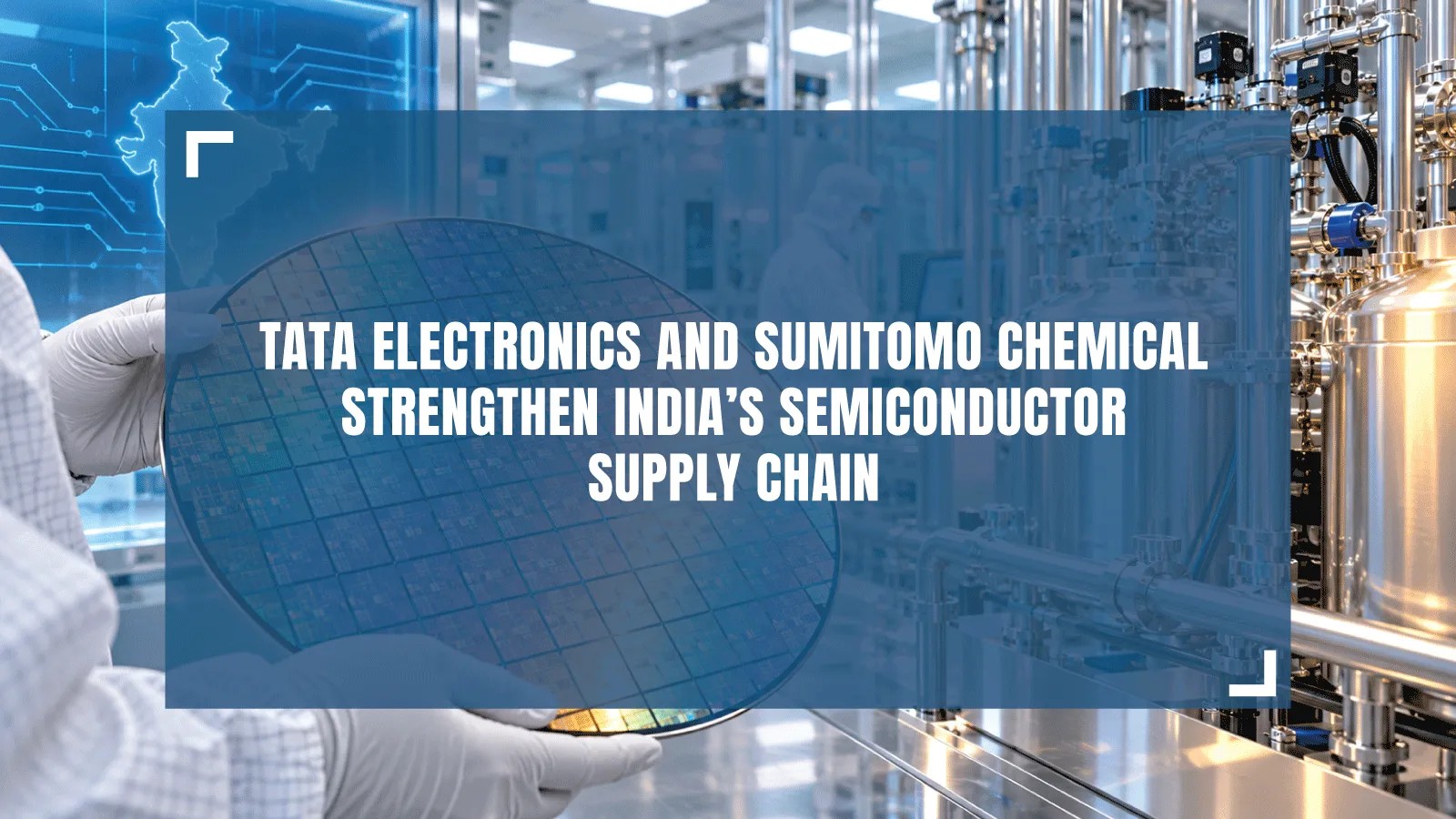
According to snsinsider.com, Tata Electronics and Sumitomo Chemical signed a Memorandum of Understanding on September 18, 2026 to explore collaboration on semiconductor materials for Tata’s upcoming fabrication plant in Dholera, Gujarat — part of an $11 billion investment project.
MoU Targets Local Production of Ultra-Pure Chemicals
The agreement focuses on manufacturing semiconductor materials and ultra-pure chemicals in India, including photoresists, functional chemicals, and process chemicals such as hydrogen peroxide, isopropyl alcohol, ammonia water, and sulfuric acid. As per the source, this initiative directly addresses the strategic need for dependable, high-purity inputs — a prerequisite for successful chip fabrication. The MoU is explicitly tied to Tata Electronics’ first commercial 12 inch (300-millimeter) wafer fab, scheduled for Dholera.
The partnership will examine feasibility of establishing a dedicated semiconductor chemicals plant in India, as stated by Sumitomo Chemical. This aligns with global efforts to reduce supply chain vulnerabilities, especially after repeated disruptions demonstrated ripple effects across industries and geographies. Local production of critical materials could shorten lead times and decrease dependency on single-source international suppliers.
Sumitomo Chemical brings decades of experience supplying semiconductor materials globally, and its involvement reflects Japan’s expanding role in India’s semiconductor development — particularly in materials, chemicals, precision technologies, and process technologies. The source notes that Japanese firms have a strong track record across multiple layers of the semiconductor supply chain.
Dholera Fab Anchors Broader Ecosystem Strategy
The Dholera facility is central to Tata Electronics’ broader ecosystem-building strategy. During SEMICON India 2026, the company unveiled multiple deals covering high-purity gases, gas distribution systems, semiconductor packaging, logistics, and engineering infrastructure. These partnerships span materials, infrastructure, and services — all essential for a fully interlinked value chain.
According to the report, a competitive semiconductor industry cannot rely on a single fabrication plant alone. Instead, it requires an integrated network of firms capable of delivering inputs and services across all stages — from material sourcing and chemical supply to assembly, testing, and packaging. The source states this trend may spur opportunities for local Indian suppliers while attracting additional foreign suppliers to the market.
The $11 billion Dholera project targets chips for automotive technology, mobile devices, and artificial intelligence — applications demanding stringent process control and material purity. High-purity chemicals are not ancillary; they are foundational to yield, defect control, and final product quality.
Global Resilience Goals Drive India-Japan Alignment
The alliance exemplifies the global semiconductor industry’s pivot toward geographic diversification and supply chain resilience. Governments and companies worldwide are actively reducing over-reliance on concentrated manufacturing hubs. India’s domestic manufacturing push — coupled with international technological and logistics linkages — positions it as an emerging node in the global semiconductor value chain.
The source emphasizes that materials are as crucial to sustainable manufacturing as core fabrication technology. The Tata-Sumitomo collaboration therefore extends beyond chipmaking into foundational industrial capability — supporting not only Dholera but also long-term national capacity in semiconductor-grade chemical synthesis and purification.
Source: snsinsider.com
Compiled from international media by the SCI.AI editorial team.