Explore

  • Trending
  • Latest
  • Tools
  • Browse
  • AI Assistant
  • Subscription Feed

Logistics

  • Ocean
  • Air Cargo
  • Road & Rail
  • Warehousing
  • Last Mile

Regions

  • Southeast Asia
  • South Asia
  • Central Asia
  • Japan & Korea
  • Middle East
  • Europe
  • Russia
  • Africa
  • North America
  • Latin America
  • Australia
SCI.AI
  • Supply Chain
    • Strategy & Planning
    • Logistics & Transport
    • Manufacturing
    • Inventory & Fulfillment
  • Procurement
    • Strategic Sourcing
    • Supplier Management
    • Supply Chain Finance
  • Technology
    • AI & Automation
    • Robotics
    • Digital Platforms
  • Risk & Resilience
  • Sustainability
  • Research
  • Expert Columns
  • English
    • Chinese
    • English
No Result
View All Result
  • Login
  • Register
SCI.AI
No Result
View All Result
Home South Asia Supply Chain

Indian Railways approves ₹440 crore third line to boost eastern freight capacity

2026/07/26
in South Asia Supply Chain
0 0
Indian Railways approves ₹440 crore third line to boost eastern freight capacity

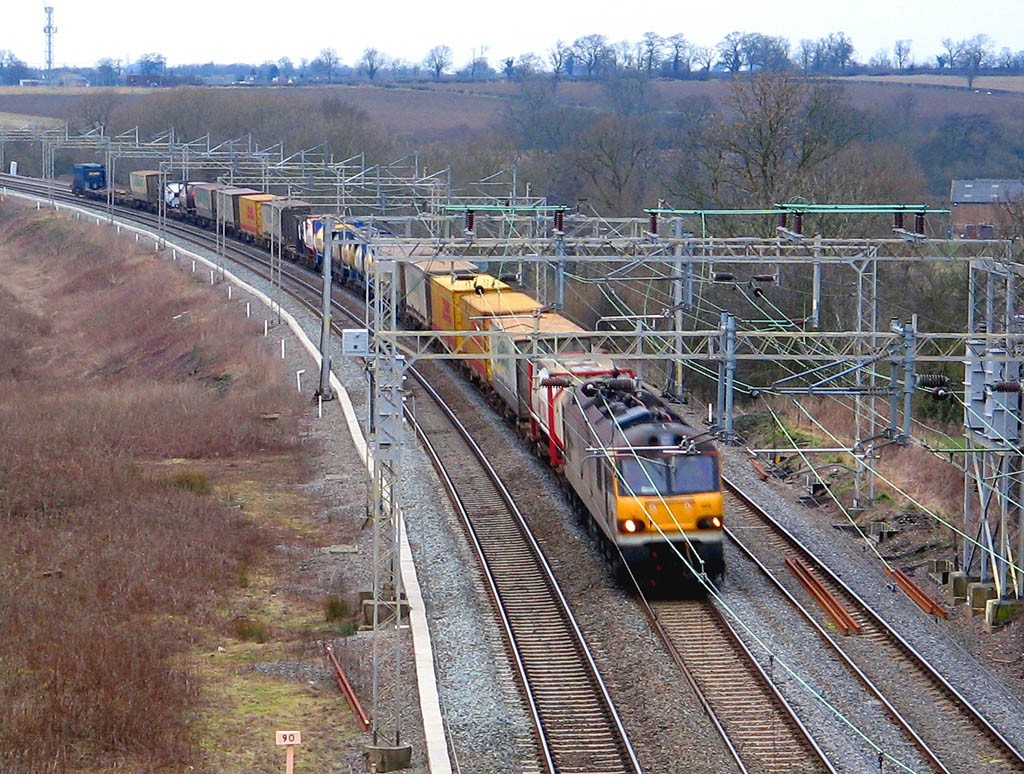
According to indiashippingnews.com, Indian Railways has approved the construction of a 14.52-km third railway line between Nimpura West Outer Cabin and Midnapur in the South Eastern Railway zone at an estimated cost of ₹440 crore.

Project Scope and Strategic Location

The new infrastructure lies on the High Utilisation Network (HUN-2) route — a critical corridor identified for urgent capacity augmentation. The Nimpura West Outer Cabin–Gokulpur section is currently a single-line segment, with doubling works already underway. Adding a third line will significantly enhance operational flexibility and redundancy across this bottlenecked stretch.

The project targets a specific geographic corridor in eastern India, anchored in Kolkata and extending through key mineral and industrial zones served by the South Eastern Railway. This region forms part of India’s eastern mineral belt, supplying raw materials essential to domestic steel, cement, and power sectors.

Freight Volume and Capacity Constraints

The existing line handles nearly 23.80 million tonnes per annum (MTPA) of freight traffic and operates at a line capacity utilisation rate of 115.71 percent — indicating chronic overcapacity and systemic congestion. This exceeds design thresholds and directly impacts punctuality, maintenance scheduling, and safety margins.

Cargo types moving along this corridor include manganese, iron ore, containers, coal, clinker, pellets, steel, wheat, petroleum products, fertilisers, and cement. The overloaded infrastructure impedes timely movement of both essential commodities and passenger services, creating cascading delays across the network.

Quantified Operational Impact

Once completed, the third line is projected to accommodate an additional 3.52 MTPA of freight traffic. This uplift represents a 14.8% increase over current annual throughput (23.80 MTPA), directly addressing the deficit created by sustained overutilisation.

The expansion will reduce bottlenecks that currently delay high-priority freight such as iron ore destined for steel plants and coal bound for thermal power stations. It also supports the Government of India’s broader Railway Freight Rationalisation Plan, which aims to raise rail’s modal share in domestic freight from ~27% to 45% by 2030.

Logistics and Supply Chain Implications

For supply chain professionals managing bulk commodity flows in eastern India, the project delivers measurable near-term relief: reduced transit times, improved train scheduling reliability, and lower demurrage and detention costs at originating and destination terminals. Industry practitioners note that consistent line capacity below 90% utilisation is necessary to absorb unplanned disruptions — a threshold this project helps restore.

From a multimodal transport perspective, enhanced rail capacity strengthens integration with major ports including Paradip and Visakhapatnam, where mineral exports and imported raw materials converge. This aligns with national initiatives like the Vishwakarma Scheme and PM Gati Shakti, both designed to synchronise infrastructure planning across transport modes.

Source: indiashippingnews.com

Compiled from international media by the SCI.AI editorial team.
More on This Topic

  • India, Panama ink maritime pact on digital ports, green ship recycling (Jul 24, 2026)
  • India Launches ISM 2.0 with Focus on Chip Equipment, Gases, Materials (Jul 20, 2026)
  • China’s Africa imports surge 40.2% in June amid zero-tariff expansion (Jul 18, 2026)
  • India cuts chip subsidy rates, expands coverage to 12 sectors (Jul 17, 2026)
  • India Rejects US Interim Trade Deal, Demands 10% Tariff Edge Over Vietnam, Bangladesh (Jul 15, 2026)
ShareTweet

Related Posts

India, Panama ink maritime pact on digital ports, green ship recycling
South Asia Supply Chain

India, Panama ink maritime pact on digital ports, green ship recycling

July 24, 2026
10
India Launches ISM 2.0 with Focus on Chip Equipment, Gases, Materials
South Asia Supply Chain

India Launches ISM 2.0 with Focus on Chip Equipment, Gases, Materials

July 20, 2026
14
China’s Africa imports surge 40.2% in June amid zero-tariff expansion
South Asia Supply Chain

China’s Africa imports surge 40.2% in June amid zero-tariff expansion

July 18, 2026
36
India cuts chip subsidy rates, expands coverage to 12 sectors
South Asia Supply Chain

India cuts chip subsidy rates, expands coverage to 12 sectors

July 17, 2026
24
India Rejects US Interim Trade Deal, Demands 10% Tariff Edge Over Vietnam, Bangladesh
South Asia Supply Chain

India Rejects US Interim Trade Deal, Demands 10% Tariff Edge Over Vietnam, Bangladesh

July 15, 2026
9
India–UK CETA lifts tariffs, boosts garment exports to 8% share
South Asia Supply Chain

India–UK CETA lifts tariffs, boosts garment exports to 8% share

July 14, 2026
16

Leave a Reply Cancel reply

Your email address will not be published. Required fields are marked *

Recommended

How Meituan Uses Gaussian Mixture Models to Optimize Food Delivery: New Research from Tsinghua University

How Meituan Uses Gaussian Mixture Models to Optimize Food Delivery: New Research from Tsinghua University

176 Views
February 27, 2026
Energy-Efficient Robotics: The Path to Sustainable Automation in Supply Chains

Energy-Efficient Robotics: The Path to Sustainable Automation in Supply Chains

10 Views
March 31, 2026
Diesel Prices Hit $5.32/Gallon — FreightWaves

Diesel Prices Hit $5.32/Gallon — FreightWaves

24 Views
June 7, 2026
India-GCC FTA Restart Reshapes Middle East Trade: How a $179 Billion Economic Corridor Is Redrawing Regional Supply Chain Lines

India-GCC FTA Restart Reshapes Middle East Trade: How a $179 Billion Economic Corridor Is Redrawing Regional Supply Chain Lines

70 Views
February 22, 2026
Show More

SCI.AI

Global Supply Chain Intelligence. Delivering real-time news, analysis, and insights for supply chain professionals worldwide.

Categories

  • Supply Chain Management
  • Procurement
  • Technology


  • Risk & Resilience
  • Sustainability
  • Research

© 2026 SCI.AI. All rights reserved.

Powered by SCI.AI Intelligence Platform

Welcome Back!

Sign In with Facebook
Sign In with Google
Sign In with Linked In
OR

Login to your account below

Forgotten Password? Sign Up

Create New Account!

Sign Up with Facebook
Sign Up with Google
Sign Up with Linked In
OR

Fill the forms below to register

All fields are required. Log In

Retrieve your password

Please enter your username or email address to reset your password.

Log In

Scan to share via WeChat

Open WeChat and scan the QR code to share

QR Code

Add New Playlist

No Result
View All Result
  • Supply Chain
    • Strategy & Planning
    • Logistics & Transport
    • Manufacturing
    • Inventory & Fulfillment
  • Procurement
    • Strategic Sourcing
    • Supplier Management
    • Supply Chain Finance
  • Technology
    • AI & Automation
    • Robotics
    • Digital Platforms
  • Risk & Resilience
  • Sustainability
  • Research
  • Expert Columns
  • English
    • Chinese
    • English
  • Login
  • Sign Up

© 2026 SCI.AI