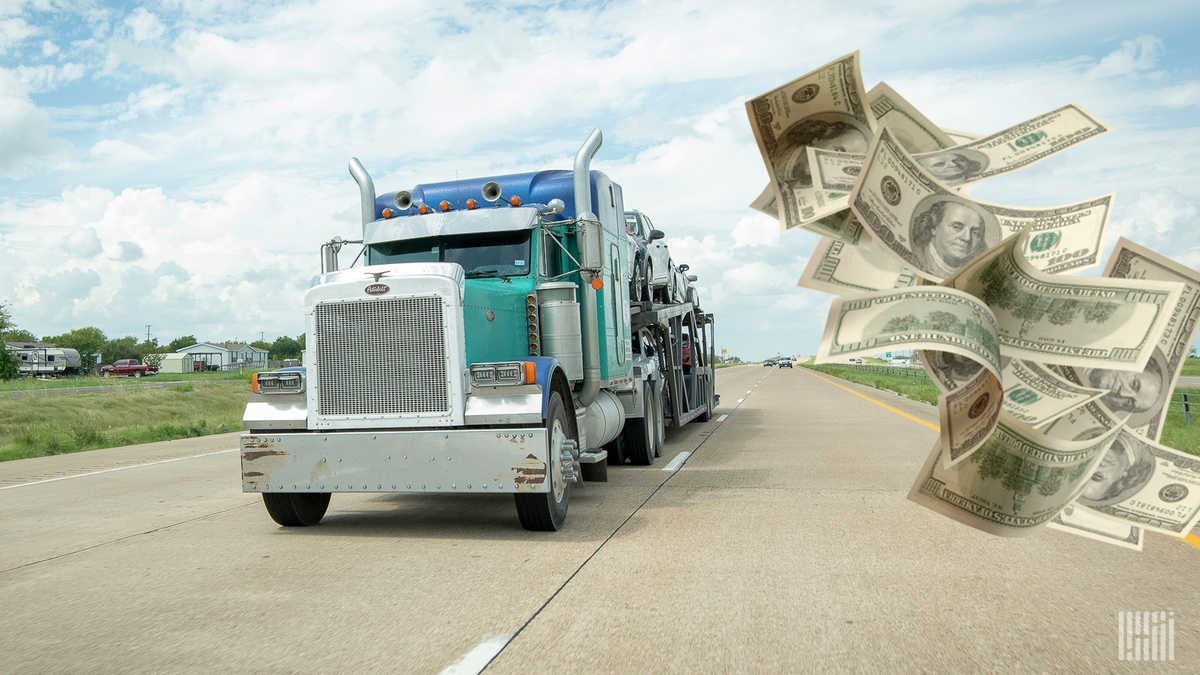
Gasoline prices are increasing almost daily, pinching the wallets and pocketbooks of nearly all Americans with cars. However, as bad as that news is, diesel prices are surging even more across the country. Today’s truckstop retail diesel prices hit a new record of $5.32/gallon. Since February 1st, national truckstop diesel prices have increased by $1.57/gallon. For an owner-operator whose truck gets 6.5 miles per gallon, this equates to a cost increase of $0.24 per mile.
Diesel’s importance to our economy
To many Americans (including politicians), diesel prices are so removed from their version of reality that they often dismiss the importance of diesel to the U.S. and global economies. However, diesel is the fuel that drives the economy and leaves major industries vulnerable to cost shocks.
Without diesel fuel, the U.S. economy would collapse in a matter of days. Our supply chains would completely shrivel, almost overnight.
Trucks use it to haul our goods across the country. Of all Class 8 trucks (the big ones), 97% use diesel. No, Elon Musk is not going to save us here. When Tesla announced the Semi in 2017, Musk projected that over 100,000 would be produced by 2022. Today there are less than 20, mostly prototypes.
Trains also depend on diesel to transport products across the country. Almost every train in the country depends on diesel for energy.
Even a large portion of our electricity is indirectly powered by diesel. Over one-fifth (22%) of our electricity in the United States comes from coal. Diesel-powered trains transport coal to power plants across the nation.
Diesel is also critical to our imports and exports, because 80% of the ships that transport products via the ocean are powered by diesel.
A world without diesel would mean that our grocery stores and restaurants would run out of food, retail store shelves would be empty, and hospitals would run out of medical supplies. But that is just scratching the surface.
Diesel’s importance to agriculture
Farmers use diesel to power most of their machinery. According to the Diesel Technology Forum, diesel is critical to the farming industry:
One reason why U.S. agriculture is among the most productive and economically valuable in the world; producing more yield in less time with fewer inputs, is thanks to the advancements in the machines and equipment that do the planting, harvesting and tending to the land. Today, diesel engines power the majority of agricultural equipment in the U.S. and around the world necessary to plant, cultivate and harvest crops and transport them to markets or for processing and then delivered ultimately to the consumer.
Diesel engines power more than two-thirds of all farm equipment, transport 90% of its product and pump one-fifth of its water in the United States. Ninety-six percent of the large trucks that move agricultural commodities to railheads and warehouses are powered by a diesel engine. One hundred percent of the freight locomotives, marine river grain barges and ocean-going vessels that deliver these products to markets at home and abroad are powered by diesel.
In the agricultural sector, there is no cost-effective substitute for diesel engines with the same combination of energy efficiency, power and performance, durability and reliability. Diesel dominates the entire “farm supply chain” – planting the product, tending the crop (watering, fertilizers, and pesticides), harvesting the product and even bringing the product to market by truck, rail or ship. Farm tractors, combines, irrigation pumps and other equipment are the workhorses in an industry vital to our national economy and quality of life.
Nearly every fishing vessel around the world uses diesel for power. Without diesel, our fishing food supply chain would collapse.
Diesel’s importance to the industrial sector
Diesel also powers the construction industry. From the Diesel Technology Forum:
Roughly 850,000 diesel-powered vehicles nationwide are in use bringing supplies, materials and workers to and from U.S. construction sites. Earthmovers, bulldozers, bucket loaders, backhoes, cranes, pavers, excavators and motor graders are all essential to building and expanding our economic infrastructure. For most of these machines, there is simply no substitute for diesel power. No viable alternative has yet emerged for equipment that exceeds 500 horsepower; some construction engines produce several thousand horsepower.
Since diesel powers the industrial economy, the recent surges in prices will put additional inflationary pressures on the U.S. economy – in the sectors that have already experienced unprecedented inflation – transportation, agriculture, and construction. But this may be less damaging than demand destruction that may come along with price surges, especially in transportation and construction.
Source: FreightWaves
Compiled from international media by the SCI.AI editorial team.