Fifteen Years of Silence Broken: Why India and the GCC Chose This Moment to Restart FTA Negotiations
On February 5, 2026, India and the six member states of the Gulf Cooperation Council signed the Terms of Reference in New Delhi, formally relaunching Free Trade Agreement negotiations that had been dormant for fifteen years. The original talks began in 2006, saw preliminary discussions in 2008, and then stalled indefinitely amid a world where globalization seemed unstoppable and neither side felt urgency to tackle the complex tariff and market access issues on the table. The intervening decade and a half has fundamentally altered that calculus. Global trade fragmentation has accelerated, supply chain security has become a matter of national strategy, and geopolitical realignments are redrawing trade corridors at a pace not seen since the end of the Cold War.
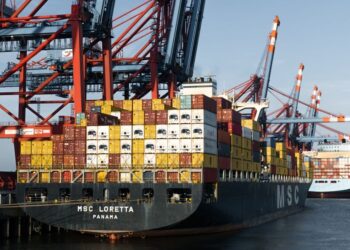
The timing is anything but coincidental. The Red Sea shipping crisis, while partially alleviated by ceasefire agreements, has left Suez Canal traffic approximately 60% below pre-crisis levels, exposing the fragility of the world’s most critical maritime chokepoint. Simultaneously, the United States’ escalating tariff regime against China has pushed China’s share of US imports to a historic low of just 7%, triggering a fundamental reorientation of global manufacturing and trade flows. Both India and the GCC find themselves at a historic inflection point where their strategic interests in repositioning within the global supply chain architecture have converged with unprecedented clarity.
India arrived at the negotiating table with substantial preparation already completed. Its Comprehensive Economic Partnership Agreement with the UAE is operational, and a newly concluded CEPA with Oman has added another bilateral building block. These agreements have provided India with valuable negotiating experience and institutional frameworks that can be scaled to the broader multilateral FTA. On the GCC side, Saudi Arabia’s Gulf Guarantee project aimed at boosting intra-regional trade and the accelerating implementation of national economic diversification plans have created complementary institutional readiness. The convergence of preparedness on both sides makes this restart qualitatively different from the false starts of the past.
The $179 Billion Trade Corridor: Mapping the India-GCC Supply Chain Ecosystem
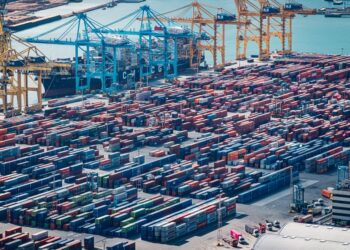
The sheer scale of the India-GCC economic relationship provides the most compelling argument for a comprehensive free trade framework. According to India’s FY 2024-2025 trade data, Indian exports to the GCC totaled approximately $57 billion while imports reached $122 billion, creating a bilateral trade volume of nearly $179 billion. This figure places the GCC among India’s most significant trading partners, rivaling and in some metrics surpassing ASEAN. Structurally, India’s imports from the GCC remain energy-dominated — Gulf states supply more than half of India’s crude oil requirements and a substantial share of its liquefied natural gas — but the composition is rapidly evolving beyond hydrocarbons.
This structural evolution is precisely what makes the FTA negotiations so consequential for supply chain professionals. The traditional characterization of India-GCC trade as an “oil-for-remittances” model — where India purchases Gulf petroleum while millions of Indian workers in GCC countries send earnings home — is being fundamentally disrupted. Under their respective national vision programs, including Saudi Arabia’s Vision 2030, UAE’s Vision 2071, Qatar’s National Vision 2030, Oman’s Vision 2040, Kuwait’s New Kuwait 2035, and Bahrain’s Economic Vision 2030, GCC states are investing massively in manufacturing, logistics infrastructure, renewable energy, fintech, and digital services. This means the commodity and service composition of bilateral trade will undergo a structural transformation from single-dimension energy trade toward diversified industrial cooperation.
For businesses operating in or considering expansion into the Middle East, a unified free trade framework spanning six GCC nations would deliver tangible operational benefits: reduced tariff barriers, simplified customs procedures, harmonized product standards and certification systems. For companies building regional distribution centers, multi-country warehousing networks, or cross-border e-commerce operations, this translates into meaningful cost reductions and efficiency gains. The complementarity between India’s IT services capabilities and the GCC’s hardware infrastructure investments creates particularly significant opportunities in logistics technology and supply chain digitization.
The IMEC Vision: How a New Silk Road Bypassing the Red Sea Could Reshape Trade Geography
The India-GCC FTA cannot be understood in isolation from a larger geoeconomic architecture: the India-Middle East-Europe Economic Corridor (IMEC). While still in its early conceptual phase, IMEC’s strategic intent is unmistakable — to build an alternative trade corridor that bypasses traditional maritime chokepoints, particularly the Red Sea and Suez Canal, by connecting India, the UAE, Saudi Arabia, Jordan, Israel, and Europe through rail, port, and digital infrastructure. First proposed at the 2023 G20 New Delhi Summit, IMEC has progressed slowly, but the establishment of an FTA framework would provide critical institutional scaffolding for the corridor’s substantive advancement.
From a supply chain perspective, IMEC’s potential impact is transformative. Current Asia-Europe maritime trade relies primarily on the Suez Canal route, with typical transit times of 30-35 days. During the Red Sea crisis, the Cape of Good Hope alternative added 10-14 days to voyage times, directly inflating transportation costs and inventory carrying requirements. If realized, IMEC would reduce Asia-Europe freight transit to approximately 10-15 days through multimodal transport, while dramatically reducing dependence on a single maritime passage. For time-sensitive products — electronics components, pharmaceuticals, and high-value consumer goods — this time advantage would create significant competitive differentiation.
The challenges facing IMEC are equally formidable. The region’s complex geopolitical landscape, uncertainties in Israel-Arab state relations, the financing of massive infrastructure investments, and multi-country coordination mechanisms all represent substantial barriers to realization. However, even if IMEC cannot be fully implemented in the near term, the trade facilitation measures driven by FTA negotiations — tariff reductions, mutual customs recognition, electronic clearance systems — can already deliver substantive improvements to existing India-GCC trade channels. In this sense, the FTA serves as IMEC’s advance guard, paving the institutional pathway for a larger strategic vision.
The GCC’s Multi-Alignment Strategy: Supply Chain Opportunities in the US-China-India Triangle
Understanding the deeper significance of the India-GCC FTA requires placing it within the GCC states’ multi-alignment strategic framework. Today’s Gulf nations are not making zero-sum choices between the United States, China, and India, but simultaneously deepening economic ties with all three, using trade policy as a core tool for hedging geopolitical risk. This “multi-alignment” strategy manifests in concrete policy actions: GCC-China trade continues to grow, particularly in energy, infrastructure, and technology; security cooperation and investment relationships with the United States remain robust; and the FTA restart now substantially strengthens institutionalized economic ties with India.
For Chinese companies expanding overseas, this landscape presents both challenges and opportunities. From a competitive standpoint, the India-GCC FTA would give Indian-manufactured products tariff advantages in Gulf markets, particularly in textiles, agricultural processing, IT services, and pharmaceuticals where India holds comparative advantages. Chinese companies like BYD and CATL are actively building new energy supply chains in the Middle East, while Korean firms like CJ Logistics have already established regional logistics hubs in Saudi Arabia — Indian entry would intensify competition further. However, the expansion of the GCC market itself creates incremental opportunities. As Gulf manufacturing and logistics demand grows, Chinese companies retain strong competitive advantages in engineering equipment, port machinery, warehouse automation, and digital logistics platforms — areas relatively less affected by FTA tariff changes.
Perhaps most significantly, GCC states are simultaneously constructing a new supply chain regulatory framework as they pursue economic diversification. From local content requirements to technology transfer conditions, from ESG compliance standards to data localization rules, these institutional changes will profoundly affect all foreign enterprises operating in the Middle East. Whether Indian or Chinese companies, those who adapt fastest to these evolving rules will secure first-mover advantages in this rapidly growing market.
Negotiation Flashpoints: The Complex Calculus of Agriculture, Labor, and Services Trade
While the restart of FTA negotiations sends a positive signal, reaching a final agreement faces numerous technical and political challenges. Agricultural market access stands as one of the most sensitive issues — India possesses a vast agricultural population and powerful farm lobbies that have maintained strict tariff protections on imported agricultural products. While GCC nations have limited agricultural output, as one of the world’s largest food-importing markets they have strong demands for agricultural trade liberalization. Designing tariff structures and transitional arrangements that protect Indian farmers while addressing GCC food security needs will require exceptional diplomatic finesse.
Labor migration represents another core negotiation pillar. Approximately 9 million Indian expatriates currently work and live in GCC countries, sending home remittances exceeding $40 billion annually — a critical component of India’s foreign exchange earnings. GCC states are simultaneously advancing workforce nationalization policies such as Saudi Arabia’s Saudization and the UAE’s Emiratisation programs, creating inherent tension with India’s push for better treatment and stronger protections for its workers abroad. How the FTA framework handles Mode 4 provisions on the movement of natural persons in services trade will directly affect millions of workers and billions in remittance flows.
Additionally, services trade liberalization and investment protection clauses present significant negotiation complexity. India holds distinct advantages in IT services, financial services, and education, seeking broader market access for Indian service providers in GCC markets. GCC states, meanwhile, prioritize investment protection mechanisms, dispute resolution frameworks, and intellectual property safeguards. Both sides must also reach consensus on digital trade rules — including cross-border data flows, electronic payments, and digitized customs procedures — all core components of modern trade agreements that will determine the operational reality for businesses on both sides.
The Middle East’s Supply Chain Metamorphosis: From Oil Corridor to Industrial Cooperation Network
Should these FTA negotiations succeed, they will mark a fundamental transformation in the India-GCC relationship — from a historical model dominated by oil trade and labor remittances to a new partnership characterized by industrial cooperation, supply chain integration, and strategic economic interdependence. This transformation extends beyond bilateral relations to reshape the entire Middle East’s supply chain geography. GCC states are evolving from pure energy exporters and trade transit points into regional economic powers with independent manufacturing capabilities, digital infrastructure, and diversified trade networks.
From a global supply chain evolution perspective, the crystallization of an India-GCC economic corridor adds a significant new supply chain artery connecting South Asia and the Middle East. Combined with the advancing IMEC corridor vision, a future “crossroads” supply chain network with the GCC as its hub — simultaneously connecting South Asia, Southeast Asia, Africa, and Europe — is gradually taking shape. This powerfully complements the traditional east-west trade corridor running from East Asia through the Strait of Malacca and Suez Canal to Europe, providing global supply chains with greater redundancy and resilience.
For supply chain managers and strategic planners, this means fundamentally reassessing the Middle East’s position in global supply chain networks. The region is no longer merely a “transit zone” where transportation risks must be managed, but is becoming a supply chain strategic high ground worthy of proactive investment. Whether establishing regional distribution centers, investing in manufacturing capacity, or deploying digital logistics platforms, the current moment represents a critical window for securing first-mover advantages in Middle East supply chain opportunities. As institutional frameworks like the India-GCC FTA take shape, trade costs in this region will continue declining, market access will become more convenient, and early advantages will become increasingly difficult to replicate.
Source: theweek.in