According to www.vietnam.vn, Vietnam’s logistics sector is positioning itself to capture opportunities from the global supply chain restructuring, with national targets set for 12–15% average annual growth and logistics costs reduced from ~17% to 12–15% of GDP by 2035.
Strategic Geographic Advantages Emerge
The forum highlighted that Hồ Chí Minh City is expected to become the regional supply chain coordination hub for southern Vietnam, while Quảng Trị and Hải Phòng are identified as having strong potential to develop large-scale logistics centers — leveraging their port infrastructure, gateway connectivity, and integrated transport networks.
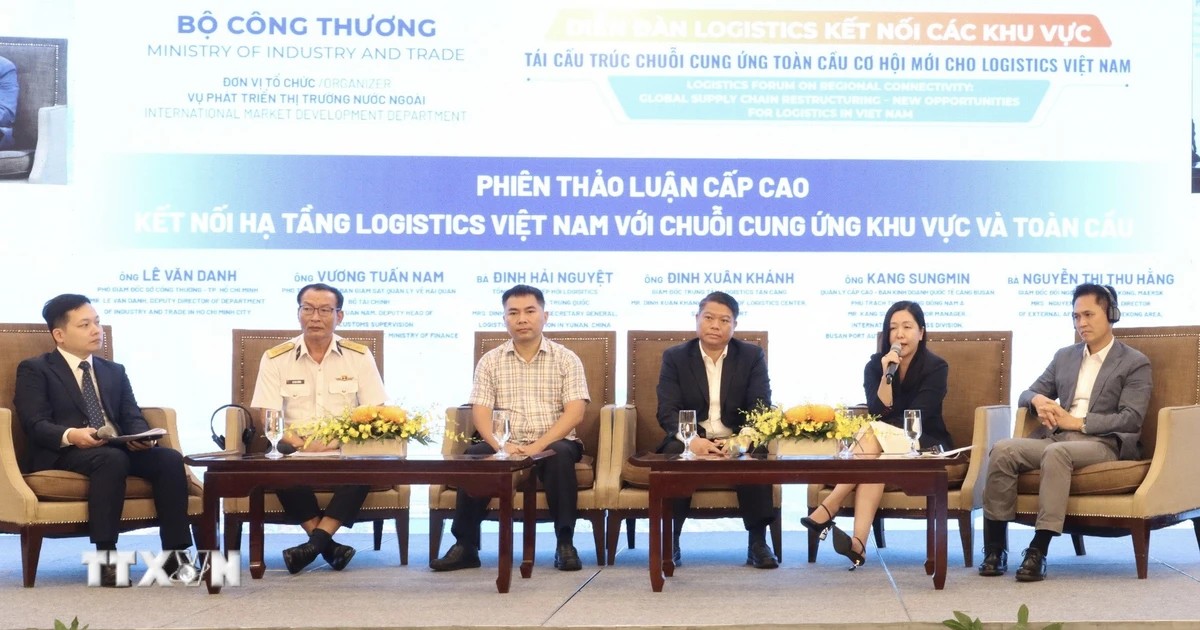
These locations were singled out during the “Logistics Forum: Restructuring the Global Supply Chain”, organized by Vietnam’s Ministry of Industry and Trade on 24 July 2026 in Hồ Chí Minh City. The event brought together provincial leaders, federal agencies, and private-sector stakeholders to align regional development strategies with national logistics goals.
National Targets and Policy Framework
Phan Thị Thắng, Deputy Minister of Industry and Trade, underscored that Vietnam’s Logistics Development Strategy for 2025–2035 — with a vision to 2050 — sets three core metrics: raising logistics’ value-added contribution to 5–7% of GDP; achieving 12–15% average annual growth; and cutting logistics costs to 12–15% of GDP from the current level of approximately 17%.
She attributed the urgency to broader shifts: geopolitical volatility, investment reallocation, digital transformation, and green transition — all driving global supply chains toward diversification, resilience, and sustainability. “Logistics capacity today determines not only goods velocity but also investment attraction, market expansion, and national standing in global supply chains,” she stated.
“Năng lực logistics hiện nay không chỉ quyết định tốc độ lưu chuyển hàng hóa mà còn quyết định khả năng thu hút đầu tư, mở rộng thị trường và vị thế của mỗi quốc gia trong chuỗi cung ứng toàn cầu.” — Phan Thị Thắng, Deputy Minister of Industry and Trade
Hồ Chí Minh City’s Four-Pillar Roadmap
Nguyễn Lộc Hà, Standing Vice Chairman of the People’s Committee of Hồ Chí Minh City, outlined four strategic priorities for the city’s logistics development: building synchronized, modern infrastructure with inter-regional connectivity; accelerating digital transformation to enhance supply chain transparency; advancing green logistics aligned with international environmental standards; and cultivating high-value human capital and service ecosystems.
The city aims to function as an international logistics services hub — serving as the primary node for coordinating and integrating regional and global supply chains. Its competitive advantages include a dense network of seaports, Tan Son Nhat International Airport, industrial parks, financial and commercial centers, and a dynamic business community.
Crucially, Nguyễn Lộc Hà stressed that logistics is inherently inter-regional: “No locality can develop logistics in isolation.” He called for coordinated planning and investment across transport corridors and logistics hubs, shared data platforms, and industry collaboration — shifting enterprises from fragmented competition to systemic cooperation.
Contextual Drivers and Performance Benchmarks
The government has set a minimum economic growth target of 10% for the coming period, with exports designated as a key driver — targeting 15–16% export growth. Despite global economic turbulence, Vietnam’s trade activity maintained positive momentum in the first half of 2026, reflecting adaptability within regional and global supply networks.
This expanding trade volume intensifies pressure on logistics systems. According to the report, rising export volumes require commensurate upgrades in warehousing, multimodal transport, customs efficiency, and last-mile delivery — especially as manufacturing output expands under new free trade agreements.
Vietnam’s growing web of FTAs — including the EU-Vietnam Free Trade Agreement (EVFTA), Comprehensive and Progressive Agreement for Trans-Pacific Partnership (CPTPP), and Regional Comprehensive Economic Partnership (RCEP) — provides preferential access to over 60 countries, further amplifying demand for seamless, compliant cross-border logistics services.
Source: vietnam.vn
Compiled from international media by the SCI.AI editorial team.