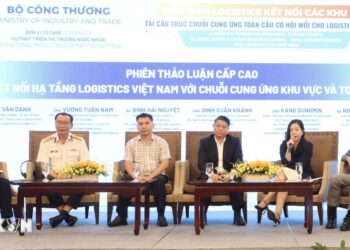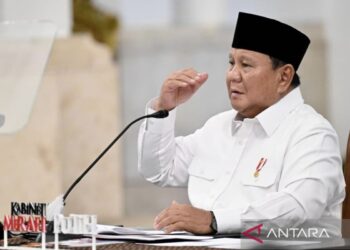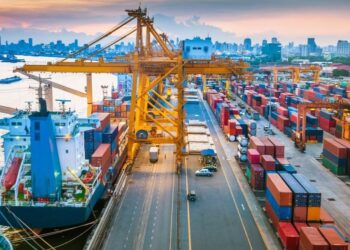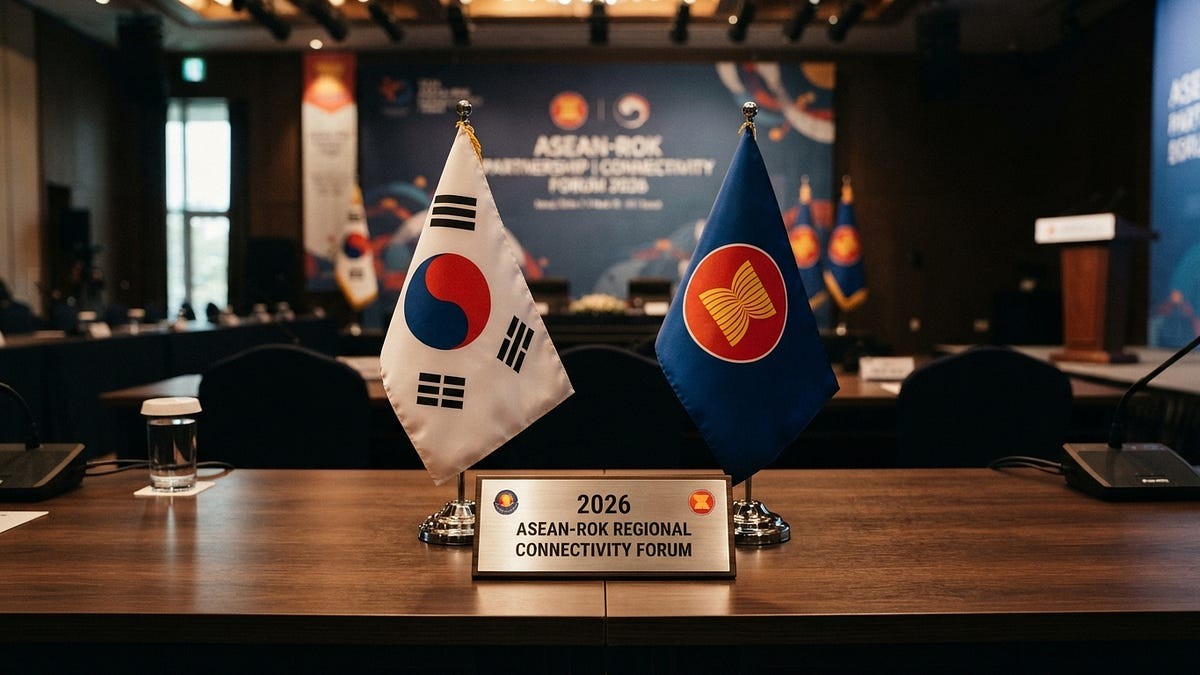
According to www.thesoutheastasiadesk.com, ASEAN and South Korea are transforming the ASEAN–Korea Free Trade Area (AKFTA) from a market-access agreement into a platform for supply-chain resilience — a strategic shift underscored at the 2026 ASEAN–ROK Regional Connectivity Forum held in Jakarta on 16 July.
From Tariff Reduction to Systemic Resilience
The forum marked a decisive pivot in bilateral economic cooperation. Where past engagement centered on trade liberalization and investment flows, the new agenda prioritizes securing access to batteries and clean technologies, semiconductors and digital infrastructure, critical minerals, energy networks, and logistics and industrial inputs. As noted by analysts at The Southeast Asia Desk, geopolitical tensions, pandemic-era disruptions, climate regulations, and technological competition have redefined expectations: efficiency alone is no longer sufficient — resilience under stress is now non-negotiable.
That distinction is operational, not semantic. An efficient supply chain minimizes cost under stable conditions; a resilient one must withstand geopolitical confrontation, climate disasters, shipping disruptions, export restrictions, and sudden shortages. The core proposition advanced at the forum was that AKFTA must evolve accordingly — explicitly embedding mechanisms for risk mapping, crisis coordination, and post-disruption review.
Economic Interdependence in Numbers
The urgency stems from deep, asymmetric integration. A presentation by the Korea Institute for International Economic Policy (KIEP) reported that in 2024, South Korea exported US$114 billion to ASEAN and imported US$79 billion from the region. Those figures represent 16.7% of Korean exports and 12.5% of its imports — volumes deeply embedded in regional production networks. South Korea supplies ASEAN with machinery, chemicals, electronics, petroleum products, and components for clean-technology production; ASEAN reciprocates with semiconductors, energy inputs, manufactured goods, and food.
This interdependence means disruptions cascade rapidly: a port closure in Malaysia, a semiconductor shortage in Vietnam, or a regulatory shift in Thailand can reverberate across factories and logistics nodes in South Korea within days. The relationship is no longer bilateral trade — it is a single, interconnected production system requiring shared governance tools.
Institutional Gaps and Proposed Fixes
Despite existing cooperation — including AKFTA tariff preferences, electronic certificates of origin, customs facilitation initiatives, bilateral battery and EV projects, critical-mineral partnerships, and digital-energy programs — the forum identified persistent structural gaps. Most collaboration remains bilateral, sector-specific, or project-based, lacking an integrated architecture. Key deficiencies include: no dedicated AKFTA mechanism for monitoring supply-chain risks; limited joint vulnerability assessments; weak early-warning and crisis-coordination systems; divergent customs procedures, standards, and digital platforms; and uneven readiness among ASEAN members and small businesses.
One concrete proposal was to establish a dedicated supply-chain cooperation chapter under AKFTA, backed by a joint committee responsible for real-time risk mapping, communication during disruptions, and post-crisis review. Implementation would require sustained political commitment and dedicated resources — both of which remain uncertain.
Alignment with ASEAN’s New Connectivity Framework
This effort coincides with the official launch of the ASEAN Connectivity Strategic Plan (ACSP) 2026–2035, endorsed by the ASEAN Connectivity Coordinating Committee in April 2026. The ACSP outlines 6 strategic areas, 14 objectives, 49 strategic measures, and 162 key activities — covering sustainable infrastructure, smart urban development, digital innovation, seamless logistics, regulatory cooperation, and people-to-people connectivity. Its work plan is designed as a living framework, adjustable over time.
Potential synergies are substantial: the ASEAN Power Grid, smart ports, digital customs, cross-border data systems, climate-resilient infrastructure, MSME development, and critical mineral supply chains all appear in both agendas. Yet, as the source notes, “overlap on paper does not guarantee coordination in practice.” The ACSP itself acknowledges implementation hurdles — including unclear ownership, fragmented alignment among ASEAN bodies, and rigid planning cycles — that could render its many commitments functionally disconnected without deliberate institutional bridging.
Critical Minerals: Data, Capacity, and Equity
Critical minerals emerged as the most advanced area of convergence. An ASEAN–Korea Cooperation Fund project running from 2024 to 2026 has focused on geological knowledge, training, and technology sharing — reporting the collection of 5,724 mineral-related datasets from ASEAN member states for a regional data platform. This improves baseline knowledge but is only the first step.
The deeper question, per forum analysis, is whether cooperation delivers local value: local processing and industrial capacity, technology and skills transfers, greater domestic value creation, strong environmental safeguards, and benefits for local communities — or merely secures more reliable raw-material access for external industries. Recommendations included joint investment, specialized industrial parks, and structured technology cooperation — all aimed at moving beyond extraction toward shared industrial upgrading.
Source: thesoutheastasiadesk.com
Compiled from international media by the SCI.AI editorial team.