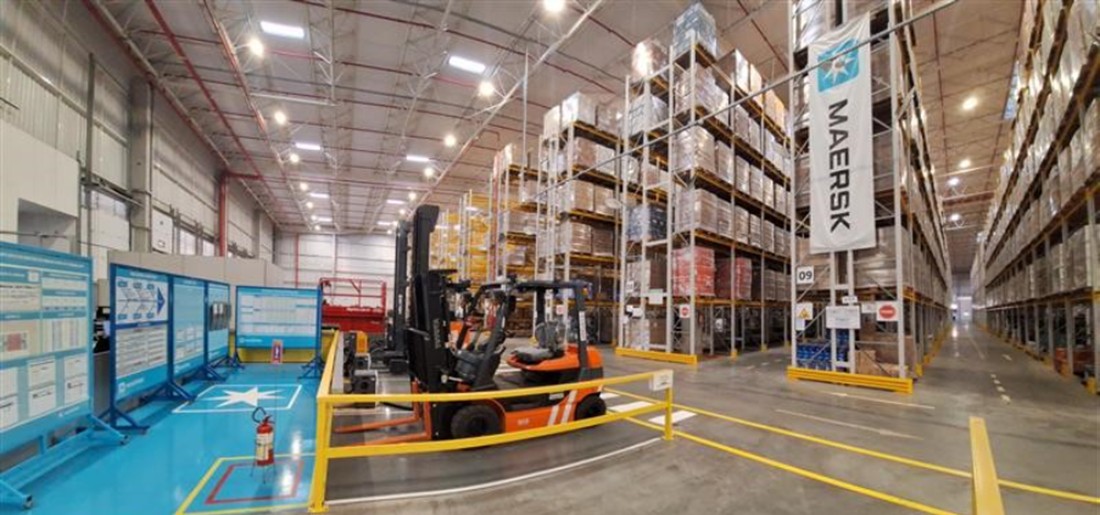
According to datamarnews.com, Maersk has launched a new 12,000-square-meter distribution center in Cabo de Santo Agostinho, Pernambuco state — approximately 20 kilometers from the Suape Industrial Port Complex and Recife/Guararapes International Airport — to strengthen its logistics footprint in Northeast Brazil.
Strategic Location and Operational Capacity
The facility is situated along BR-101, one of the primary highways linking states across Northeast Brazil, enabling multimodal connectivity. It is fully operational and already serving customers in premium beverage and automotive spare parts segments. The center features 36 loading docks and can simultaneously receive up to 36 containers, supporting diverse customer requirements including cross-docking to accelerate cargo distribution and reduce handling times.
The distribution center serves industries spanning consumer goods, automotive, technology, retail, electronics, pet food, solar energy, personal care, household products, disposable goods, food and beverages, and household appliances — reflecting the region’s diversified trade profile.
Record Regional Cargo Growth Drives Investment
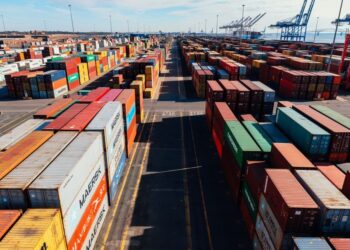
Maersk’s expansion follows a surge in regional cargo activity: Northeast Brazil handled 329.7 million metric tons of cargo via sea and inland waterways in 2025, according to data compiled by Brazil’s Ministry of Ports and Airports from the National Waterway Transportation Agency (Antaq). Containerized cargo reached 21.2 million metric tons that year — an increase of 9% year-on-year, marking the region’s highest growth rate in five years.
This growth underpins Maersk’s strategic commitment to integrated logistics infrastructure in the region, where economic activity, investment inflows, and domestic consumption are expanding rapidly.
Integrated Digital and Sustainable Operations
The facility operates using Maersk’s proprietary warehouse management system, which coordinates cargo receipt, warehousing, inventory management, order preparation, and final distribution on a single platform. Real-time monitoring and radio-frequency-enabled processes enhance accuracy, visibility, and operational efficiency. According to Maersk, this system delivers greater flexibility and customization than conventional warehouse management solutions.
Sustainability measures include waste separation and recycling, full LED lighting, and all-electric cargo-handling equipment powered by lithium batteries — enabling faster charging and higher productivity while reducing greenhouse gas emissions.
Leadership Perspective on Regional Economic Role
Ricardo Rocha, Maersk’s president for Brazil, Paraguay, Uruguay and Argentina, emphasized the growing centrality of Northeast Brazil in national development:
“Northeast Brazil is playing an increasingly strategic role in the country’s economic development, attracting investment, expanding consumption and creating new business opportunities.”
“Our goal is to support this growth with integrated logistics solutions that connect companies, markets and consumers with greater efficiency, predictability and speed. By combining warehousing, transportation and supply chain management, we help our customers reduce operational complexity and strengthen their competitiveness in an increasingly dynamic environment.”
The launch aligns with broader industry momentum: Armac expanded its port operations in Northeast Brazil in November 2025, and the world’s largest ship towing operator began operations at Pecém Port in July 2021. These developments collectively signal deepening private-sector commitment to Northeast Brazil’s port and logistics infrastructure.
Source: datamarnews.com
Compiled from international media by the SCI.AI editorial team.