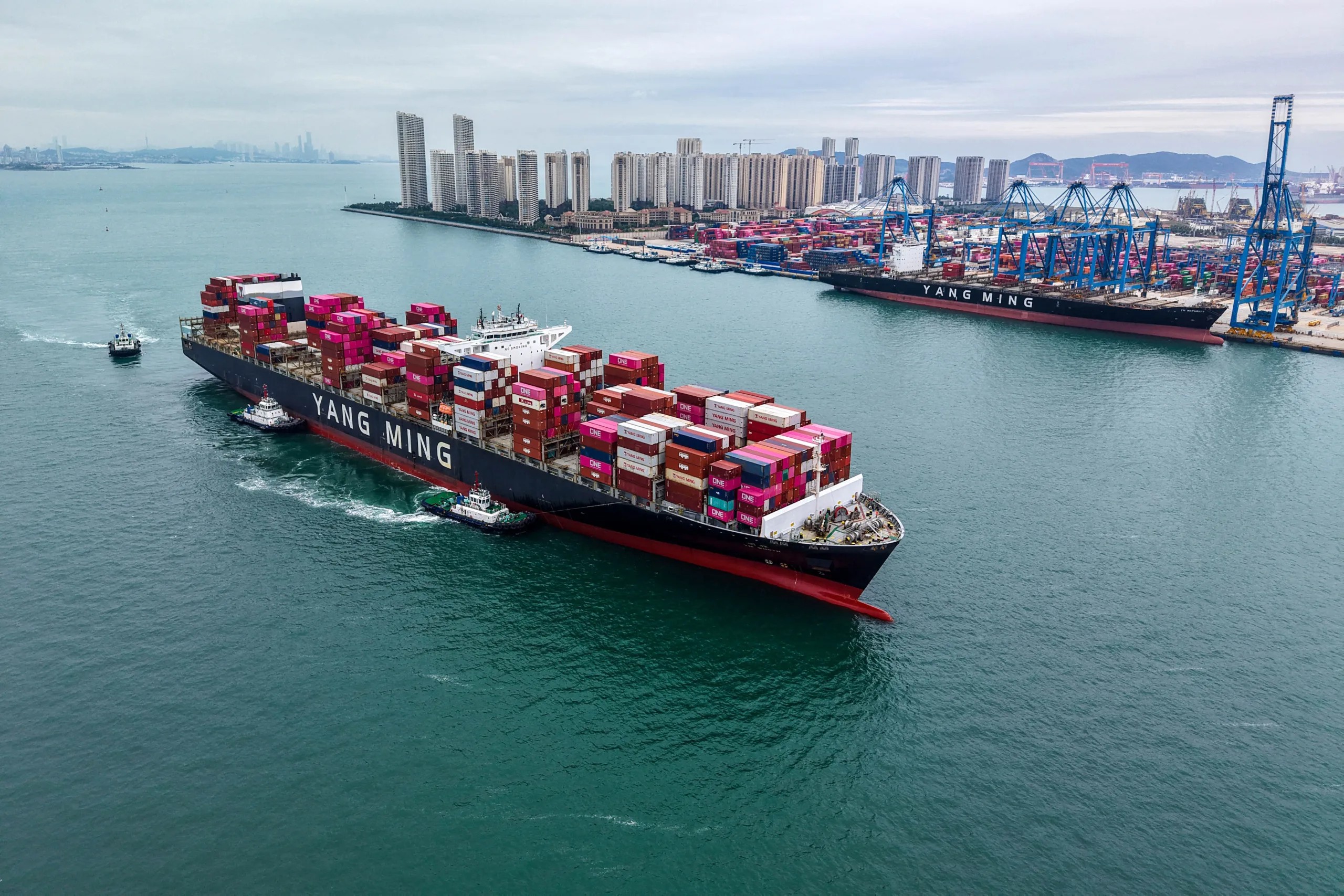
According to www.brasildefato.com.br, China’s foreign trade totaled 25.47 trillion yuan (approximately $3.2 trillion) in the first half of 2026 — the first time it has exceeded 25 trillion yuan in a single semester — growing 16.9% year-on-year.
Import Surge Drives Overall Growth
Imports rose sharply by 22.1% to 10.74 trillion yuan ($1.37 trillion), outpacing export growth of 13.4% to 14.73 trillion yuan ($1.87 trillion). The trade surplus narrowed by 4.7% over the period. Wang Jun, Deputy Director-General of China’s General Administration of Customs, attributed the import strength to stronger domestic demand, rising industrial output, and increased procurement of raw materials — notably metal ores, imports of which climbed 22.6%, and electronic components, up 45.6%.
Africa and Neighboring Regions Outperform Global Average
Trade with African countries grew 19.6% — above the national average and higher than the 14.4% increase recorded in the same period of 2025. This acceleration followed China’s implementation of zero-tariff treatment for all products from 53 African countries starting May 1, 2026. In the first two months of that policy, African imports reached 193.8 billion yuan ($24.7 billion), a 23.5% rise, led by seafood, textiles, and fruits — avocado purchases more than doubled, while apple imports jumped 89.6%. Meanwhile, China exported 534.1 billion yuan ($68 billion) in electromechanical goods to Africa, up 28.8%, with solar panels, power transmission equipment, and auto parts leading the surge.
ASEAN Remains Top Partner; Belt and Road Dominates Trade Flow
Trade with neighboring countries totaled 9.44 trillion yuan ($1.2 trillion), up 20.6%. The Association of Southeast Asian Nations (ASEAN) remained China’s largest trading partner, with bilateral trade reaching 4.34 trillion yuan ($552 billion) — an increase of 18.2%. Collectively, countries participating in the Belt and Road Initiative accounted for 50.9% of China’s total foreign trade volume, or 12.97 trillion yuan ($1.65 trillion), rising 14.8%.
US Trade Shows Modest Recovery, EU Tensions Persist
Bilateral trade with the United States amounted to 2 trillion yuan ($254 billion) in H1 2026. After falling 18.7% in Q1, trade rebounded 13.7% in Q2 — the first turnaround since the Trump-era tariff hikes, which had imposed duties as high as 145% on Chinese goods in 2025. Lü Daliang, spokesperson and head of the Statistics and Analysis Department at the General Administration of Customs, credited the modest recovery to former U.S. President Donald Trump’s visit to China in May:
“The meeting between the heads of state defined a new positioning for relations between the two countries, gave stable expectations to economic and trade relations, and injected positive momentum.” — Lü Daliang, spokesperson, General Administration of Customs
In contrast, trade with the European Union grew 10.2%, even as Brussels intensified regulatory pressure — launching new steel import rules and e-commerce small-parcel tariffs on July 1, 2026. The EU’s trade deficit with China stood at approximately €360 billion ($392 billion) in 2025, prompting European Commission President Ursula von der Leyen to label China’s industrial expansion a “new China shock” during the G7 summit in France in June.
Private Firms and High-Tech Exports Accelerate
Private enterprises drove over half of China’s foreign trade, contributing 14.53 trillion yuan ($1.85 trillion) — 57% of the total — and growing 17%. More than 660,000 private firms engaged in import-export operations during the semester. High-tech exports surged 39% to 3.26 trillion yuan ($415 billion). AI infrastructure-related goods — including electronic components and computer parts — reached 5.13 trillion yuan ($653 billion), up 56.6%. Industrial robots — newly assigned their own customs classification in 2026 — were exported to 141 countries, with sales climbing 18.6%; surgical robot exports soared by over 300% to 480 million yuan ($61 million).
Source: brasildefato.com.br
Compiled from international media by the SCI.AI editorial team.