Explore

  • Trending
  • Latest
  • Tools
  • Browse
  • AI Assistant
  • Subscription Feed

Logistics

  • Ocean
  • Air Cargo
  • Road & Rail
  • Warehousing
  • Last Mile

Regions

  • Southeast Asia
  • South Asia
  • Central Asia
  • Japan & Korea
  • Middle East
  • Europe
  • Russia
  • Africa
  • North America
  • Latin America
  • Australia
SCI.AI
  • Supply Chain
    • Strategy & Planning
    • Logistics & Transport
    • Manufacturing
    • Inventory & Fulfillment
  • Procurement
    • Strategic Sourcing
    • Supplier Management
    • Supply Chain Finance
  • Technology
    • AI & Automation
    • Robotics
    • Digital Platforms
  • Risk & Resilience
  • Sustainability
  • Research
  • Expert Columns
  • English
    • Chinese
    • English
No Result
View All Result
  • Login
  • Register
SCI.AI
No Result
View All Result
Home Latin America Supply Chain

Brazil extends 12% oil export tax for 60 days amid Strait of Hormuz tensions

2026/07/13
in Latin America Supply Chain
0 0
Brazil extends 12% oil export tax for 60 days amid Strait of Hormuz tensions

According to www.cartacapital.com.br, Brazil’s Executive Committee on Foreign Trade (Gecex-Camex) extended the 12% export tax on crude oil and bituminous minerals for 60 days, effective as of 9 July 2026.

Temporary extension amid geopolitical volatility

The decision, announced by Brazil’s Ministry of Development, Industry, Commerce and Services (Mdic), maintains the 12% export tariff originally introduced in March 2026 via a provisional measure (MP). That MP expired on 9 July 2026, but Gecex exercised administrative authority to renew the rate without congressional approval—since the tax functions as a regulatory instrument rather than permanent legislation.

The extension is explicitly tied to deteriorating conditions in the Middle East. According to the Mdic, renewed U.S.–Iran tensions and fresh instability in the Strait of Hormuz triggered the move. The ministry stated the policy aims to “preserve domestic fuel supply and guarantee feedstock for Brazil’s national refining capacity,” adding it seeks “continuity of adequate refining conditions in the country, protecting the internal market from potential fuel shortages.”

Economic rationale and price signals

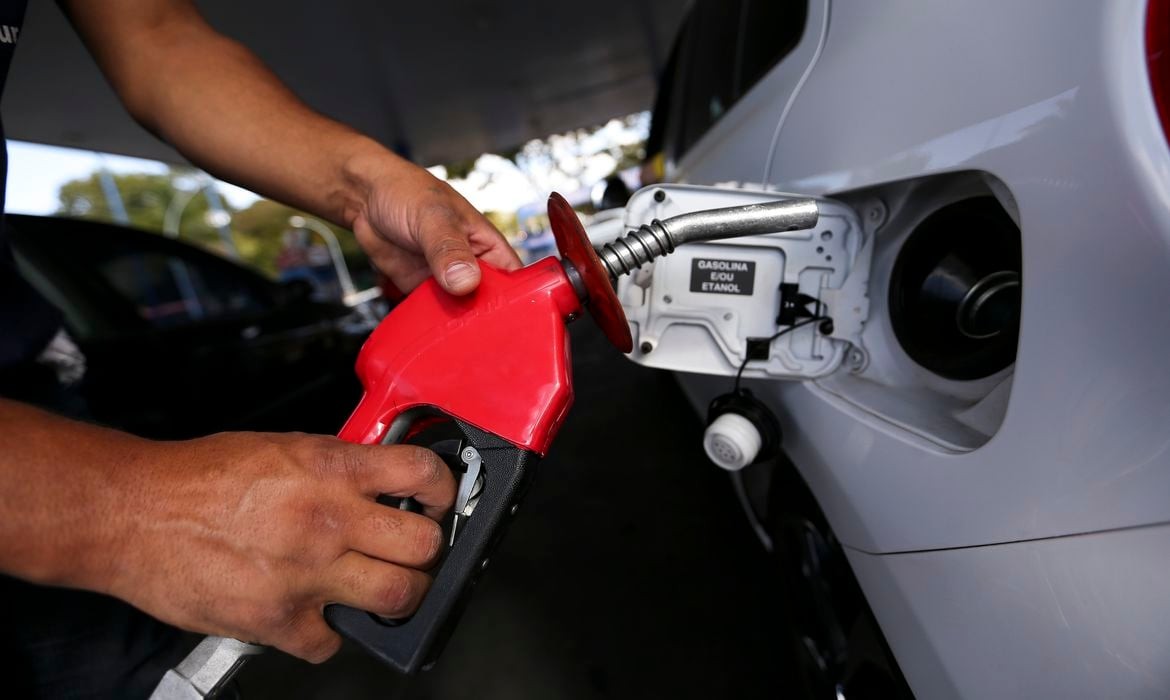
The original tax was designed to offset federal tax cuts on diesel—implemented earlier in 2026 to cushion consumers from global fuel price spikes linked to Middle Eastern conflict. Initially, Brazil’s economic team planned a phased reduction of the export levy, targeting full elimination if international oil prices stabilized at lower levels. That plan was abandoned after renewed hostilities pushed benchmark Brent crude back toward US$80 per barrel.

This price level reflects acute market concern over supply continuity: the Strait of Hormuz handles approximately 20% of globally traded oil. The government emphasized that the 60-day extension will be reevaluated within 30 days, with Gecex assessing both conflict developments and their impact on global petroleum and fuel markets.

Broader fiscal recalibration

Finance Minister Dario Durigan confirmed during a briefing on 9 July 2026 that the government is simultaneously reviewing its timeline for phasing out fuel subsidies. He stressed that “the change in the international scenario demands caution before any new adjustment to sectoral policy.” This includes the diesel subsidy program, which—according to a separate Agência Brasil report—was recently extended through December 2026 at R$1.12 per liter.

The tax extension also aligns with other recent fiscal measures, including a newly expanded advance credit period for exporters and a R$550 million credit line approved to subsidize diesel distribution. These actions collectively signal a coordinated response to external shocks—not isolated interventions. As one industry analyst observed, such export taxation tools are increasingly deployed by commodity-exporting nations to balance trade flows and shield domestic industrial inputs during geopolitical turbulence.

Supply chain implications

For supply chain professionals managing Latin American energy logistics, the extension introduces near-term pricing uncertainty for Brazilian-origin crude shipments. Exporters must now factor in an additional 12% cost layer for at least two months—potentially affecting contract negotiations, hedging strategies, and destination-specific competitiveness. Refineries reliant on domestic feedstock gain temporary stability, but downstream fuel distributors face continued pressure to absorb or pass through cost fluctuations.

From a regional risk perspective, this action underscores how chokepoint instability—particularly in the Strait of Hormuz—triggers cascading policy responses far beyond immediate transit zones. It mirrors similar measures adopted by Indonesia (2022 palm oil export curbs) and Argentina (2023 grain export taxes), reflecting a broader trend among emerging-market resource exporters to use fiscal levers for domestic market protection amid volatile global commodity cycles.

Source: cartacapital.com.br

Compiled from international media by the SCI.AI editorial team.

More on This Topic

  • Pacific University hosts 20th ICLS with 100 delegates, AI and blockchain focus (Jul 14, 2026)
  • J.B. Hunt Intermodal Revenue Hits 58% in Q2 2026 (Jul 12, 2026)
  • Fertilizer prices rise 30% amid Strait of Hormuz disruptions (Jul 10, 2026)
  • Micron pledges $3B for U.S. semiconductor supply chain (Jul 10, 2026)
  • Ormuz Crisis Halts $125B in Cargo, Asia Builds Supply Chain Resilience (Jul 9, 2026)
ShareTweet

Related Posts

Pacific University hosts 20th ICLS with 100 delegates, AI and blockchain focus
Latin America Supply Chain

Pacific University hosts 20th ICLS with 100 delegates, AI and blockchain focus

July 14, 2026
2
J.B. Hunt Intermodal Revenue Hits 58% in Q2 2026
Latin America Supply Chain

J.B. Hunt Intermodal Revenue Hits 58% in Q2 2026

July 12, 2026
8
Fertilizer prices rise 30% amid Strait of Hormuz disruptions
Latin America Supply Chain

Fertilizer prices rise 30% amid Strait of Hormuz disruptions

July 10, 2026
14
Micron pledges $3B for U.S. semiconductor supply chain
Latin America Supply Chain

Micron pledges $3B for U.S. semiconductor supply chain

July 10, 2026
11
Ormuz Crisis Halts $125B in Cargo, Asia Builds Supply Chain Resilience
Latin America Supply Chain

Ormuz Crisis Halts $125B in Cargo, Asia Builds Supply Chain Resilience

July 9, 2026
10
Brazilian Orange Juice Export Revenue Falls 30% in 2025/26
Latin America Supply Chain

Brazilian Orange Juice Export Revenue Falls 30% in 2025/26

July 8, 2026
19

Leave a Reply Cancel reply

Your email address will not be published. Required fields are marked *

Recommended

Mars & Ofi Cut Cocoa Carbon: 960 Farmers, 9,000 Hectares in Ecuador

Mars & Ofi Cut Cocoa Carbon: 960 Farmers, 9,000 Hectares in Ecuador

16 Views
April 25, 2026
AI Logistics Trends 2026: 5 Key Shifts for Supply Chains

AI Logistics Trends 2026: 5 Key Shifts for Supply Chains

54 Views
April 15, 2026
SE Asia Freight Rates Double Amid Middle East Supply Chain Shifts

SE Asia Freight Rates Double Amid Middle East Supply Chain Shifts

34 Views
April 22, 2026
AI-Powered Mixed-Case Palletizing: Peak & Jacobi Launch Next-Gen Automation

AI-Powered Mixed-Case Palletizing: Peak & Jacobi Launch Next-Gen Automation

15 Views
April 19, 2026
Show More

SCI.AI

Global Supply Chain Intelligence. Delivering real-time news, analysis, and insights for supply chain professionals worldwide.

Categories

  • Supply Chain Management
  • Procurement
  • Technology


  • Risk & Resilience
  • Sustainability
  • Research

© 2026 SCI.AI. All rights reserved.

Powered by SCI.AI Intelligence Platform

Welcome Back!

Sign In with Facebook
Sign In with Google
Sign In with Linked In
OR

Login to your account below

Forgotten Password? Sign Up

Create New Account!

Sign Up with Facebook
Sign Up with Google
Sign Up with Linked In
OR

Fill the forms below to register

All fields are required. Log In

Retrieve your password

Please enter your username or email address to reset your password.

Log In

Scan to share via WeChat

Open WeChat and scan the QR code to share

QR Code

Add New Playlist

No Result
View All Result
  • Supply Chain
    • Strategy & Planning
    • Logistics & Transport
    • Manufacturing
    • Inventory & Fulfillment
  • Procurement
    • Strategic Sourcing
    • Supplier Management
    • Supply Chain Finance
  • Technology
    • AI & Automation
    • Robotics
    • Digital Platforms
  • Risk & Resilience
  • Sustainability
  • Research
  • Expert Columns
  • English
    • Chinese
    • English
  • Login
  • Sign Up

© 2026 SCI.AI