Explore

  • Trending
  • Latest
  • Tools
  • Browse
  • AI Assistant
  • Subscription Feed

Logistics

  • Ocean
  • Air Cargo
  • Road & Rail
  • Warehousing
  • Last Mile

Regions

  • Southeast Asia
  • South Asia
  • Central Asia
  • Japan & Korea
  • Middle East
  • Europe
  • Russia
  • Africa
  • North America
  • Latin America
  • Australia
SCI.AI
  • Supply Chain
    • Strategy & Planning
    • Logistics & Transport
    • Manufacturing
    • Inventory & Fulfillment
  • Procurement
    • Strategic Sourcing
    • Supplier Management
    • Supply Chain Finance
  • Technology
    • AI & Automation
    • Robotics
    • Digital Platforms
  • Risk & Resilience
  • Sustainability
  • Research
  • Expert Columns
  • English
    • Chinese
    • English
No Result
View All Result
  • Login
  • Register
SCI.AI
No Result
View All Result
Home Latin America Supply Chain

Ormuz Crisis Halts $125B in Cargo, Asia Builds Supply Chain Resilience

2026/07/09
in Latin America Supply Chain
0 0
Ormuz Crisis Halts $125B in Cargo, Asia Builds Supply Chain Resilience

According to www.vietnam.vn, the ongoing disruption at the Strait of Hormuz has left $125 billion in goods stranded across thousands of vessels, triggering a regional pivot toward supply chain resilience over just-in-time efficiency.

Strait of Hormuz Blockage Persists Despite Ceasefire

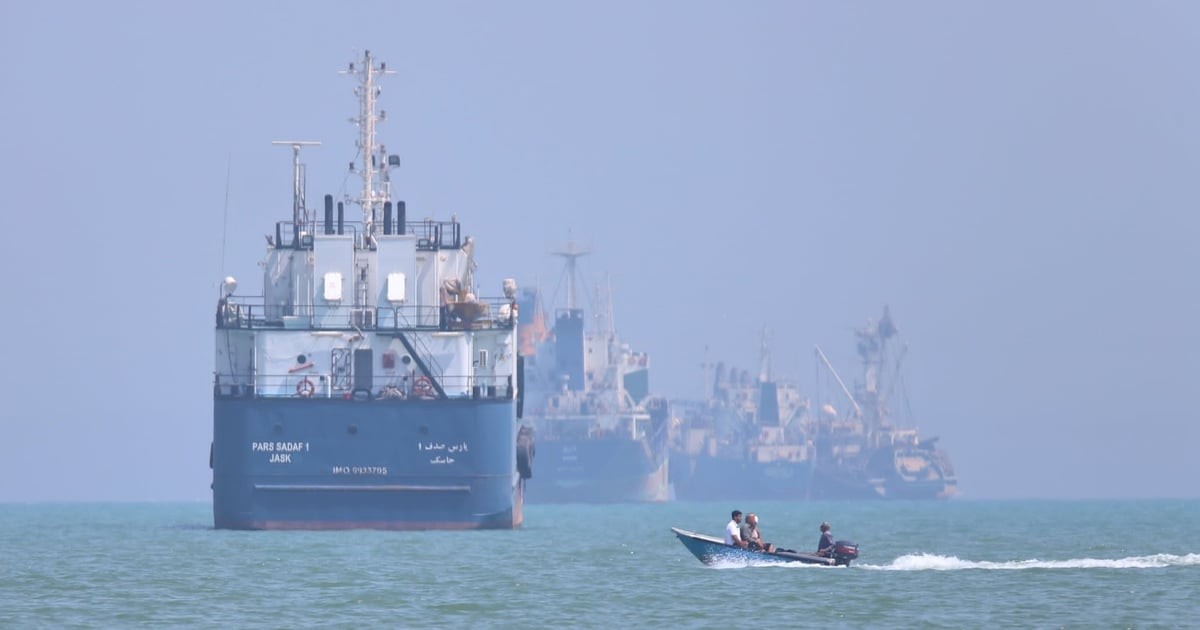
Although a temporary U.S.–Iran ceasefire signed last month allowed cargo ships to resume transit through the Strait of Hormuz, normal operations remain far from restored. As of 11 June 2026, grounded vessels still litter the Iranian coastline near the strait, and maritime insurers are renegotiating coverage terms amid lingering conflict risks. The removal of naval mines, restoration of scheduled navigation windows, and resolution of port congestion at key hubs—including Jebel Ali and Chabahar—are projected to take weeks to months, according to industry assessments.

The Mayuree Naree, a Thai-flagged cargo vessel, caught fire after being struck by an Iranian missile in the strait on 11 March 2026. That incident—alongside repeated navigational hazards—exposed the vulnerability of a chokepoint handling over 20 million barrels per day of oil, most of it destined for Asian markets.

Asia’s Geopolitical Supply Chain Shock

Bernard Aw, Chief Economist for Asia-Pacific at Coface, stated that unresolved geopolitical risks mean Asia must prepare for prolonged instability:

“The Strait of Hormuz crisis serves as a stark warning for Asia regarding energy self-sufficiency, supply diversification, strategic reserve expansion, and infrastructure investment.” — Bernard Aw, Chief Economist for Asia-Pacific, Coface

Asia is the world’s most exposed region due to its heavy reliance on Middle Eastern oil and gas—over 80% of which transits the Strait of Hormuz. Unlike earlier disruptions—the COVID-19 pandemic (2020–2022) and the Russia–Ukraine war (beginning 2022)—the Iran-related crisis directly severed Gulf energy flows and cut off raw materials critical to plastics, fertilizers, and petrochemical manufacturing across Vietnam, Thailand, Indonesia, and South Korea.

Regional Responses Accelerate

In response, governments have launched concrete initiatives with measurable scale and timelines. In April 2026, Japan announced the Asia Energy and Resources Resilience Partnership, a $10 billion initiative aimed at hardening energy logistics and material supply chains. One month later, in May 2026, Singapore and New Zealand inked a binding agreement to guarantee essential goods flow, while ASEAN advanced its long-delayed fuel-sharing mechanism.

  • Japan and South Korea agreed to strengthen crude oil and liquefied natural gas (LNG) reserve coordination and energy product swap frameworks;
  • Indonesia proposed an ASEAN-wide joint petroleum reserve to bolster regional energy security;
  • India increased Russian oil imports during the crisis to offset shortfalls—a shift requiring new shipping routes and longer lead times.

Jakir Ahmed, economist at IbisWorld, told the South China Morning Post:

“The Iranian conflict—and before it, Russia–Ukraine and COVID-19—demonstrated that the ‘just-in-time’ supply chain model is no longer viable after repeated global shocks.” — Jakir Ahmed, Economist, IbisWorld

Resilience Over Efficiency Becomes Strategic Imperative

Supply chain professionals now face trade-offs once considered inefficient: higher transport costs, extended delivery windows, and layered geopolitical risk from alternative sourcing. Yet these are increasingly accepted as operational necessities. Diversifying energy sources requires not only new contracts but also upgraded port storage, expanded pipeline capacity, and dual-sourced logistics corridors—such as India’s use of the International North–South Transport Corridor alongside traditional Gulf routes.

Long-term, the acceleration of renewable energy deployment is viewed as a structural hedge against maritime chokepoint volatility. However, experts stress that even with gradual normalization of Hormuz traffic, companies and governments will continue adjusting procurement strategies, inventory policies, and infrastructure investment plans throughout 2026 and 2027.

As one practitioner noted, “Resilience is no longer a contingency plan—it’s the new baseline metric for competitiveness.”

Source: vietnam.vn

Compiled from international media by the SCI.AI editorial team.

More on This Topic

  • Brazilian Orange Juice Export Revenue Falls 30% in 2025/26 (Jul 8, 2026)
  • NY Fed Supply Chain Index Falls to -1.06 in March (Jul 8, 2026)
  • Toyota invests $3.6B to shift Tacoma production to Texas (Jul 7, 2026)
  • Brazil’s China exports up 24.4% in June, $19.8B H1 surplus (Jul 6, 2026)
  • EU imposes €3 duty per parcel, ending de minimis exemption (Jul 3, 2026)
ShareTweet

Related Posts

Brazilian Orange Juice Export Revenue Falls 30% in 2025/26
Latin America Supply Chain

Brazilian Orange Juice Export Revenue Falls 30% in 2025/26

July 8, 2026
2
NY Fed Supply Chain Index Falls to -1.06 in March
Latin America Supply Chain

NY Fed Supply Chain Index Falls to -1.06 in March

July 8, 2026
2
Toyota invests $3.6B to shift Tacoma production to Texas
Latin America Supply Chain

Toyota invests $3.6B to shift Tacoma production to Texas

July 7, 2026
6
Brazil’s China exports up 24.4% in June, $19.8B H1 surplus
Latin America Supply Chain

Brazil’s China exports up 24.4% in June, $19.8B H1 surplus

July 6, 2026
6
EU imposes €3 duty per parcel, ending de minimis exemption
Latin America Supply Chain

EU imposes €3 duty per parcel, ending de minimis exemption

July 3, 2026
12
CXMT inks $3B memory deal with Tencent, targets $4.2B IPO
Latin America Supply Chain

CXMT inks $3B memory deal with Tencent, targets $4.2B IPO

July 1, 2026
16

Leave a Reply Cancel reply

Your email address will not be published. Required fields are marked *

Recommended

Maersk’s Last-Mile Gambit: How a Container Giant Is Rewriting Global Parcel Economics

Maersk’s Last-Mile Gambit: How a Container Giant Is Rewriting Global Parcel Economics

11 Views
March 22, 2026
Semiconductor Supply Chain: $701B Market in 2025

Semiconductor Supply Chain: $701B Market in 2025

41 Views
April 23, 2026
Korea-Japan Launch Joint Supply Chain Resilience Framework

Korea-Japan Launch Joint Supply Chain Resilience Framework

15 Views
April 6, 2026
State of AI in Procurement 2026: 94% of Executives Use GenAI Weekly, Yet Only 4% Achieve Scale

State of AI in Procurement 2026: 94% of Executives Use GenAI Weekly, Yet Only 4% Achieve Scale

45 Views
February 18, 2026
Show More

SCI.AI

Global Supply Chain Intelligence. Delivering real-time news, analysis, and insights for supply chain professionals worldwide.

Categories

  • Supply Chain Management
  • Procurement
  • Technology


  • Risk & Resilience
  • Sustainability
  • Research

© 2026 SCI.AI. All rights reserved.

Powered by SCI.AI Intelligence Platform

Welcome Back!

Sign In with Facebook
Sign In with Google
Sign In with Linked In
OR

Login to your account below

Forgotten Password? Sign Up

Create New Account!

Sign Up with Facebook
Sign Up with Google
Sign Up with Linked In
OR

Fill the forms below to register

All fields are required. Log In

Retrieve your password

Please enter your username or email address to reset your password.

Log In

Scan to share via WeChat

Open WeChat and scan the QR code to share

QR Code

Add New Playlist

No Result
View All Result
  • Supply Chain
    • Strategy & Planning
    • Logistics & Transport
    • Manufacturing
    • Inventory & Fulfillment
  • Procurement
    • Strategic Sourcing
    • Supplier Management
    • Supply Chain Finance
  • Technology
    • AI & Automation
    • Robotics
    • Digital Platforms
  • Risk & Resilience
  • Sustainability
  • Research
  • Expert Columns
  • English
    • Chinese
    • English
  • Login
  • Sign Up

© 2026 SCI.AI