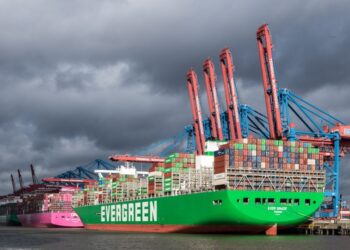
According to Seatrade Maritime, fire incidents on container ships managed by members of the Container Ship Safety Forum (CSSF) rose for the third consecutive year — reaching 0.15 fires per 1,000 vessel management days in 2025, up from 0.14 in 2024 and 0.12 in 2023.
Three-year upward trend defies broader safety gains
While overall safety metrics improved across CSSF member fleets in 2025, key leading indicators deteriorated. Fire frequency increased for the third straight year — from a low of 0.07 in 2022 — and navigational incident frequency also rose. At the same time, Port State Control (PSC) inspection quality indicators weakened. Swapan Mondal, group MD, operations and shared services at Anglo-Eastern Ship Management and second chairman of the CSSF management board, emphasized that this divergence — improving lagging indicators alongside weakening leading signals — underscores the need for more precise, risk-sensitive KPIs.
The CSSF defines fire frequency as the number of fire incidents per 1,000 vessel management days — a metric aggregating all days vessels spend under member companies’ operational control. Though still below the decade’s peak of 0.17 recorded in 2019, the sustained three-year climb has shifted focus from isolated events to systemic trends.
Engine rooms remain epicenter; lithium battery cargo grows risk
Engine and machinery spaces accounted for 43% of all fires recorded in 2025, matching the share observed in 2024. This concentration highlights risks largely within operators’ direct control — including maintenance practices, fuel system integrity, lubrication management, and early detection capability. In contrast, cargo-related fires present upstream challenges: lithium-ion batteries embedded in consumer goods continue entering the container supply chain undeclared, with enforcement inconsistent across jurisdictions.
Søren Thuen, DPA and head of fleet safety at Maersk and first chairman of the CSSF management board, detailed how Maersk has responded with design enhancements exceeding regulatory minimums and new heat-based early-detection systems — an area gaining industry-wide traction. Several presenters at the Athens meeting called for standardized digital cargo declarations, citing expectations that regulatory change at the IMO will arrive too slowly to counter near-term risk escalation.
Operational realities complicate fire response
Vessel fires occur, on average, every 10 days globally, according to data from the International Group of P&I Clubs. Elias Psyllos, VP at T&T Salvage, stressed the practical difficulty of locating fire origins aboard large container ships carrying thousands of containers. “As reported by the International Group of P&I Clubs that use their own dataset and scope, with fires happening around every ten days, fire containment and crew training are paramount,” said Psyllos — drawing a clear distinction between standard seafarer training and the specialized capabilities of professional marine firefighters.
The CSSF introduced a 13-location fire-location breakdown in 2023, enabling granular tracking of ignition points. On-deck fires — both cargo- and non-cargo-related — along with accommodation-area fires collectively made up the remaining 57% of incidents in 2025. The forum’s latest report identifies fire as the single biggest challenge facing container ship crews today.
Industry consensus on resilience amid complexity
Swapan Mondal concluded the Athens meeting — the largest gathering in the CSSF’s 12-year history — by affirming that core safety management systems remain effective: “A key takeaway from this year’s meeting is that the industry demonstrated that safety management works. Core safety indicators improved during 2025.” However, he noted a concurrent shift toward more complex, interconnected threats — including cybersecurity vulnerabilities and geopolitical instability — requiring new layers of organizational resilience.
Source: Seatrade Maritime
Compiled from international media by the SCI.AI editorial team.