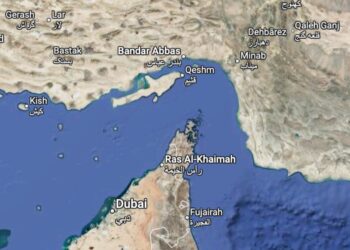
According to gcaptain.com, former U.S. President Donald Trump announced on Monday, July 13, 2026, the reinstatement of a U.S.-led blockade targeting Iranian shipping and proposed a 20% fee on all cargo transiting the Strait of Hormuz — a move that would assert unprecedented U.S. administrative control over the world’s most critical maritime oil chokepoint.
Military Escalation Precedes Policy Shift
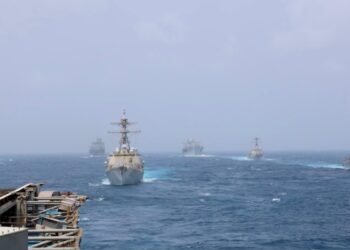
The announcement follows four consecutive waves of U.S. military strikes against Iranian targets in the Persian Gulf region, culminating in Sunday’s operation conducted by U.S. Central Command (CENTCOM). That strike targeted Iranian air defense systems, coastal radar sites, missile and drone capabilities, and Islamic Revolutionary Guard Corps small boats — marking the first reported combat use of U.S. one-way attack sea drones alongside aircraft, naval vessels, and aerial drones.
The latest escalation occurred less than a day after the Cyprus-flagged container ship GFS Galaxy was struck by a projectile east of Oman on Sunday, July 12, 2026, resulting in one crewmember missing and the abandonment of the vessel. This incident effectively ended the June memorandum of understanding that had briefly halted hostilities and reopened the Strait of Hormuz to commercial traffic.
Unilateral Governance Claim
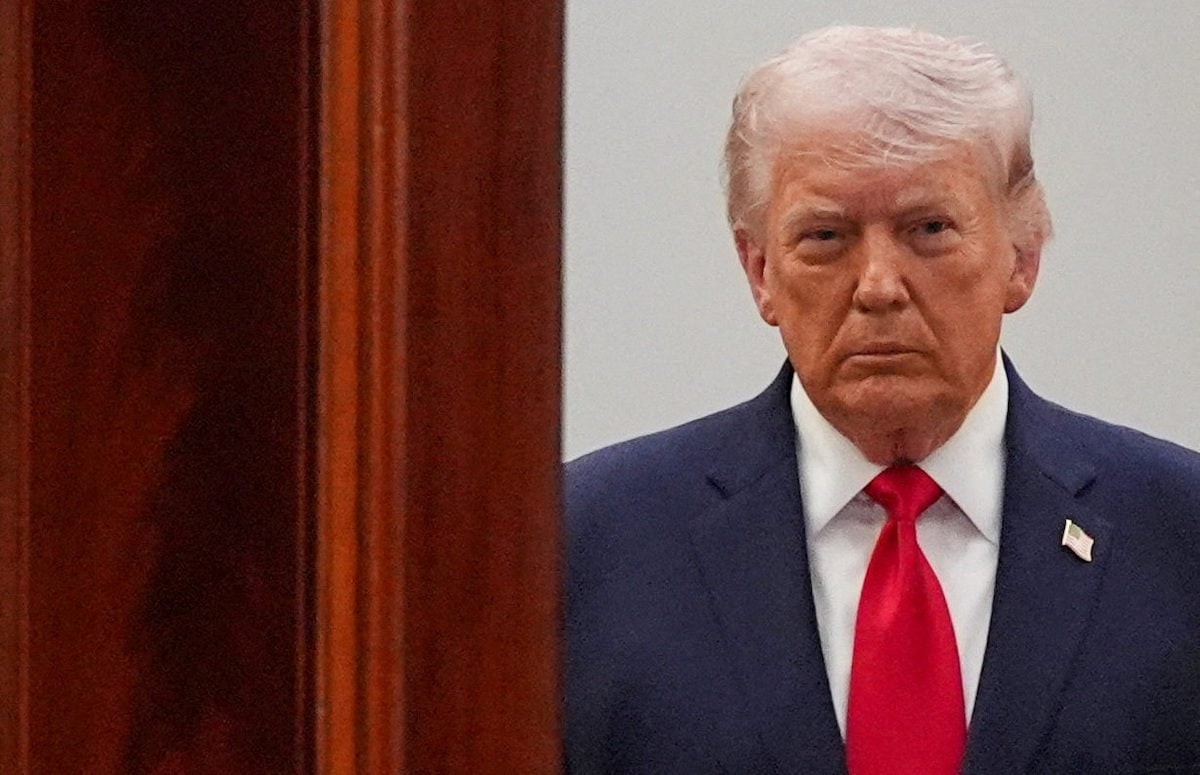
In a Truth Social post dated Monday, July 13, 2026, Trump declared:
“The U.S.A. will be, from this point forward, known as ‘THE GUARDIAN OF THE HORMUZ STRAIT,’ but as such, and as a matter of FAIRNESS, will be reimbursed, at the rate of 20% on all cargo shipped, for any and all costs necessary to do the job of providing safety and security to this very volatile section of the World.” — Donald Trump, former U.S. President
He added:
“We are reinstating the THE IRANIAN BLOCKADE, so named because it is only stopping Iran’s ships or customers from entering or leaving. All other countries will have fair and open use of the Strait.” — Donald Trump
Trump also stated the Strait of Hormuz “is OPEN, and will remain OPEN, with or without Iran,” directly countering Iran’s Persian Gulf Strait Authority (PGSA), which on the same day announced passage through the waterway was “currently unfeasible” and suspended processing of transit permit applications until stability returned.
Legal and Operational Uncertainty
The Strait of Hormuz carries roughly one-fifth of global oil consumption and remains the world’s most important maritime oil transit route. Under the United Nations Convention on the Law of the Sea (UNCLOS), ships of all nations enjoy the right of transit passage through international straits — though the United States is not a party to UNCLOS while recognizing many of its navigational provisions as customary international law.
As of July 13, 2026, the White House has not released an executive order, legal framework, or guidance for shipowners, cargo interests, insurers, or port authorities. It remains unclear how the 20% cargo reimbursement mechanism would be assessed or collected, nor how the blockade would be enforced beyond existing sanctions enforcement infrastructure. The policy declaration stands without operational implementation details.
According to the report, gCaptain’s audience includes 104,674 maritime professionals who rely on daily briefings for operational intelligence — underscoring the immediate relevance of these developments to global shipping stakeholders.
Industry Response and Precedent
The International Maritime Organization’s Council adopted a resolution just hours before Trump’s announcement reaffirming freedom of navigation through international straits and condemning attacks on commercial vessels — a direct counterpoint to unilateral claims of jurisdiction. The IMO resolution called for unhindered transit through the Strait of Hormuz and emphasized adherence to internationally recognized navigational rights.
This divergence highlights growing friction between multilateral maritime governance norms and unilateral assertions of control. While no other major maritime power has publicly endorsed the U.S. proposal, the July 13, 2026 announcement represents the most explicit attempt by a single nation to monetize security provision in a globally vital waterway since the 1987–1988 U.S. Operation Earnest Will — when U.S. naval forces escorted Kuwaiti tankers during the Iran-Iraq War.
Source: gcaptain.com
Compiled from international media by the SCI.AI editorial team.