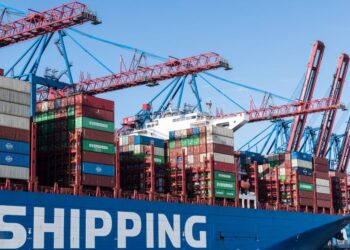
According to www.ad-hoc-news.de, Maersk stock mirrors the structural reset in global container shipping as pandemic-era freight rate surges give way to a more stable, competitive environment shaped by trade normalization and supply chain diversification.
From freight boom to market normalization
A.P. Moller – Maersk A/S posted exceptionally strong financial results during the peak years of the pandemic-driven logistics boom — driven by unprecedented freight rate spikes and port congestion — but those conditions have now receded. As bottlenecks eased and new shipping capacity entered the market, freight rates gradually retreated, and container volumes began aligning more closely with historical patterns. This shift reduced the extraordinary profitability that defined 2021 and 2022, moving Maersk into a post-boom phase where investor expectations hinge on volume stability, cost discipline, and operational efficiency rather than one-off rate volatility.
For investors, the transition means less focus on short-term spot-rate fluctuations and more scrutiny on how effectively Maersk manages its cost base, optimizes fleet utilization, and integrates ocean transport with end-to-end logistics services. According to the report, this recalibration is already reflected in share price behavior, which now tracks underlying business performance more tightly than macro freight index swings.
Integrated logistics strategy accelerates
In response to the normalized freight market, Maersk has intensified its pivot toward becoming an integrated logistics partner — expanding beyond ocean carriage into landside logistics, warehousing, fulfillment, and digital supply chain management. The goal is to reduce dependence on volatile spot freight rates and anchor revenue in multi-year contracts tied to service-level agreements and performance metrics.
This strategy targets steady revenue streams and deeper client relationships: cargo owners increasingly prioritize resilience and geographic diversification, and Maersk’s logistics offerings — including its FreightForwarding and Logistics & Services divisions — are designed to meet that demand. According to the source, growth in these segments must outpace the traditional container shipping core to sustain earnings stability through market cycles.
Cost discipline and fleet optimization
Container shipping remains capital-intensive, and Maersk faces ongoing challenges in aligning its vessel fleet, fuel consumption, and route network with current demand while maintaining service reliability. Decisions about ordering, scrapping, or refitting vessels affect both future capacity and the cost base for years, making fleet planning a critical margin protection lever amid softening freight rates.
Investors now track initiatives such as port call optimization, reduction of idle time, and coordinated scheduling to limit empty sailings and repositioning costs. Even incremental gains — like cutting terminal turnaround times by 15% or reducing vessel idle hours by 8% — meaningfully influence profitability when large portions of operating costs are fixed or semi-fixed in the short term.
Decarbonization as cost and differentiator
Maersk has publicly committed to net-zero greenhouse gas emissions by 2040 and is among the industry’s leading adopters of methanol-ready vessels. As of 2026, the company has ordered over 25 dual-fuel container ships capable of running on green methanol — representing a multi-billion-dollar capital commitment.
This decarbonization pathway involves not only vessel investments but also fuel partnerships, port infrastructure upgrades, and digital tools for emissions monitoring across its network. While near-term capital expenditures and alternative fuel premiums raise operating costs, early-mover status may yield premium contracts and stronger alignment with sustainability-focused shippers — a strategic advantage as regulators intensify pressure on Scope 3 emissions reporting and compliance.
Global trade exposure intensifies volatility
Maersk’s financial performance remains tightly coupled to world trade flows, with container volumes influenced by manufacturing activity, consumer demand, inventory cycles, and trade policy shifts across North America, Europe, and Asia. Supply chain diversification, nearshoring trends, and changes in trade agreements — such as tariff adjustments or sanctions — directly affect regional volume balances and route profitability.
The company’s ocean-heavy revenue mix makes it more sensitive to global manufacturing purchasing managers’ indices and import inventory levels than domestic-focused transport peers. Compared with North American railroads or parcel carriers — whose revenues correlate more closely with e-commerce or industrial production — Maersk’s earnings cycle is uniquely exposed to international trade dynamics, amplifying both upturns and downturns in its financial results and share price sentiment.
Source: ad-hoc-news.de
Compiled from international media by the SCI.AI editorial team.