According to wwd.com, a DP World survey of 292 China-based logistics and supply chain executives found that 38% are prioritizing nearshoring and 36% are focusing on friendshoring — sourcing from geopolitical allies — in response to global trade disruptions and heightened policy uncertainty.
Diversification as Resilience Strategy
The report, part of DP World’s Global Trade Observatory for 2026, reveals that 58% of surveyed Chinese executives plan to expand their sourcing portfolios into new markets and increase their total number of suppliers this year. This reflects a deliberate pivot from concentration toward redundancy: more suppliers, more transport corridors, and more regional flexibility. As analysts noted, “Businesses in China are using logistics networks to build a more layered approach to resilience: more suppliers, more route options, more regional flexibility and more ability to shift as rules, costs and demand change.”
That strategic layering is reinforced by inventory decisions: 32% identified increasing inventory levels as a key initiative. Meanwhile, 43% reported growing demand from new markets and consumers — underscoring that diversification is not only defensive but growth-oriented.
Drivers Behind the Shift
ESG compliance, AI-driven operational evolution, and the pursuit of agility emerged as the strongest drivers behind these shifts — ahead of tariffs or trade policies alone. Glen Hilton, CEO and managing director for Asia Pacific at DP World, emphasized this evolution: “China’s next trade advantage will come from resilience and adaptability, not just scale. Chinese companies are already diversifying suppliers, entering new corridors and investing in digital systems and AI.”
The data confirms this technological emphasis: 44% of executives cited digitalization as critical to achieving growth targets in 2026. Another 43% pointed to new market access, and 34% named new value chains as leading growth levers — a clear signal that resilience strategy has shifted “from absorbing disruption to outpacing it,” per the report.
Confidence Amid Uncertainty
Globally, DP World’s survey of 3,500 supply chain leaders showed 94% confidence that trade would grow or match 2025 levels despite obstacles. Yet 53% expected high policy uncertainty, and 90% anticipated rising trade barriers such as tariffs. In that context, 37% called government support for free trade agreements “imperative” to unlocking open market access — while every single executive ranked customs procedures among their top three sources of delay, with 60% identifying it as the No. 1 cause.
Chinese executives displayed calibrated optimism: 43% were positive about accelerated trade and growth prospects in 2026, and 50% expected pace to remain flat versus 2025. Notably, they were the most confident cohort globally in navigating trade barriers — 35% expected tariff or policy changes, and only 26% anticipated negative impacts. Analysts attributed this to “China’s successful pivot to more diversified export markets.”
Operational Realities on the Ground
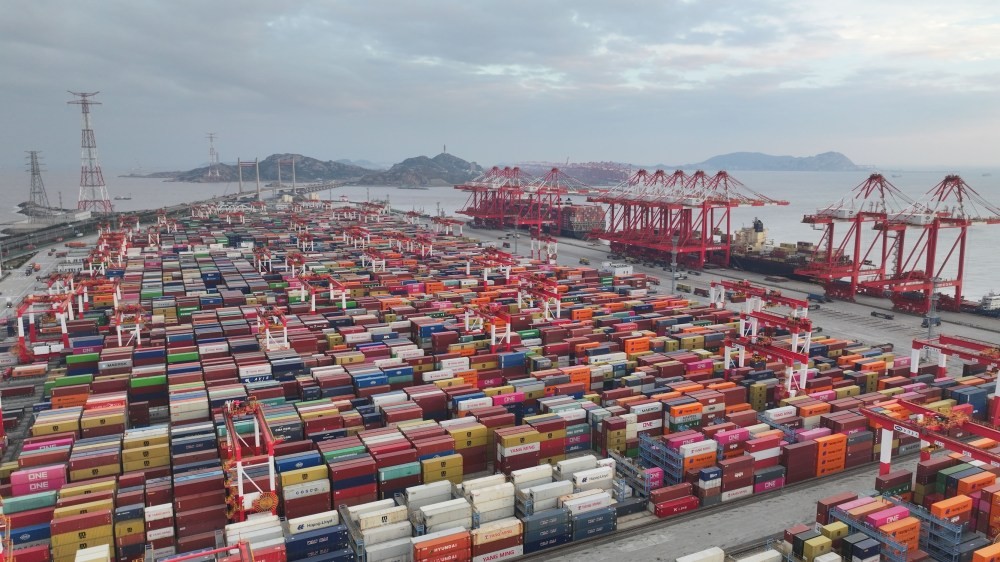
These macro trends translate directly into daily operations. For instance, Shanghai Port — one of the world’s busiest container hubs — serves as both a barometer and a node for recalibration. With over 47 million TEUs handled annually (per 2025 port authority data), its congestion patterns, customs clearance times, and multimodal connectivity now feed directly into nearshoring feasibility assessments across ASEAN, India, and Mexico. While the article does not cite specific port throughput figures, industry benchmarks confirm Shanghai’s role as the anchor point for many of the corridor expansions referenced — including new rail links to Central Asia and sea-air hybrid routes to Latin America.
Practitioners report that nearshoring initiatives often target Vietnam, Thailand, and Malaysia for apparel and electronics assembly, while friendshoring efforts increasingly involve partnerships with firms in Poland, Türkiye, and the UAE — all countries with which China has deepened bilateral trade agreements since 2023. These moves align with broader industry behavior: Maersk and COSCO have jointly expanded trans-Asian feeder services by 22% since Q4 2025, and JD Logistics launched three new AI-optimized inland distribution hubs in Southwest China during Q1 2026.
Source: wwd.com
Compiled from international media by the SCI.AI editorial team.