A peace deal in the Persian Gulf could signal a return of global shipping to the Suez Canal.
Structural shift to trans-Suez routing
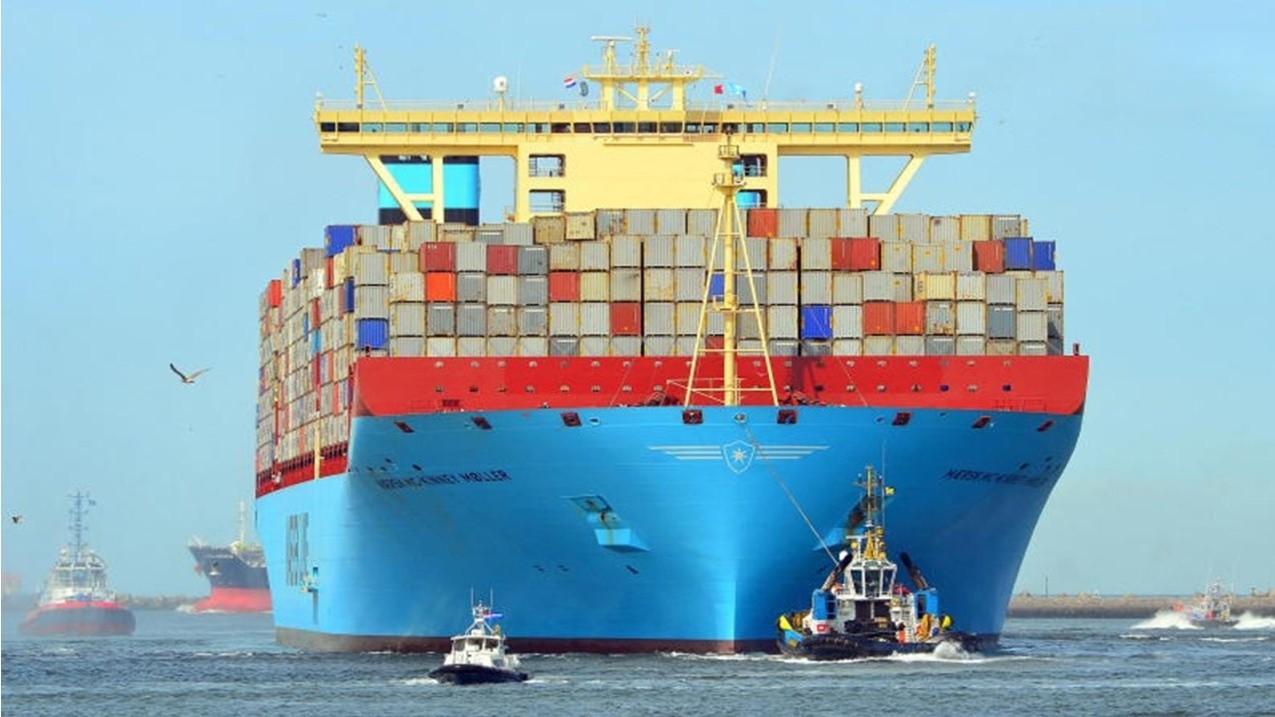
The world’s second-largest shipping line is once again making a tentative return to one of the world’s busiest trade routes. Maersk announced Monday that one of its Gemini services with Hapag-Lloyd will return to the Suez Canal. The structural change will see the AE15 service sailing via the trans-Suez route instead of the longer Cape of Good Hope voyage around the tip of Africa. The first sailing will be the Majestic Maersk from Port Said on July 24.
“This joint decision with Hapag-Lloyd comes following thorough assessments of the security situation in the Red Sea area, and marks a step towards a gradual return to the trans-Suez corridor,” Maersk (OTC: AMKBY) said in the announcement.
Security context and regional tensions
Global container and tanker lines had diverted away from the Red Sea since late 2023, when Yemen-based Houthi militia began attacking merchant shipping in support of Gaza. Maersk earlier this year made test voyages through the Suez only to quickly withdraw after hostilities flared in the region. The tentative peace amid ongoing negotiations between the United States and Iran have mostly settled hostilities in the Strait of Hormuz, though vessel traffic through the narrow waterway guarding the Persian Gulf remains sparse.
Maersk’s re-return comes less than a month after the Houthi warned of more attacks on Red Sea shipping they claim are linked to Israel. Late last week the Houthis warned Saudi Arabia that it would face a “comprehensive response” if it repeated what the group described as airspace violations. The Houthis said Saudi warplanes tried to stop an Iranian civilian aircraft from landing at Sanaa International Airport, and they threatened Saudi airports and other “vital interests” on land and sea.
Economic impact on the Suez Canal
The diversions have come at a dire price for the Suez Canal, which accounts for approximately 15% of Egypt’s total revenue. Toll revenue fell as much as 40%, from $47 million to $28 million, in 2024, as container tolls dropped 66%, and vessel transits through the canal fell by about 38%.
Broader carrier activity on the route
Elsewhere, French liner CMA CGM has expanded deployment on the Suez, operating five additional eastbound French Asia Line (FAL) 3 sailings in June connecting Asia and North Europe alongside several other services that already transit the waterway. Wan Hai of Taiwan remains the only other major carrier regularly using the route.
A total of 780 vessels with a combined capacity of 11.3 million twenty foot equivalent units (TEUs) continue to be routed via the Cape of Good Hope, according to Linerlytica. A full return would free an estimated 120 ships, or 1.7 million TEUs of capacity — about 5% of the global fleet.
Service configuration and operational priorities
The AE15 connecting Asia, the Mediterranean and Europe, will have a rotation of Qingdao, Kwangyang, Ningbo, Tanjung Pelepas, Port Said, Damietta, Colombo, and Singapore.
“The route through the Suez and the Red Sea is the fastest, most sustainable and most efficient way to serve customers with transport between Asia and Europe,” said Maersk. “By making this structural change to the AE15 service, where it will transition it to the trans-Suez corridor instead of sailing around the Cape of Good Hope, we will offer more efficient transit times for customers.”
The carriers said that they will continue to monitor the security situation in the Middle East region closely, with Gemini services dependent on the ongoing stability in the Red Sea area and the absence of any escalation in conflicts in the region. “The safety of the crew, the vessels, and customers’ cargo remains the highest priority,” they said.
Read more articles by Stuart Chirls here.
Read more:
- Former FMC chief Sola to lead Thorn Run LatAm business team
- Hormuz in the rearview as Asia-US ocean container rates soar past $7,900
- FedEx sells supply chain unit to CMA CGM for $1.4B
- Wartime economy: Maersk lifts full-year guidance on strong demand
- Containers lost at sea nearly tripled in 2025
Source: FreightWaves
Compiled from international media by the SCI.AI editorial team.