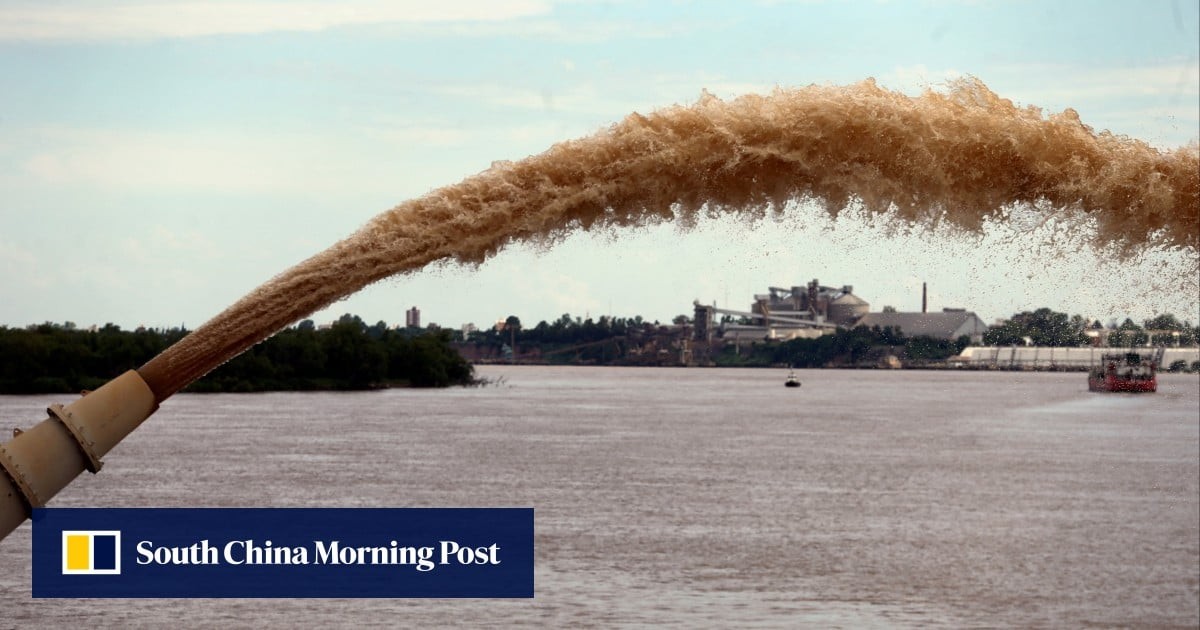
According to www.scmp.com, US House Foreign Affairs Committee Chairman Brian Mast sent a letter dated April 23, 2026 to US Secretary of State Marco Rubio raising concerns about potential Chinese state influence in Argentina’s pending 25-year contract to dredge and operate the Parana River — a waterway handling most of Argentina’s agricultural exports.
Contract Scope and Financial Scale
Argentina estimates the total investment required for the Parana River dredging and operations concession at US$10 billion. The tender is in its final phase, with a decision expected in the coming days, per Reuters reporting cited by SCMP. Although the tender’s official terms explicitly bar state-owned companies from bidding — a provision designed to limit direct PRC involvement — Mast alleges China is attempting to “circumvent that choice through a private sector proxy.”
Consortium Structure and Alleged Links
The letter identifies Belgian firm Jan De Nul as the leading bidder under the tender’s point-score system. Jan De Nul has managed the Parana waterway for decades. Its consortium includes Argentine firm Servimagnus, which Mast’s letter claims “maintains deep and ongoing links to PRC state-owned entities.” No specific PRC entity names or transaction values are cited in the source, but the linkage is asserted as a basis for “serious concern.”
Competing Bidders and US Industry Involvement
Jan De Nul competes against the Deme Group, whose consortium includes US-based Great Lakes Dredge & Dock Corporation and investment firm KKR & Co. This transatlantic bid reflects heightened US strategic interest: the Trump administration remains a close ally of Argentine President Javier Milei, and US officials have repeatedly flagged Beijing’s growing regional footprint. In March 2026, China was Argentina’s second-largest trading partner.
Geopolitical Context and Supply Chain Implications
The Parana River carries over 80% of Argentina’s grain exports — primarily soy, corn, and wheat — making it a critical node in global agri-supply chains. Disruption or foreign-controlled operational leverage on this corridor could affect shipping lead times, insurance costs, and port throughput for US and EU importers. According to industry data from the International Grain Council, Argentina accounts for 17% of global soybean exports and 12% of world corn shipments (2025–26 forecast). Jan De Nul’s decades-long incumbency underscores the technical complexity and capital intensity of maintaining navigable depth across the river’s 3,400-kilometer length — a factor that may explain why only two consortia advanced to the final stage.
Source: South China Morning Post
Compiled from international media by the SCI.AI editorial team.