Skip to content

Strategy & Planning · Supply Chain · Warehousing & Transport

How DSV Grew Into the World’s Largest Logistics Company

DSV to Become the World's Largest Logistics Company by Agreeing to Acquire Schenker for €14.3 Billion

Original source: Source information pending

How DSV Grew Into the World’s Largest Logistics Company

Ask SCI.AI about this story

📋 本文要点

DSV to Become the World's Largest Logistics Company by Agreeing to Acquire Schenker for €14.3 Billion

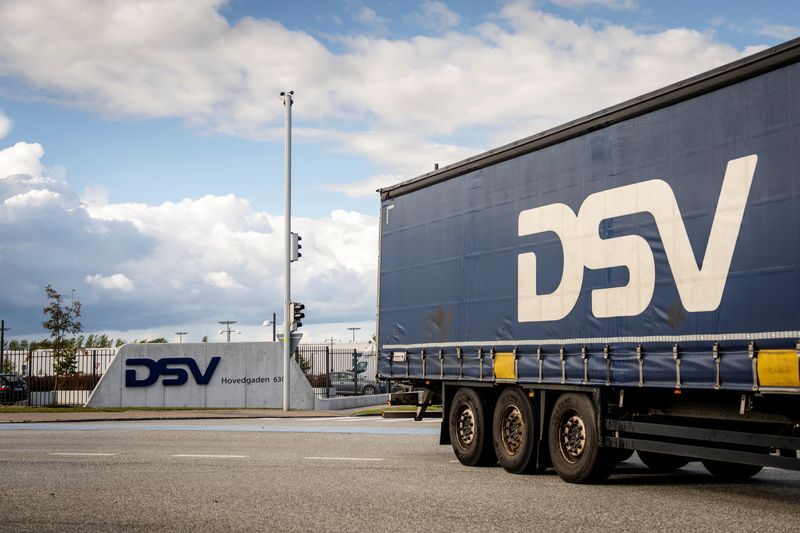
Copenhagen (Reuters) – DSV is set to become the world’s largest logistics company by acquiring Schenker, the logistics division of German state-owned railway operator Deutsche Bahn, for €14.3 billion ($15.85 billion).

DSV, a logistics firm that started as a small business founded in 1976 by ten truck drivers, has rapidly grown through a series of successful acquisitions in the competitive logistics market – some of which were even larger than the company itself.

What is DSV?

DSV began with ten truck drivers in 1976 and now employs over 75,000 people. Post-merger with Schenker, the company will have 147,000 employees and a revenue of 293 billion Danish Kroner (approximately $43.52 billion) based on 2023 performance, surpassing Danish pharmaceutical giant Novo Nordisk.

DSV handles everything from transporting single pallets to managing entire supply chains for multinational corporations.

The company was founded by Leif Tullberg and nine other independent truck drivers who saw a market opportunity as intermediaries in the shipping industry, helping businesses transport goods worldwide with minimal commission. The business operates on a light asset model without owning ships, planes, or trucks itself.

What Market Share Will the Expanded Company Have?

DSV states that its acquisition of Schenker will create the world’s largest logistics company, surpassing Germany’s DHL and Switzerland’s Kuehne + Nagel in size and revenue. However, the group only holds a 6% to 7% market share in the highly fragmented global logistics market.

It is estimated that the top 20 global logistics companies account for 30-40% of the global market share, with the rest held by local and regional firms.

Research firm Technavio predicts that the global third-party logistics (3PL) market will grow by over $500 billion from 2023 to 2027, driven primarily by e-commerce and integrated transport services.

How Has DSV Grown?

In recent years, DSV has expanded through several acquisitions, including the purchase of US company UTi for $1.35 billion in 2016, Swiss Panalpina for $4.6 billion in 2019, and Kuwait’s Global Integrated Logistics (GIL) for $4.2 billion in 2021.

(Reporting by Jacob Gronholt-Pedersen; Editing by Matt Scuffham and Tomasz Janowski)


Source: Yahoo Finance

Ask SCI.AI Finished reading? Continue with SCI.AI. Explore the related policy, route, company and historical context. Continue asking
Stay ahead of supply chain shifts

One email a week: the stories that matter and new risk events — in English, free.

Prefer RSS? Articles Risk events

North American robot orders hit highest level since 2022 boom
Strategy & Planning

North American robot orders hit highest level since 2022 boom

North American robot orders climbed to their highest level since the 2022 boom and continued that trend into 2026, according to Association for Advancing Automation data reported by DC Velocity. Strong demand from semiconductor and electronics, pharmaceutical, and food and beverage industries offset declining automotive orders in the first half of 2026, with shipments up 21% and 24% year over year. Rocrich AGV, a joint venture of Logisnext Americas and Jungheinrich, supplies automated guided vehicles for warehouse automation. Shifting trade policies and a warehouse labor shortage intensified by tightened immigration policies are pushing more companies toward automation, while falling costs are making the technology accessible to small and medium-sized players.

Xeneta: Asia-US West Coast spot rates jump 343% on Iran war
Warehousing & Transport

Xeneta: Asia-US West Coast spot rates jump 343% on Iran war

Asia-U.S. West Coast container spot rates were 343% above their February 28 level in October, just 14% below the pandemic-era record, according to freight-rate intelligence provider Xeneta. The company forecasts a 5% decline in long-term contract rates for 2027, with the global container fleet expected to grow 6.8% while demand rises between 2.5% and 4%. Xeneta chief analyst Peter Sand traces the volatility to the Red Sea conflict in 2024, U.S. tariffs in 2025 and the Strait of Hormuz closure in 2026, and warns that fuel costs and route disruptions could still upend the outlook.

AI hardware demand lifts air cargo rates 30% year over year
Warehousing & Transport

AI hardware demand lifts air cargo rates 30% year over year

Air cargo rates are up 30% year over year and volumes have grown about 6%, according to FreightWaves, as surging AI equipment demand offsets slower e-commerce and automotive flows. The strength has defied forecasts of a 2025 softening after a down 2024. Meanwhile, Walmart is deploying Wing and Zipline drones across nearly 300 stores; Zipline raised $1.5 billion and Wing plans a $125 million Texas factory ahead of anticipated FAA beyond-line-of-sight rules.

Welcome Back!

Login to your account below

Create New Account!

Fill the forms below to register

Retrieve your password

Please enter your username or email address to reset your password.

Scan to share via WeChat

Open WeChat and scan the QR code to share

QR Code

Add New Playlist