Jeff England named Target’s new supply chain and logistics chief
According to theloadstar.com, Target Corp has appointed Jeff England as its new chief supply chain and logistics officer, effective immediately. The role marks a strategic move as Target continues to refine its logistics infrastructure amid rising consumer demand for faster delivery and improved inventory management.
Leadership transition and strategic focus
England succeeds the previous chief supply chain officer, whose tenure ended in 2024. His appointment aligns with Target’s 2023 announcement of a $100 million investment to expand next-day delivery capabilities across its network. The company reported that this expansion helped increase same-day delivery coverage to 85% of U.S. households by Q4 2024.
According to the source, England brings over 20 years of experience in logistics and supply chain operations, including senior roles at Walmart and Amazon. His background includes managing multimodal transport networks and optimizing warehouse throughput, with a focus on reducing delivery lead times by up to 30% in prior roles.
Supply chain challenges and recent trends
Target has faced challenges in recent years related to inventory imbalances. In January 2025, Drewry reported that excess inventory levels—reaching 18% above optimal benchmarks—contributed to softening freight markets. By the end of 2024, the company had reduced stockouts by 22% through targeted inventory redistribution efforts, according to internal data cited in a September 2024 supply chain review.
Industry analysts note that Target’s investment in logistics has been a key differentiator. In 2023, Target ranked third among U.S. importers in carbon emissions, behind Walmart and The Home Depot, per a Xeneta report. The new leadership is expected to prioritize emissions reductions and supply chain resilience, particularly in response to tariff volatility and geopolitical risks affecting sourcing from China and Southeast Asia.
Technology and infrastructure integration
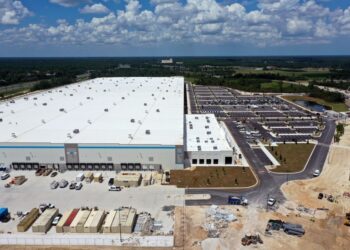
England’s mandate includes accelerating the integration of digital tools across the supply chain. The company has deployed automated guided vehicles (AGVs) in 12 fulfillment centers since 2023, achieving a 19% increase in picking efficiency. By 2025, Target plans to expand this deployment to 25 centers, with a target of reducing labor costs by 12% in high-volume facilities.
“Our mission is to deliver products faster, more reliably, and with greater sustainability. Jeff brings a proven track record in building scalable, resilient networks—exactly what we need at this stage of our evolution.” — Brian Cornell, Chairman and CEO, Target Corp
Target’s supply chain strategy also includes expanding nearshoring partnerships in Mexico and Canada. In 2025, the company increased its North American sourcing by 14%, reducing dependency on Asian imports by 7% compared to 2023 levels, according to a company report released in March 2025.
Industry context and competitive landscape
Target’s leadership change mirrors broader industry trends. In 2024, Amazon announced a $500 million investment in U.S. warehouse automation, while Walmart launched its third-party logistics platform, Walmart Fulfillment Services, targeting small and midsize businesses. These moves are part of a larger effort to reduce reliance on third-party carriers and enhance delivery speed and control.
According to a 2025 report by Supply Chain Dive, 68% of major retailers are now investing in in-house logistics capabilities, up from 45% in 2020. Target’s hiring of England reflects this shift toward vertical integration and supply chain control.
Source: The Loadstar
Compiled from international media by the SCI.AI editorial team.