The Strategic Chokepoint Crisis: From Red Sea to Taiwan Strait
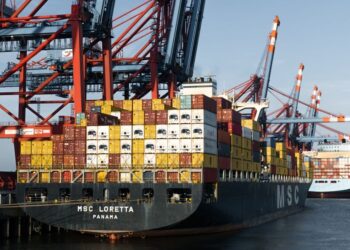
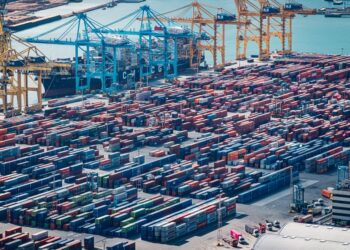
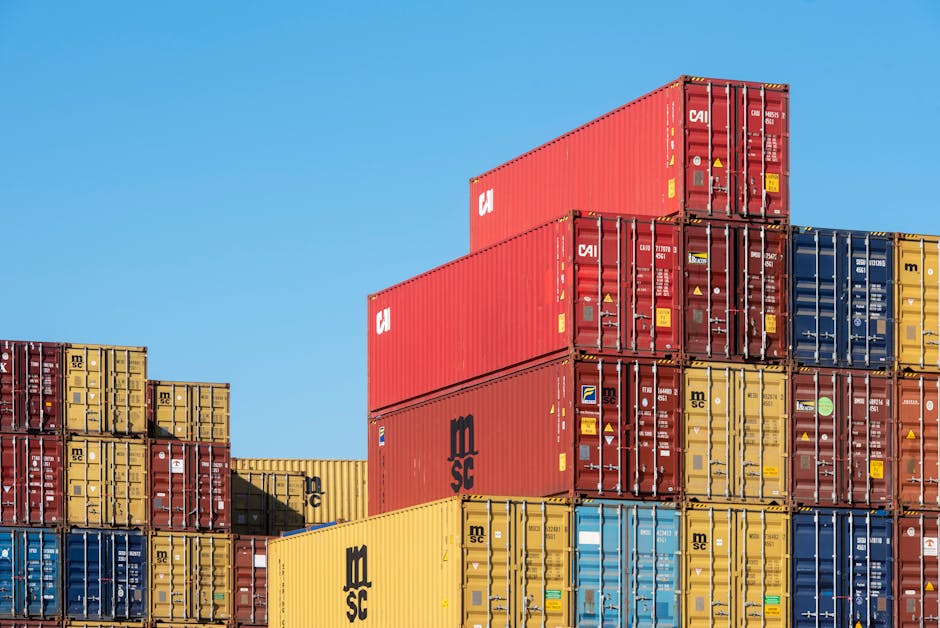
The global technology supply chain no longer faces isolated vulnerabilities—it confronts a cascading architecture of strategic chokepoints where geography, sovereignty, and infrastructure converge with alarming fragility. The Bab el-Mandeb Strait and Red Sea corridor—through which 12% of all international trade passes—has evolved from a logistical artery into a geopolitical fault line. Since late 2023, Houthi-led attacks, naval interdictions, and insurance market collapse have forced over 60% of container vessels bound for Northern Europe and North America to reroute around the Cape of Good Hope. This detour adds 10–14 days to transit times and inflates fuel consumption by 35–40%, directly raising landed costs for memory modules, server chassis, and AI accelerators destined for data centers in Frankfurt, Amsterdam, and Ashburn. Crucially, this is not a temporary disruption but a structural recalibration: major carriers like Maersk and MSC now treat Red Sea passage as ‘high-risk exception’ rather than standard routing, embedding contingency premiums into long-term contracts. The deeper implication lies in the asymmetry of impact—while Western tech firms absorb incremental cost increases, Asian electronics exporters (particularly Vietnamese and Malaysian EMS providers) face margin compression on just-in-time components, triggering inventory hoarding and secondary price inflation across Tier-2 PCB assemblies.
This maritime instability pales beside the existential vulnerability concentrated in the Taiwan Strait. Taiwan controls 92% of global advanced chip production capacity, with TSMC alone commanding 64% of the smart chip manufacturing market—a dominance rooted not merely in scale but in unmatched process control at sub-3nm nodes, proprietary defect mitigation protocols, and decades-deep tacit knowledge embedded in its workforce. Unlike commodity semiconductors, advanced logic chips cannot be substituted or rapidly requalified; a six-month fabrication interruption would halt production of next-generation AI training clusters, 5G baseband modems, and autonomous vehicle SoCs globally. Goldman Sachs’ October 2025 stress modeling confirms that even a partial blockade scenario—not full-scale conflict—would trigger a 2.8% contraction in global GDP within the first year, driven by cascading failures in automotive telematics, cloud infrastructure provisioning, and defense electronics maintenance cycles. What makes this uniquely destabilizing is the absence of viable near-term alternatives: Intel’s Ohio fabs remain two years from volume 3nm output, Samsung’s Pyeongtaek expansion faces yield challenges above 2.5nm, and China’s SMIC lags by three generations in EUV-integrated logic. The crisis is thus not about scarcity per se, but about the irreplaceable convergence of human capital, metrology precision, and ecosystem integration that defines cutting-edge semiconductor sovereignty.
Yet the most underappreciated dimension is temporal arbitrage—the growing mismatch between investment horizons and crisis timelines. Governments pledge $52 billion in CHIPS Act subsidies, the EU allocates €43 billion under the European Chips Act, and Japan commits ¥6 trillion—but none address the 7–10-year gestation period required to train a new generation of cleanroom engineers, calibrate extreme ultraviolet lithography tools, and qualify materials across thousands of wafer lots. Meanwhile, geopolitical friction compresses decision windows: export license reviews now take 14–18 months instead of 90 days, forcing multinationals to pre-emptively dual-source substrates or abandon high-margin custom ASIC designs. This creates a perverse incentive structure where resilience is priced out of competitiveness—firms that prioritize redundancy sacrifice R&D velocity, while those optimizing for speed become single-point failure targets. The result is not diversification but fragmentation: regionalized supply chains optimized for political compliance rather than technical efficiency, accelerating the balkanization of digital infrastructure standards and interoperability protocols.
Rare Earths and Critical Metals: The Silent Monopoly Beneath Every Circuit Board
Beneath the glossy surface of smartphones, electric vehicles, and quantum computing prototypes lies a subterranean economy governed by elemental scarcity and geopolitical asymmetry. China controls 70% of rare metals and global processing capacity, a dominance cemented not through resource endowment alone but via deliberate industrial policy spanning four decades. While Australia and the Democratic Republic of Congo hold significant raw ore deposits, China’s mastery lies in refining: 92% of rare earth metal refining and 98% of critical magnet production globally occurs within its borders, according to Goldman Sachs’ October 2025 assessment. This is no accident—it reflects systematic suppression of environmental regulations, state-subsidized energy inputs, and vertical integration from mine-to-magnet that no Western competitor can replicate without violating ESG covenants or fiscal discipline. When Beijing imposed tightened export controls in October 2025—targeting dysprosium, terbium, and neodymium—global manufacturers faced immediate bottlenecks in permanent magnet motors for EVs, wind turbine generators, and MRI scanners. The shockwave was not in absolute volume reduction but in certification latency: replacing a Chinese-sourced NdFeB magnet requires 18–24 months of requalification across aerospace, medical, and defense applications due to stringent material traceability and thermal stability testing mandates.
The implications extend far beyond magnets. Consider neon gas—a seemingly trivial industrial byproduct essential for deep-ultraviolet photolithography lasers. Russia and Ukraine provide over 85% of global semiconductor-grade neon, alongside disproportionate shares of palladium (used in catalytic converters and hard drives), germanium (in infrared optics and fiber amplifiers), and cobalt (for lithium-ion cathodes). The 2022 invasion triggered a 700% price spike in neon, exposing how ‘non-strategic’ commodities become mission-critical when concentrated in conflict zones. Similarly, the top three producing countries control 86% of the global market for copper, lithium, cobalt, and rare earths, creating systemic fragility where labor strikes in Chilean copper mines or water shortages in Atacama lithium brine operations ripple through battery gigafactories in Sweden and semiconductor packaging plants in Malaysia. What distinguishes this from historical commodity volatility is the zero-substitution reality: there is no commercially viable alternative to cobalt in NMC811 cathodes at scale, no scalable replacement for gallium arsenide in 5G RF front-end modules, and no near-term substitute for silicon carbide in high-voltage EV inverters. This transforms supply chain risk from operational contingency into technological determinism—where innovation roadmaps are dictated not by physics breakthroughs but by mining concession renewals and customs clearance delays.
Attempts to de-risk through ‘friend-shoring’ reveal profound geological and economic constraints. The U.S. Geological Survey identifies only 14 economically viable rare earth deposits outside China, with just three—Mount Weld (Australia), Lynas’ Kalgoorlie facility, and MP Materials’ Mountain Pass operation—currently operational. Yet even these require shipping concentrates to China for final separation, as Western refineries lack the regulatory approvals and specialized corrosion-resistant metallurgical infrastructure. Developing independent supply chains outside China takes 8–10 years, not because of capital scarcity—over $12 billion has been committed to North American and European critical mineral projects—but due to permitting timelines averaging 7.3 years in the EU and 9.1 years in the U.S., compounded by skilled labor deficits in hydrometallurgy and solvent extraction engineering. Consequently, the current ‘diversification’ trend is largely illusory: it shifts dependency from Beijing to Perth, Oslo, or Toronto while preserving the same concentration risk—just with higher logistics costs and lower technical readiness. The real bottleneck is not ore but oxide; not mining but molecular separation; not geology but governance.
Climate-Induced Infrastructure Failure: When Weather Becomes a Supply Chain Weapon
Climate change has ceased to be a distant environmental concern and emerged as an active, asymmetric disruptor of industrial continuity—particularly for technology supply chains predicated on hyper-precision, ultra-low contamination, and uninterrupted power. Semiconductor fabrication facilities (fabs) demand continuous 24/7 power with voltage fluctuations under ±0.5%, temperature stability within ±0.1°C, and airborne particulate counts below 10 particles per cubic foot. These requirements make them exquisitely vulnerable to climate-driven infrastructure stress: in July 2024, a heatwave-induced grid collapse in Taiwan caused TSMC’s Hsinchu campus to lose cleanroom cooling for 117 minutes—resulting in $420 million in wafer scrap and delaying Apple’s A18 chip tape-outs by eight weeks. Similarly, drought conditions in Sichuan province forced the shutdown of 1,500 electronics component factories in Q3 2025 due to hydropower shortfalls, disrupting capacitor and connector supplies for Dell and Lenovo. These are not anomalies but harbingers: the World Economic Forum’s 2025 Global Risk Report identifies ‘climate-related infrastructure failure’ as the second-highest probability/high-impact risk for technology-intensive sectors, surpassing cyberattacks and market volatility.
The deeper vulnerability lies in transportation networks. Copper shortages of 30% by 2030 could disrupt EVs, smart grids, and defense systems, yet copper’s supply chain is itself acutely climate-sensitive. Over 60% of global copper concentrate moves by bulk carrier, requiring deep-water ports with draft capacities exceeding 18 meters. But rising sea levels and intensified cyclonic activity are degrading port infrastructure across Southeast Asia: Port Klang in Malaysia reported 47% more weather-related berthing delays in 2025 versus 2020, while Chennai Port in India suspended operations for 19 days during Cyclone Michaung due to sedimentation from torrential runoff. Simultaneously, inland transport faces compounding risks—Chile’s copper-rich Antofagasta region relies on rail lines crossing the Atacama Desert, where temperatures exceeding 52°C warp rails and melt asphalt roadbeds, causing average freight delays of 3.2 days per month. These micro-disruptions aggregate into macro-consequences: a 2025 MIT study found that climate-induced port congestion increased median lead times for printed circuit board assemblies by 22 days, eroding the economic rationale for just-in-time manufacturing models that underpin 78% of global electronics production.
What distinguishes climate risk from geopolitical or resource risk is its non-negotiable universality—no sanctions regime, trade agreement, or stockpile policy can insulate against atmospheric physics. Yet corporate adaptation remains dangerously superficial. Most tech firms’ climate resilience plans focus on Scope 1 & 2 emissions reduction while neglecting Scope 3 physical risk mapping: fewer than 12% of Fortune 500 tech companies publicly disclose climate vulnerability assessments for Tier-2 and Tier-3 suppliers, despite these tiers accounting for 63% of supply chain carbon intensity and 89% of geographic concentration risk. The consequence is reactive triage rather than anticipatory design: when floods submerged Thailand’s Eastern Seaboard industrial zone in 2025—home to 40% of global HDD assembly capacity—Western cloud providers scrambled to renegotiate SLAs with hyperscalers, while Japanese automakers halted production lines due to missing sensor housings. True resilience demands rethinking foundational assumptions: relocating fabs to cooler latitudes (Iceland, Finland) despite higher labor costs; investing in modular, air-cooled power distribution units; and co-developing predictive meteorological AI with national weather services to forecast port congestion windows 72 hours in advance. Without such systemic rewiring, climate instability will increasingly function as a de facto trade barrier—one enforced not by tariffs but by thermodynamics.
The Tariff Trap: How Trade Policy Accelerates Fragmentation
Trade policy has metastasized from a tool of commercial negotiation into a primary vector of technological decoupling—with consequences far exceeding tariff revenue or short-term protectionism. The U.S. imposition of 25% tariffs on high-performance AI chips—including Nvidia’s H200 and AMD’s MI325X—in January 2026 followed a nine-month interagency review that prioritized national security calculus over economic analysis. While framed as countering China’s military-civil fusion strategy, the rule’s technical scope inadvertently ensnared European and Korean AI startups using these chips in sovereign cloud infrastructure, triggering €2.1 billion in delayed deployments across Germany’s GAIA-X initiative and France’s CEA supercomputing program. More insidiously, the regulation’s ‘performance threshold’ definition—based on interconnect bandwidth and memory bandwidth density—created perverse innovation incentives: chip designers now deliberately cap specifications below regulatory triggers, sacrificing 12–18% computational efficiency to avoid classification. This ‘de-optimization’ phenomenon, documented by the Semiconductor Industry Association in Q2 2026, represents a quiet erosion of Moore’s Law’s economic logic, where legal compliance supersedes physical possibility.
The transatlantic divergence compounds the problem. While the U.S. weaponizes export controls, the EU pursues ‘strategic autonomy’ through regulatory coercion—mandating that all AI chips sold in the bloc meet strict energy efficiency and hardware-level transparency requirements by 2027. These parallel but incompatible frameworks force multinational chipmakers to maintain three distinct product lines: U.S.-compliant, EU-certified, and China-market variants—each requiring separate validation, firmware stacks, and supply chain audits. The resulting complexity inflates R&D costs by 37% and extends time-to-market by 5.8 months on average, according to McKinsey’s 2026 Semiconductor Competitiveness Index. Worse, the regulatory arms race incentivizes ‘regulatory arbitrage’—firms relocating design centers to Singapore or Dubai to exploit jurisdictional gaps, fragmenting global talent pools and diluting technical standards. When China responded to U.S. tariffs with tightened export controls on rare metals in October 2025, it didn’t just restrict materials—it weaponized certification latency, requiring foreign buyers to submit 147-item technical dossiers for approval, with average processing times stretching to 22 weeks. This transforms trade policy from a border instrument into a systemic inhibitor of innovation velocity, where compliance overhead consumes engineering resources that could otherwise advance heterogeneous integration or chiplet architectures.
Perhaps the most corrosive effect is the collapse of shared technical governance. Historically, bodies like JEDEC (memory standards), PCI-SIG (interconnect protocols), and IEEE (semiconductor metrology) provided neutral forums for consensus-building. Today, these organizations face politicized membership withdrawals, funding freezes, and contested voting procedures. In 2025, China’s withdrawal from two key JEDEC working groups on DDR6 memory standards forced a six-month delay in specification finalization, costing the industry an estimated $890 million in postponed product launches. The emerging reality is not competing standards but competing epistemologies—where ‘reliability’ means different things in Shanghai versus San Jose, ‘security’ implies divergent threat models in Berlin versus Beijing, and ‘efficiency’ incorporates conflicting environmental accounting methodologies. This epistemic fragmentation undermines the very premise of interoperable global technology: without shared definitions, measurement protocols, and validation frameworks, supply chains don’t merely diversify—they ossify into mutually incomprehensible ecosystems. The tariff trap, therefore, is not about money—it’s about the irreversible dissolution of the common language that enabled the digital revolution.
The Rail Rift: Logistics as Geopolitical Battleground
When Poland closed its border with Belarus in March 2025—citing security concerns after intercepted sabotage attempts on rail infrastructure—the immediate consequence was the paralysis of China-Europe rail freight, which handles 90% of rail trade between the regions. Within 72 hours, over 1,200 containers sat stranded in Brest, triggering €450 million in direct EU economic losses according to the European Commission’s logistics damage assessment. But the true significance lies beneath the headline figure: this was the first time a land-based corridor—once hailed as the ‘New Silk Road’ alternative to maritime chokepoints—was weaponized as a geopolitical lever. Unlike sea lanes subject to piracy or naval blockades, rail corridors depend on seamless cross-border coordination, standardized signaling systems, and harmonized customs protocols. The Poland-Belarus closure exposed how easily this interdependence becomes vulnerability when political trust evaporates. German automotive suppliers saw delivery times for Chinese-sourced wiring harnesses balloon from 18 to 44 days, forcing BMW to idle two Leipzig production lines for 11 days—a cost of €312 million in lost output and contractual penalties.
The crisis revealed deeper structural flaws in overland logistics strategy. China-Europe rail routes rely on just three primary corridors: the Northern route (via Russia/Belarus), Central route (via Kazakhstan), and Southern route (via Turkey/Iran). After the Northern route’s collapse, shippers rushed to the Central corridor—only to confront Kazakh rail capacity limits (max 1,800 TEUs/month versus demand of 4,200) and Iranian sanctions-related banking restrictions that delayed cargo release by up to 19 days. Crucially, rail freight’s appeal rested on its ‘green premium’—30–40% lower CO₂ emissions than air freight—but this advantage vanished when trains sat idle for weeks awaiting customs clearance or transshipment. A 2025 MIT Center for Transportation & Logistics study found that post-closure, average rail shipment carbon intensity increased by 217% due to extended dwell times and forced trucking legs, undermining the very sustainability rationale that attracted ESG-conscious tech firms. Moreover, the incident shattered the myth of rail as a ‘neutral’ alternative: every kilometer of track is sovereign territory, every customs checkpoint a potential chokepoint, and every signaling upgrade a geopolitical negotiation. As the EU accelerates its Trans-Caspian corridor development, it confronts Azerbaijan’s delicate balancing act between NATO alignment and Russian energy dependence—a reminder that geography cannot be outsourced, only managed.
What emerges is a new taxonomy of logistics risk: not just ‘port congestion’ or ‘carrier bankruptcy’, but ‘corridor sovereignty’. Multinationals now conduct quarterly ‘rail corridor viability assessments’ evaluating not just transit time and cost, but presidential election cycles in transit states, currency reserve levels, and domestic anti-corruption enforcement trends. For semiconductor equipment makers like ASML and Lam Research, whose vacuum chambers and plasma etchers require precise humidity and temperature control during overland transit, corridor instability forces costly re-engineering: switching from rail to air-freighted ‘critical path’ components, accepting 40% higher logistics costs to guarantee 99.99% on-time delivery. This isn’t optimization—it’s capitulation to fragmentation. The rail rift demonstrates that supply chain resilience cannot be built on infrastructure alone; it requires diplomatic infrastructure—bilateral agreements on cargo liability, mutual recognition of safety certifications, and real-time data sharing on rail network status. Without such ‘soft infrastructure’, even the most advanced physical corridors remain fragile, reversible, and politically contingent.
Pathways Beyond Fragmentation: Toward Adaptive Sovereignty
The prevailing narrative of supply chain strategy—diversify, duplicate, decouple—is collapsing under its own contradictions. Diversification fails when alternative sources replicate the same geological, climatic, and political risks; duplication proves economically unsustainable given the 8–10 year timeline to develop independent supply chains outside China; and decoupling accelerates innovation stagnation by fracturing talent pools and standardization efforts. A more viable paradigm is ‘adaptive sovereignty’: maintaining strategic interdependence while building dynamic response capabilities that anticipate, absorb, and reconfigure in real time. This begins with radical transparency—not just mapping Tier-1 suppliers, but deploying blockchain-verified provenance tracking down to mine-level for cobalt and lithium, combined with AI-powered risk scoring that ingests satellite imagery of port activity, social media sentiment in mining communities, and real-time atmospheric river forecasts. Companies like Siemens and STMicroelectronics are piloting such systems, reducing supplier risk identification latency from months to 72 hours.
Adaptive sovereignty also demands reimagining inventory strategy. The ‘just-in-case’ model—hoarding months of buffer stock—is financially prohibitive and environmentally unsound. Instead, leading firms are developing ‘just-in-readiness’ architectures: pre-qualified alternate suppliers with dormant but audited capacity, modular component designs enabling rapid substitution (e.g., socket-compatible GaN and SiC power modules), and AI-driven demand sensing that adjusts procurement signals based on geopolitical event probability scores. When the Red Sea crisis escalated, Cisco activated its ‘Tier-2 Resilience Protocol’, rerouting 37% of optical transceiver orders from Malaysian EMS partners to Mexican facilities within 96 hours—enabled by pre-negotiated capacity reservation agreements and standardized test fixtures. Critically, this approach treats supply chain agility as a core competency, not a cost center, investing in cross-functional ‘resilience teams’ with authority to override traditional procurement hierarchies during crises.
Ultimately, adaptive sovereignty requires institutional innovation. No single firm can solve systemic fragility—hence the rise of industry consortia like the Semiconductor Climate Consortium (SCC) and the Critical Minerals Intelligence Partnership (CMIP), which pool anonymized logistics data, co-fund metallurgical R&D, and jointly lobby for accelerated permitting. These are not cartels but ‘infrastructure commons’, recognizing that resilience is a public good with network effects. The path forward isn’t retreating into autarky or surrendering to chaos, but cultivating what political economist Dani Rodrik terms ‘intelligent flexibility’: the capacity to maintain deep specialization while retaining the agility to recombine capabilities across borders when circumstances demand. In an era where even a 10% supply disruption could cause an estimated $150 billion loss in global GDP, the defining competitive advantage will belong not to those who control the most nodes, but to those who can orchestrate the most resilient connections between them.
Source: worldpolicyhub.com