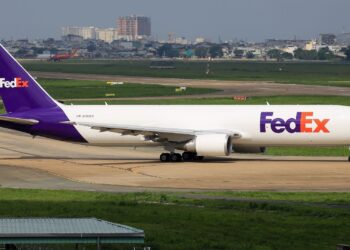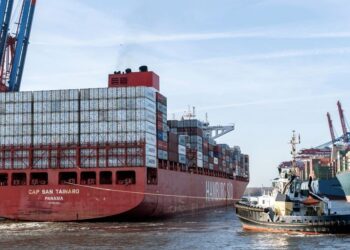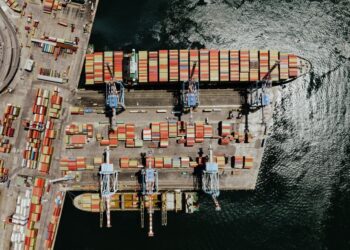
According to www.lowyinstitute.org, ASEAN’s US-bound exports grew 29% in 2025 — the highest annual growth since at least 2021 — even as U.S. policymakers intensified scrutiny of Chinese transshipment through Southeast Asian supply chains.
U.S. Tariff Threats and Transshipment Concerns
In July 2025, the Trump administration granted itself authority to impose 40% tariffs on goods deemed to be transshipped — defined as shipments passing through a third country without “substantial transformation.” Vietnam, deeply integrated with southern Chinese supply networks, has drawn particular attention. Trade advisor Peter Navarro claimed that one-third of Vietnamese exports to the U.S. are actually Chinese-origin goods. However, empirical analysis contradicts this figure: a Harvard study found only 9% of the growth in Vietnamese U.S. exports between 2018–2021 was attributable to transshipment.
Data on Chinese Value-Added in ASEAN Exports
A Lowy Institute analysis using 2022 data estimated China’s share of value-added in ASEAN’s U.S.-bound global value chain exports at 18%. Meanwhile, ASEAN now absorbs 18% of all Chinese exports — a record high surplus for Beijing. This dual dependency underscores structural realities: Chinese intermediate and capital goods are actively enabling ASEAN’s export surge to the U.S., while Chinese investors in ASEAN continue sourcing predominantly from domestic suppliers.
Shifting Market Dynamics: U.S. Overtakes China
By 2024, the U.S. became ASEAN’s largest export market for the first time since 2007, overtaking China. This shift resulted from converging forces: China’s tepid domestic consumption, chronic industrial overcapacity, and post-2021 property sector collapse mercantilist recalibration. U.S. demand remained irrepressible, and tariff-driven supply chain reorientation accelerated the trend. In 2025, Malaysia, Thailand, and Vietnam all recorded healthy U.S.-bound export growth — despite ongoing tariff threats — while their exports to China declined: the Philippines, Malaysia, and Vietnam registered contractions; Thailand posted modest growth after three years of decline; and Indonesia reported a 15% increase — but only after two consecutive years of decline.
Negotiation Stalemate and Future Rulemaking
Despite rhetorical pressure, the U.S. has not enforced transshipment tariffs vigorously. As veteran U.S. trade negotiator Wendy Cutler explained, defining and enforcing transshipment proved too complex given Washington’s aggressive timeline for concluding trade agreements with ASEAN members. Instead, the U.S. inserted placeholders — such as Article 4.1 of the U.S.–Indonesia agreement — deferring rules-of-origin talks to future negotiations. Cutler anticipates these discussions will begin “shortly,” likely after the U.S. secures a durable legal basis to reconstitute its “reciprocal tariffs.” These talks will determine the maximum permissible level of Chinese content in goods qualifying for preferential U.S. tariff treatment.
Strategic Implications for ASEAN Governments
Overly restrictive rules of origin risk eroding ASEAN’s tariff-driven cost advantage over China — a perversity noted explicitly in the source. Yet carefully calibrated reforms could yield benefits: Vietnam, Malaysia, and Indonesia are particularly concerned about capturing more domestic value from exports. Chinese firms operating in ASEAN are generally criticized for low local sourcing rates. Well-designed rules could compel greater technology transfer and higher local content requirements. They could also protect ASEAN producers of intermediate goods — such as steel and plastics — currently displaced by lower-cost Chinese imports. Success hinges on U.S. officials demonstrating greater pragmatism and responsiveness to regional concerns than in past engagements.
Source: www.lowyinstitute.org
Compiled from international media by the SCI.AI editorial team.