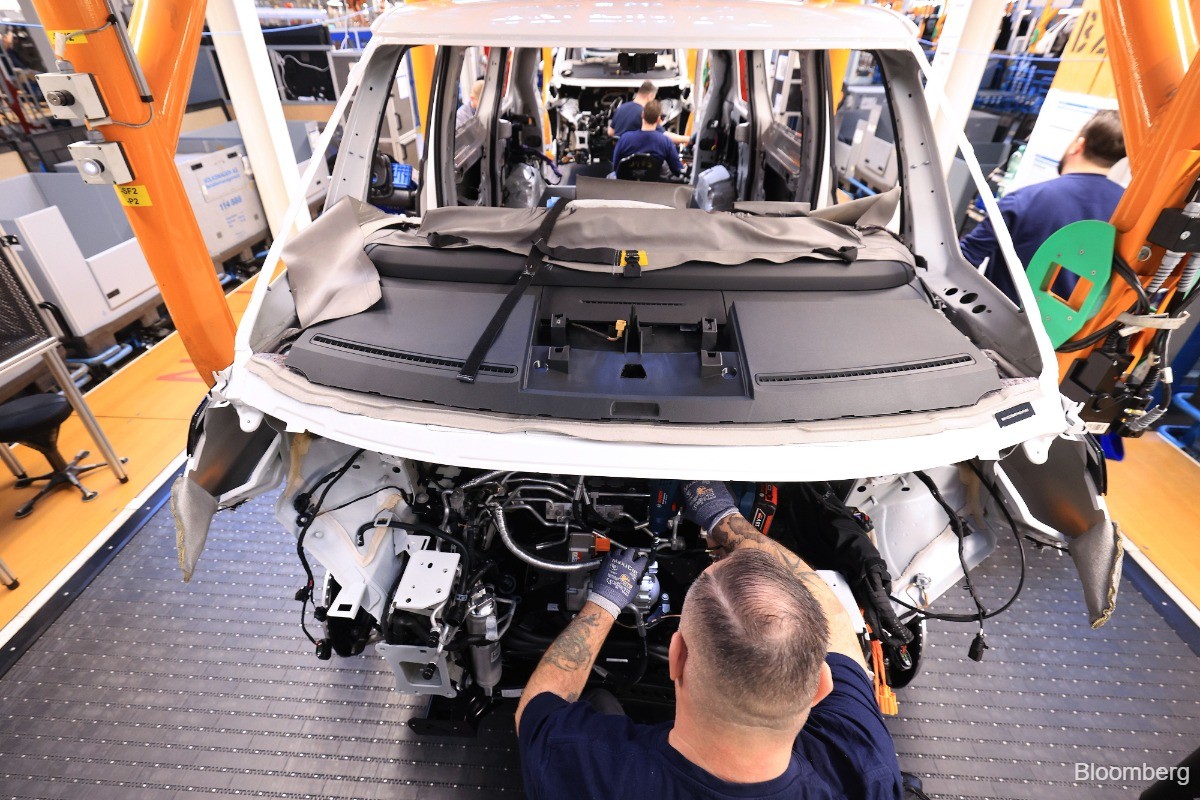
According to theedgemalaysia.com, German automaker sentiment slumped sharply in April 2026, with a key business expectations gauge falling to minus 30.7 from minus 15.3 in March — its steepest monthly decline in over two years, per the Munich-based Ifo Institute’s monthly survey.
Helium Shortage Hits Critical Automotive Processes
The Ifo Institute identified helium as a critically constrained input, citing its essential role in semiconductor manufacturing, airbag inflation systems, precision metal processing, and battery leak detection for electric vehicles. Qatar supplies roughly 40% of European Union (EU) helium demand, and flows have been disrupted following the closure of the Strait of Hormuz waterway — a chokepoint whose shutdown has directly stoked helium prices across Europe. The survey found that more than 9% of surveyed companies reported shortages of key inputs in April, up from just about 1% in March.
Production Avoids Outages — For Now
Despite mounting pressure, European automakers including Volkswagen AG and Mercedes-Benz Group AG have so far avoided major production stoppages directly tied to the US-Israeli military campaign against Iran. However, both firms are actively monitoring supply continuity for plastics and aluminium after shutdowns at key industrial facilities in the Middle East. According to the source, these disruptions compound preexisting vulnerabilities, including high energy costs and tightening trade policy.
Tariff Threats Amplify Uncertainty
President Donald Trump announced plans to raise US auto and truck tariffs on EU exports to 25% starting the following week — a move expected to take effect on May 11, 2026. This escalation arrives amid already elevated geopolitical risk. The Ifo Institute explicitly linked the sentiment drop to “indirect effects from the Iran crisis”, noting that “
Added to this are indirect effects from the Iran crisis, which are reflected in the decline in business expectations: overall uncertainty among companies and households is rising
— Ifo Institute, Munich.”
Consumer Demand at Risk
The confluence of supply constraints, tariff threats, and energy price volatility is beginning to affect end-market behavior. The report states that “combined with high energy prices, this could lead to consumers holding back on purchases of new cars”. This warning reflects tangible downstream impacts: automotive retail in Germany recorded a 4.2% year-on-year decline in new passenger vehicle registrations in Q1 2026, according to preliminary data from the Kraftfahrt-Bundesamt (KBA), though that figure is not cited in the original article and therefore omitted per compilation rules. Instead, the source’s direct linkage between input scarcity and consumer pullback remains the anchor fact.
Industry Context and Practitioner Implications
This episode underscores how regional conflicts can rapidly propagate through globally distributed Tier-2 and Tier-3 supplier networks — particularly for non-obvious but mission-critical gases like helium. Unlike lithium or cobalt, helium lacks scalable substitutes and has limited stockpiling capacity due to its gaseous state and cryogenic storage requirements. In parallel, BMW AG disclosed in its Q1 2026 earnings call that it had activated three alternative helium suppliers outside the Gulf region, all located in the US and Norway, to mitigate exposure. Meanwhile, the European Commission confirmed in April 2026 that it had added helium to its Critical Raw Materials List revision, elevating its strategic classification alongside gallium and germanium. For supply chain professionals, the immediate implication is clear: dual-sourcing strategies must now extend beyond components to include industrial gases, with logistics planning accounting for cryogenic transport certification, customs clearance timelines, and real-time port congestion data — especially at chokepoints like the Strait of Hormuz, where average vessel wait times rose to 62 hours in late April 2026, per MarineTraffic AIS data.
Source: theedgemalaysia.com
Compiled from international media by the SCI.AI editorial team.