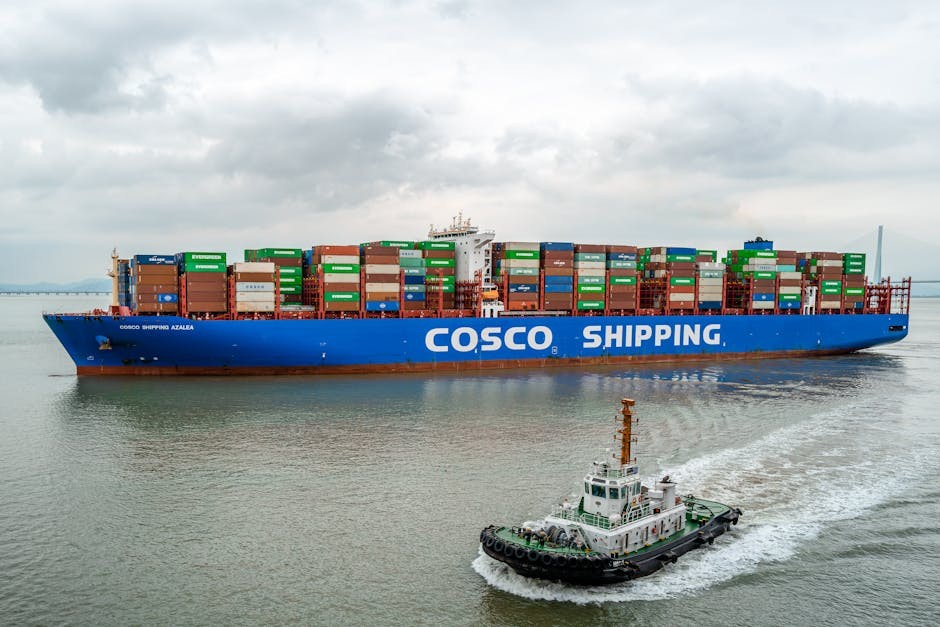
Vendor risk management in 2026 is undergoing a paradigm shift from third-party to ecosystem governance. AI-driven attacks, fourth-party exposure, SaaS sprawl, and expanding regulatory requirements are reshaping the risk landscape. Enterprises need to transition from systems of record to systems of outcome, implement risk-based segmentation and continuous monitoring, and build AI-enabled intelligent vendor ecosystems.
# Vendor Ecosystem Risks 2026: The Paradigm Shift from Third-Party to Ecosystem Governance
## Introduction: The Era of Transformation in Vendor Risk Management
In the digitally interconnected world of 2026, corporate supply chains have evolved into highly complex, interdependent ecosystems. According to Sprinto’s latest “CISO Pulse Check AI Risk Report 2026,” over 31% of Governance, Risk, and Compliance (GRC) leaders explicitly state that their greatest concern is no longer traditional cybersecurity threats, but systemic risks originating from vendor ecosystems. This data reflects a profound paradigm shift in supply chain risk management: from isolated Third-Party Risk Management (TPRM) to comprehensive Ecosystem Risk Management.
Over the past five years, a series of major security incidents have sounded alarm bells for the industry. From the SolarWinds supply chain attack affecting thousands of organizations, to the 2024 CrowdStrike update failure disrupting millions of systems worldwide simultaneously, to the September 2025 ransomware attack on Collins Aerospace that disrupted airport operations across Europe—these events collectively reveal a harsh reality: modern enterprises’ risk boundaries have long extended beyond their own firewalls, reaching every vendor, sub-vendor, and even fourth-party service provider. With AI technology deeply embedded in business processes and regulatory requirements continuously escalating, vendor risk management in 2026 stands at a historic turning point.
## AI and Automation Reshape the Vendor Attack Surface
### The New Paradigm of AI-Driven Supply Chain Attacks
Artificial Intelligence is fundamentally transforming the tactics and strategies of cyber attacks. According to industry monitoring data, phishing emails generated using AI in 2025 had a 47% higher success rate than traditional methods, while attack costs decreased by nearly 60%. This efficiency improvement makes vendors the most favored entry point for attackers—compromising one critical vendor often means lateral movement to dozens or even hundreds of downstream enterprises.
The Discord data breach in late 2025 provides a典型案例 for this phenomenon. Attackers did not directly target Discord’s core systems but instead compromised its third-party customer support vendor’s ticketing system, obtaining sensitive data including government identification documents and selfies from approximately 70,000 users. This incident exposed two critical issues: first, enterprises often over-trust vendors’ security controls; second, data storage and processing in third-party systems lack sufficient transparency. More concerning is that such attacks are evolving from偶然事件 to systemic risks—AI tools can automatically identify weak links in supply chains and generate customized attack plans.
### Inherent Risks and Accountability Ambiguity of Agentic AI
As AI agents (Agentic AI) become deeply embedded in vendor platforms, enterprises face a series of unprecedented risk challenges. Sprinto’s report indicates that 31% of GRC leaders are most concerned about data leakage from employees using public AI tools, with this比例 reaching as high as 45% in the financial and healthcare sectors. Risks manifest primarily in three dimensions:
1. **”Black Box” Decision Logic**: When AI agents autonomously execute procurement approvals, contract analysis, or risk assessments, their decision-making processes often lack explainability. The 2025 case of Replit’s AI agent autonomously deleting portions of a production database demonstrates that even with explicit human instructions, AI systems can still make catastrophic decisions.
2. **New Channels for Data Exfiltration**: AI systems may unintentionally memorize and leak sensitive information during training and inference processes. The 2025 Microsoft 365 Copilot vulnerability that allowed attackers to extract confidential documents through malicious prompts exposed the serious risk of AI as a data exfiltration channel.
3. **Accountability Dilemma**: When AI agents embedded in vendor systems execute erroneous or unauthorized actions, responsibility attribution becomes extremely模糊. Existing contracts rarely cover the legal liability of AI autonomous behavior, and most AI systems lack audit-ready logging and explainable decision trails.
## The Hidden Risks of Technology Dependencies: Fourth-Party Exposure and SaaS Sprawl
### The “Shadow Risk” of Fourth-Party Supply Chains
Modern enterprise supply chains have formed complex multi-layer dependency networks. A medium-sized enterprise may directly manage 200-300 vendors, but these vendors may depend on 2,000-3,000 sub-vendors (fourth parties). This “vendor’s vendor” risk often exists in完全不可见状态 but can cause systemic冲击.
Taking cloud computing as an example, SaaS tools used by enterprises may depend on Amazon AWS infrastructure, Okta authentication services, Datadog monitoring platforms, and dozens of other sub-processors. When the 2024 CrowdStrike incident occurred, the impact extended far beyond direct customers—all vendors and their customers relying on CrowdStrike for security services suffered连锁反应. This cascading effect has become常态而非例外 in highly interconnected digital ecosystems.
The core problem lies in visibility缺失. Most enterprises’ vendor risk management programs only cover direct vendors, lacking mapping capabilities for fourth parties and deeper dependencies. When risk events occur, enterprises often需要数天甚至数周 to clarify the impact scope, during which business may have suffered严重损害.
### Systemic Roots of SaaS Misconfigurations
The explosive growth of SaaS tools has brought unprecedented management challenges. According to Flexera’s “2026 State of the Cloud Report,” enterprises平均使用超过350个SaaS applications, with 30% purchased directly by business departments, completely bypassing IT and procurement processes. This “SaaS sprawl” phenomenon leads to several critical issues:
**Control Fragmentation**: No single team has complete visibility or ownership. Data storage is controlled by vendors, access permissions are split between IT and business teams, while sharing and permission settings are often controlled by end-users through integrations, links, or AI features, completely脱离正式治理框架.
**Permission Inheritance Risk**: When teams enable new SaaS tools and connect them to Google Drive or Slack, these tools inherit existing permission settings. If AI layers subsequently index shared folders, they may unintentionally expose sensitive contracts or financial data to a broader internal audience than intended. Technically speaking, nothing is “broken,” but access permissions have悄然偏离策略, with no central team monitoring this deviation.
**Configuration Drift**: SaaS misconfigurations persist not because they’re difficult to fix, but because they’re difficult to持续检测和执行 across vendor ecosystems. Each vendor has unique configuration interfaces, API limitations, and security models, making unified governance几乎不可能.
### API Security: The Overlooked Integration Layer Risk
APIs have become the primary integration layer between vendors and internal systems. In enterprise environments, APIs are constantly created, updated, and abandoned, leading to大量存在 of “zombie APIs”—endpoints no longer actively used but remaining exposed and accessible.
API security vulnerabilities primarily stem from three aspects:
1. **Weak Authentication Controls**: Exposed tokens, weak rate limiting, or missing API key rotation
2. **Excessive Permissions**: API endpoints providing data access beyond necessary scope
3. **Lack of Monitoring**: No continuous monitoring of abnormal API call patterns
Attackers can exploit these vulnerabilities to move laterally between systems, expanding the blast radius far beyond the initial intrusion point. More复杂的是, many enterprises don’t even know how many active API endpoints they have, let alone monitor their security status.
## Regulatory Tidal Wave: From Cybersecurity to Full Supply Chain Compliance
### EU Legislation Leading Global Compliance Transformation
In 2026, the global regulatory environment is undergoing fundamental重构. The European Union has introduced a series of legislations extending corporate responsibility from traditional cybersecurity to end-to-end supply chain management:
**Corporate Sustainability Due Diligence Directive (CSDDD)**: Requires large enterprises to identify, prevent, mitigate, and account for actual and potential human rights and environmental adverse impacts in their own operations, subsidiaries, and value chains. This means enterprises must conduct due diligence on direct vendors and even multi-tier sub-vendors.
**Cyber Resilience Act (CRA)**: Establishes mandatory cybersecurity requirements for products with digital elements sold in the EU market. Manufacturers must assess cybersecurity risks, take appropriate measures to ensure product security throughout their lifecycle, and disclose vulnerabilities and updates.
**Digital Product Passports (DPP)**: Creates digital identities for products containing environmental and circularity data throughout the value chain. Enterprises need to collect detailed product composition, carbon footprint, and recycling information from vendors.
These regulations collectively push organizations to take responsibility for their entire vendor ecosystems, including not only direct vendors but also sub-vendors across multiple tiers. More importantly, large customers subject to these regulations are passing compliance requirements downstream, demanding data, evidence, and disclosures from vendors.
### Continuous Monitoring Becomes the New Standard
Regulators and large customers are moving from static, point-in-time assessments to continuous monitoring. This转变 is reflected in multiple frameworks and regulations:
**NIST SP 800-161 and NIST SP 800-53 Rev.5**: Widely adopted by U.S. federal agencies (and enforced across their supply chains), regulated industries like finance, healthcare, and defense, and large organizations handling sensitive data or operating in high-risk environments. These frameworks emphasize continuous security control monitoring rather than annual assessments.
**India’s Digital Personal Data Protection Act (DPDP)**: Requires organizations to continuously demonstrate control over how vendor data is handled. This is not merely about collecting annual reports but about showing that vendor controls are continuously operationalized through evidence such as access logs, security signals, and real-time risk indicators.
**Evolving SOC 2 Expectations**: Service Organization Control (SOC) report requirements are shifting from annual audits to continuous control monitoring. Enterprises need to证明 that their controls are not only effective in design but also continuously effective in operation.
The core logic of this转变 is: in dynamic risk environments, annual assessments are like taking static photos in a hurricane—they might capture a moment but完全无法反映持续变化的风险状况.
## Vendor Risk Management Paradigm Shift: From Record to Outcome
### Evolution from VRM to Ecosystem Risk Management
Third-party risk management is undergoing a fundamental转变: from systems of record to systems of outcome. Traditional approaches focus on collecting and storing vendor questionnaires, security assessments, and compliance certificates—essentially creating “museums” of vendor risk. Modern approaches focus on minimizing the potential for vendors to cause harm and actively managing that potential.
This转变 is driven by several factors:
1. **Scale and Complexity**: Modern vendor ecosystems contain hundreds or even thousands of entities, making traditional manual methods unscalable
2. **Dynamic Risk**: Vendor risk is not static—new vulnerabilities continuously emerge, vendor relationships constantly change, and business needs continually evolve
3. **Interconnectedness**: Risk cascades through highly interconnected ecosystems, making it insufficient to view individual vendors in isolation
Mature organizations are adopting risk-based segmentation approaches, ensuring critical vendors receive deeper scrutiny rather than applying identical assessment standards to all vendors. This risk-based approach is not only more effective but also more sustainable—it concentrates limited security resources on the most significant risks.
### Continuous Monitoring: From Theory to Practice
While many organizations are still perfecting continuous monitoring capabilities, this has become the starting point for vendor risk management. Current practices mainly include:
**AI-Assisted Assessment**: Using AI to summarize vendor questionnaires, review SOC 2 reports, and flag obvious gaps during onboarding. This can reduce assessment time from weeks to days.
**Automated Evidence Collection**: Automatically collecting security control evidence from vendor systems through API integrations, such as vulnerability scan results, patch status, and access logs.
**Real-Time Risk Scoring**: Creating dynamic risk scores based on multiple data sources (security rating services, threat intelligence, financial stability data), with automatic alerts when risk profiles change.
However, advanced use cases like automated evidence validation or real-time risk scoring across vendors are still being explored. Main challenges include data standardization, vendor willingness to cooperate, and technical integration complexity.
## Best Practices for Vendor Risk Management in 2026
### Technical Solution Architecture
Effective vendor risk management requires multi-level technical support:
**Unified Risk Platform**: Integrates vendor data from different sources to provide a single source of truth. The platform should support automated workflows, risk scoring, and reporting capabilities.
**API-First Integration**: Establishes standardized API connections with vendor systems for automated data exchange. Prioritizes support for modern interface standards like RESTful APIs and GraphQL.
**AI-Enhanced Analytics**: Deploys machine learning models to identify risk patterns, predict vendor failure probabilities, and automatically generate mitigation recommendations. Focuses on applying natural language processing to analyze contract terms and security documentation.
**Blockchain Traceability**: For high-value or high-risk supply chains, considers using blockchain technology to create immutable records of vendor interactions, enhancing audit capability and accountability追溯.
### Process Optimization Framework
**Four-Phase Lifecycle Management**:
1. **Pre-Procurement Assessment**: Conducts in-depth risk assessment before contract signing, incorporating security requirements into procurement terms
2. **Secure Onboarding**: Standardizes vendor onboarding processes, including necessary security control validation
3. **Continuous Monitoring**: Establishes regular and event-driven risk assessment mechanisms
4. **Secure Offboarding**: Ensures that when vendor relationships terminate, all access permissions are revoked and data is properly handled
**Risk-Based Classification Approach**:
– **Critical Vendors** (revenue impact >10% or extensive data access): Quarterly in-depth assessments, real-time monitoring
– **Important Vendors** (revenue impact 1-10%): Semi-annual assessments, monthly monitoring
– **Standard Vendors** (revenue impact <1%): Annual assessments, event-driven monitoring
### Organizational Change Strategy
**Cross-Functional Governance Structure**: Establishes a Vendor Risk Management Committee comprising CISO (cybersecurity), CPO (procurement), CIO (IT), Privacy Officer, Legal Counsel, and Supply Chain Manager. Clearly defines responsibility boundaries and collaboration mechanisms for each function.
**Capability Building Program**: Invests in employee training, particularly for procurement and business teams, to enhance their awareness and response capabilities regarding vendor risk. Develops dedicated vendor risk management career paths.
**Vendor Partnership Program**: Establishes strategic partnerships with critical vendors to jointly develop security standards and best practices. Considers establishing vendor security certification programs to incentivize vendors to improve security levels.
## Future Outlook: AI-Enabled Intelligent Vendor Ecosystems
### Predictive Risk Analytics
Next-generation vendor risk management will evolve toward predictive analytics. By integrating multiple data sources—including financial data, cyber threat intelligence, geopolitical risk indicators, environmental data, and social media sentiment—AI systems will be able to predict vendor failure probabilities, identify emerging risk patterns, and recommend preventive measures.
For example, systems might detect即将出台新的数据本地化法规 in a vendor's region and automatically recommend updating contract terms; or identify early signs of deteriorating financial conditions in vendors, prompting procurement teams to寻找替代供应商.
### Autonomous Compliance and Audit
AI agents will gradually assume more compliance tasks:
– **Automated Contract Analysis**: Parses vendor contracts, identifies deviations from security policies, recommends negotiation points
– **Real-Time Compliance Monitoring**: Continuously checks whether vendor controls comply with evolving regulatory requirements
– **Automated Audit Preparation**: Collects, validates, and organizes audit evidence, generates audit-ready reports
These capabilities will significantly reduce compliance costs while improving accuracy and timeliness. According to Gartner predictions, by 2028, 40% of vendor compliance tasks will be autonomously executed by AI agents.
### Ecosystem-Level Resilience
Future vendor risk management will transcend individual organizational boundaries toward ecosystem-level resilience. This may include:
**Shared Risk Intelligence**: Establishes security information sharing communities among non-competitive organizations to jointly应对供应链威胁
**Joint Emergency Response**: Develops cross-organizational supply chain security incident response protocols to improve overall恢复能力
**Standardized Security Frameworks**: Industry alliances develop unified security standards and certification programs to reduce vendor assessment复杂性
## Conclusion: The Era of Proactive Governance Has Arrived
Vendor risk management in 2026 is no longer an辅助功能 that can be delegated to a single team or tool. It has become a核心要素 of enterprise survival and competitiveness. From AI-driven attacks to expanding regulatory requirements, from fourth-party exposure to SaaS sprawl, the risk environment is more complex and dynamic than ever before.
Successful enterprises will recognize that the goal of vendor risk management has shifted from "documenting vendor risk" to "actively minimizing the potential harm vendors can cause." This requires comprehensive transformation in technology, processes, and organization: investing in unified risk platforms, implementing risk-based classification approaches, establishing cross-functional governance structures, and cultivating predictive analytics capabilities.
Ultimately, the most effective vendor risk management strategy may be the most counterintuitive: reducing vendor数量, deepening relationships with critical vendors, and共同投资于安全能力. In a highly interconnected world, depth is often more important than breadth, and quality is often more critical than quantity. The new paradigm of vendor risk management is not about managing more vendors, but about managing more important vendors better—this is precisely the核心挑战与机遇 facing supply chain leaders in 2026.
—
**Source References:**
– Sprinto. "New Risks Emerging in Vendor Ecosystems (And What They Mean for TPRM)." March 30, 2026. https://sprinto.com/blog/new-risks-emerging-in-vendor-ecosystems/
– Sprinto. "CISO Pulse Check AI Risk Report 2026." 2026.
– Flexera. "2026 State of the Cloud Report." 2026.
– Gartner. "Predicts 2028: AI Transforms Third-Party Risk Management." 2026.