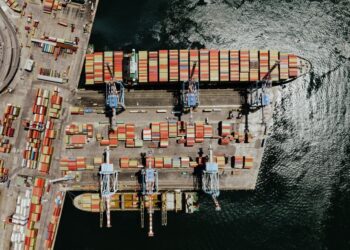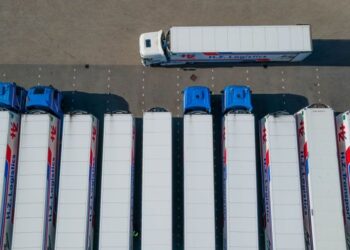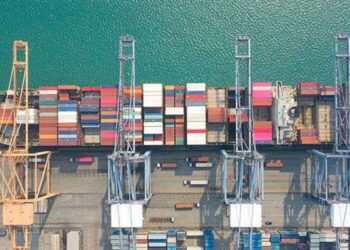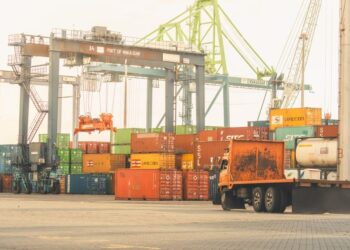
According to www.dhl.com, the Asia-Pacific region accounted for 44.6% of the global logistics market share in 2024, driven by stronger trade activity, supportive government policies, and accelerated adoption of advanced logistics technologies. This dominance underscores a structural shift: logistics in Asia is now defined less by volume or cost alone and more by resilience, intelligence, and long-term sustainability. However, rapid growth has intensified operational complexity—higher shipment volumes and faster delivery expectations are straining cross-border supply chains across the region.
Elastic Logistics and AI-Driven Decision Making
Elastic logistics is emerging as a foundational response to Asia’s volatile trade environment. Rather than relying on fixed capacity and rigid planning cycles, businesses are adopting flexible models that scale resources up or down based on real-time demand, seasonal peaks, and disruptions. At the operational level, AI co-pilots analyze traffic conditions, weather patterns, and port congestion to recommend or execute real-time shipment rerouting. Other AI tools continuously adjust inventory levels using sales and demand signals. As routine decisions become automated, manual intervention declines and cost control improves. For SMEs managing complex cross-border orders, this combination enables greater resilience without increasing overhead.
“China Plus One” Moves from Strategy to Standard
The “China Plus One” strategy has transitioned from optional contingency planning to mainstream practice in 2026. Companies are diversifying production across Vietnam, Thailand, Malaysia, Indonesia, and India—regions offering favorable labor markets, government incentives, and expanding industrial capacity. To coordinate multi-country operations, forward-looking firms deploy bonded warehouses, free trade zones, and regional inventory positioning to streamline distribution and defer duties until products reach target markets. Cross-border trucking and flexible freight strategies further ensure continuity amid ocean or air capacity fluctuations. Supplier vetting across multiple countries and standardized customs compliance processes have become essential for risk mitigation and agility.
Hyper-Local Fulfillment and Bonded Warehousing
To meet rising consumer expectations for speed and convenience, businesses are shifting from centralized hubs to hyper-local fulfillment. Smaller distribution points and micro-fulfillment centers near urban demand clusters shorten delivery times while cutting transportation costs and congestion. This proximity is critical for quick-commerce and social-commerce, where same-day or next-day delivery windows directly impact customer satisfaction and repeat purchases. In Indonesia, bonded warehouses are gaining strategic importance: they allow importers to store goods without immediate payment of duties and taxes, deferring those costs until products are sold or released into the domestic market—enhancing cash flow and working capital flexibility.
Sustainability as Mandatory Compliance
Sustainability is no longer voluntary—it is becoming mandatory across Southeast Asia due to new carbon-tracking regulations and ESG reporting requirements in major trade hubs. Businesses are adopting circular packaging loops that can be reused and tracked, reducing waste and improving operational efficiency. Real-time carbon footprint monitoring at the individual shipment level enables immediate, data-driven emission-reduction decisions. Combined with electrified last-mile fleets in dense urban centers, these measures support greener deliveries without compromising speed or reliability.
Cross-Border Social Commerce Goes Mainstream
Social commerce platforms like TikTok Shop and Shopee are blurring lines between social media and logistics. In Southeast Asia, 57% of shoppers discover new products through marketplaces and 50% through social media. Indonesia leads the region with an internet economy valued at over USD 82 billion in 2023. These dynamics fuel high-frequency, low-value international orders—demanding seamless reverse logistics and fully integrated payment-to-delivery workflows. Consumers now expect “domestic-level” delivery times for cross-border orders. With the Asia Pacific e-commerce market projected to reach USD 28.9 trillion in 2026, logistics optimization—including fulfillment, tracking, and returns—is a decisive competitive advantage.
Source: www.dhl.com
Compiled from international media by the SCI.AI editorial team.