Amazon's New Shreveport Fulfillment Center in Louisiana: AI-Driven with 10 Times More Robots, Redefining Logistics for Employees and Customers
Amazon Launches Next-Generation Fulfillment Center Driven by AI and a Tenfold Increase in Robots
By an Amazon employee
4-minute read
October 9, 2024
The most advanced fulfillment center in Shreveport, Louisiana, will redefine logistics for the benefit of employees and customers.
When we started selling books in 1995, we were operating out of a garage. Fast forward to today, our global network of fulfillment centers is powered by cutting-edge technology and artificial intelligence. Over the years, we have built and expanded the world’s largest industrial robot fleet, helping employees complete tasks more efficiently while enhancing operational safety and creating hundreds of thousands of new jobs.
Amazon’s latest robotic innovations are supporting our most advanced fulfillment center, such as the newest one in Shreveport, Louisiana.
Today, we enter a new era by deploying the largest robot and AI technology advancements in our operational history. The next-generation fulfillment center in Shreveport, Louisiana, brings together years of innovation under one roof. This location is changing how we work and setting new standards for industry efficiency.
The facility spans five floors and covers over 30 million square feet, equivalent to 55 football fields, making it one of Amazon’s largest sites. Once fully operational, it will employ 2,500 employees.
We are introducing technical solutions in all key production areas on-site for the first time, meaning our employees will seamlessly work with an ever-growing fleet of robotic systems that were previously unattainable.
At the heart of the facility is Sequoia, a state-of-the-art multi-level containerized inventory system that allows employees to store and pick items faster and more safely. In our next-generation facilities, Sequoia can house over 30 million items, five times larger than our first deployment in Houston, Texas, helping us bring products closer to customers for quicker delivery.
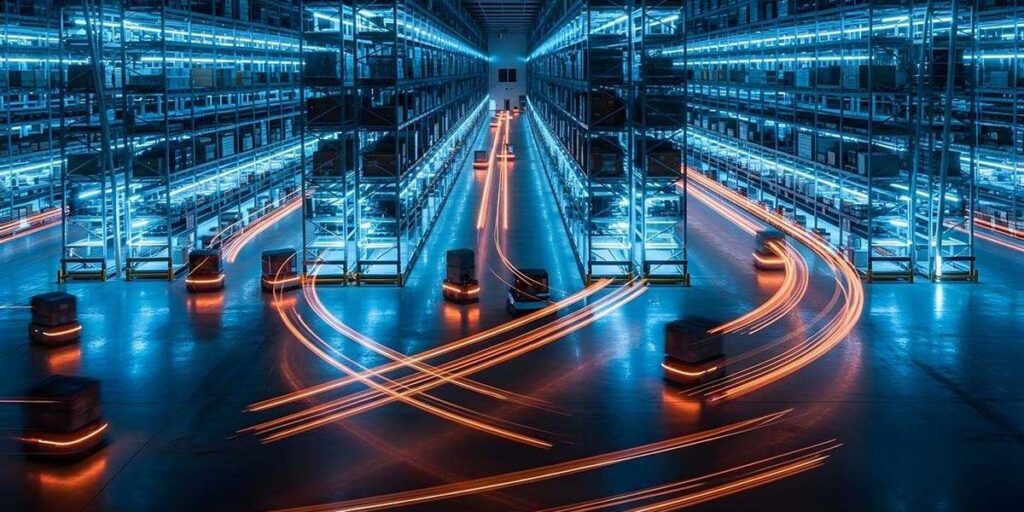
The system coordinates the efforts of thousands of mobile robots and a series of mechanical arms to deliver items to ergonomic workstations where employees can perform all tasks more comfortably and safely.
Once customer orders are picked, a series of new systems help them move through our next-generation sites faster for packaging and delivery. Our packaging automation optimizes the packing process while replacing plastic materials with paper solutions that are recyclable at curbside.
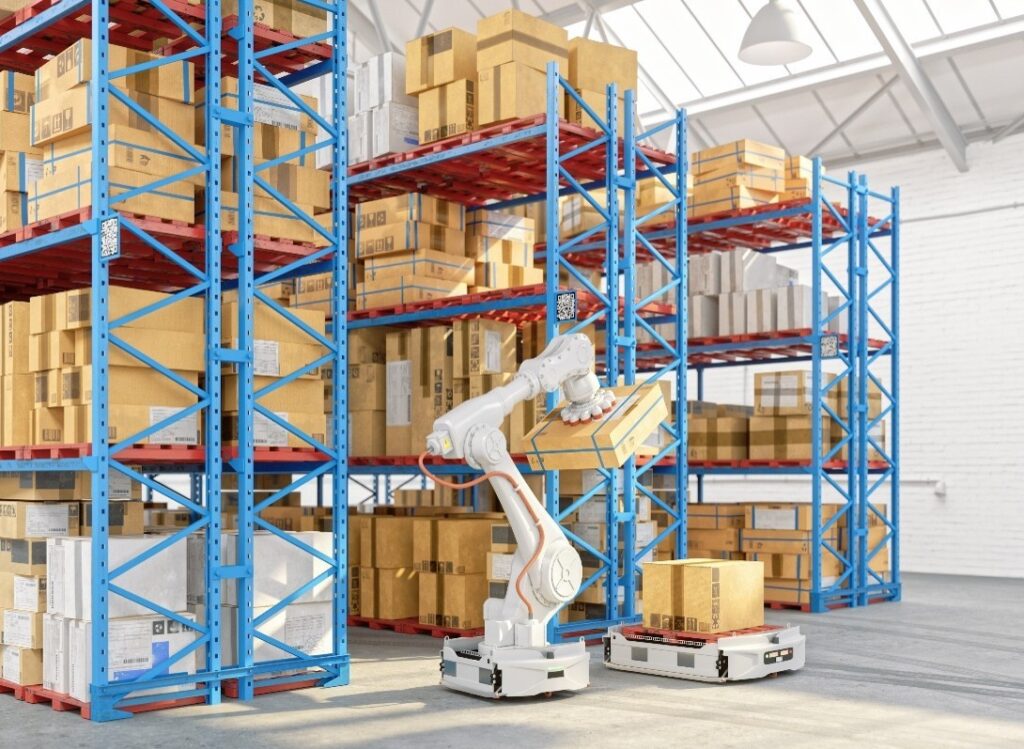
As inventory and packages move within the facility, Robin, Cardinal, and Sparrow – an AI-driven trio of mechanical arms – sort, stack, and consolidate millions of items and customer orders with remarkable precision.
Our latest version of Sparrow can now handle over 200 million unique products that vary in shape, size, and weight. It uses advanced computer vision and AI systems to become the most versatile and reliable robotic arm seen in our industry.
Proteus is our first fully autonomous mobile robot that skillfully navigates open spaces safely around employees, transporting trailers to our shipping docks for loading into trucks.
These technologies, along with thousands of other robotic systems used in Shreveport, embody our vision for collaborative technology.
This vision centers on supporting our employees, enhancing operational safety and sustainability, and enabling us to serve customers more quickly, efficiently, and responsibly.
Technology Benefiting Employees and Customers
The technologies in our next-generation sites unlock meaningful new benefits for both our employees and customers. Systems like Sequoia, Cardinal, and Proteus will play a crucial role in supporting our company-wide safety goals. We expect these sites to further improve the ergonomics of facilities and reduce heavy lifting workloads by more than 30% compared to improvements made over the past few years.
With this new generation of robots deployed across our network, we anticipate continued growth in employee numbers and are excited about the opportunities for creating skilled jobs. In fact, our next-generation fulfillment centers with advanced robotics will require a workforce that is 30% larger in roles related to reliability, maintenance, and engineering.
These skill-based positions often require certifications, which we support through our Career Choice program by providing employees cost-free opportunities to pursue these certifications. Our mechatronics and robotics apprenticeship programs offer hourly wages up to 40% higher than entry-level positions, highlighting our commitment to advancing employee careers.
According to the latest research from MIT, such opportunities make employees willing to embrace new technologies and see their benefits as they prepare for future jobs.
Our commitment to delivering faster for customers has never waned, and our next-generation facilities will play a key role in achieving this goal. In these sites, we have reduced fulfillment processing time by up to 25%, improved shipping accuracy, and increased the number of same-day and next-day delivery items.
Amazon’s most advanced fulfillment center is an important step forward, but this milestone is just one chapter in a broader story of our next wave of robotic and AI innovations.
This new generation of robotic systems was not designed merely for new buildings; they are engineered to seamlessly integrate into our existing structures. This allows us to modernize the entire network more rapidly than ever before, accelerating the widespread positive impact of this technology and driving scale efficiencies.
During peak delivery times, we aim to improve service cost efficiency by 25%. These savings will be passed on to our customers.
As we continue to accelerate how we use AI and robotics to reimagine logistics, we believe the scope and impact of our innovations will grow. The future of work begins now.
Source: US About Amazon