Explore

  • Trending
  • Latest
  • Tools
  • Browse
  • Subscription Feed

Logistics

  • Ocean
  • Air Cargo
  • Road & Rail
  • Warehousing
  • Last Mile

Regions

  • Southeast Asia
  • South Asia
  • Central Asia
  • Japan & Korea
  • Middle East
  • Europe
  • Russia
  • Africa
  • North America
  • Latin America
  • Australia
SCI.AI
  • Supply Chain
    • Strategy & Planning
    • Logistics & Transport
    • Manufacturing
    • Inventory & Fulfillment
  • Procurement
    • Strategic Sourcing
    • Supplier Management
    • Supply Chain Finance
  • Technology
    • AI & Automation
    • Robotics
    • Digital Platforms
  • Risk & Resilience
  • Sustainability
  • Research
  • Expert Columns
  • English
    • Chinese
    • English
No Result
View All Result
  • Login
  • Register
SCI.AI
No Result
View All Result
Home Risk & Resilience Geopolitics

Global Trade Grows to Record Levels Amid Tariff Shifts — www.csmonitor.com

2026/05/07
in Geopolitics, Risk & Resilience, Trade & Tariffs
0 0
Global Trade Grows to Record Levels Amid Tariff Shifts — www.csmonitor.com

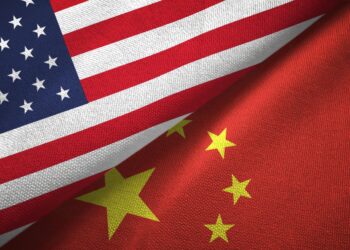
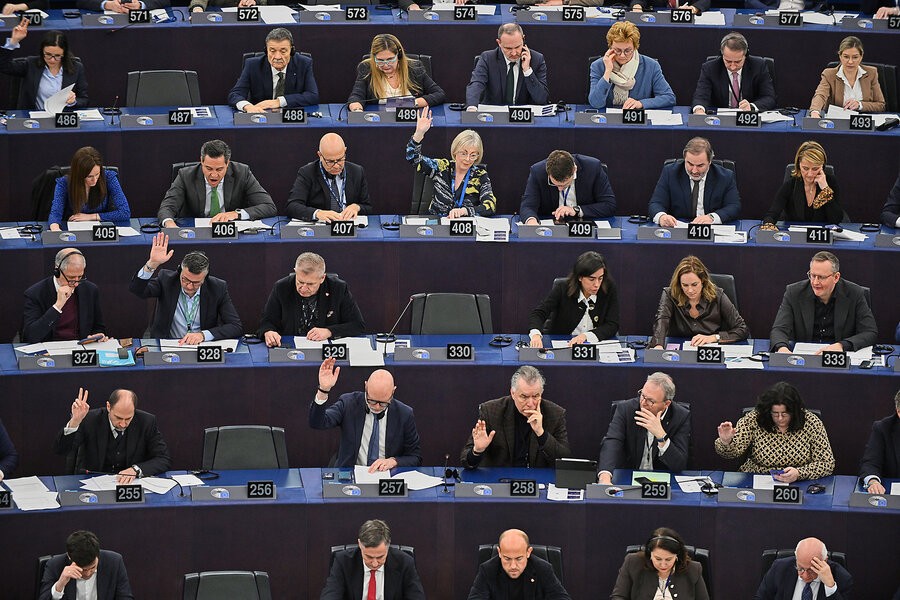
According to www.csmonitor.com, global trade expanded to record levels in 2025 despite escalating tariffs, with total bilateral trade between the U.S. and China reaching $400 billion last year — even amid strategic decoupling pressures.

New Trade Alliances Accelerate

The European Union and Mercosur — comprising Argentina, Brazil, Paraguay, Uruguay, and Bolivia since 2024 — signed a provisional free trade agreement in January 2026, immediately eliminating tariffs. The deal unites 720 million people across two major economic blocs. Márcio Elias Rosa, Brazil’s minister of development, industry, commerce, and services, stated during a recent interview that he foresees “no difficulties” in full long-term approval.

Mercosur’s diplomatic outreach intensified after the U.S. imposed a 40% tariff on Brazilian exports in 2025. In addition to the EU pact, Mercosur finalized a free-trade agreement with the European Free Trade Association (Iceland, Liechtenstein, Norway, and Switzerland) in 2025 and had previously signed one with Singapore in 2023.

Diversification Driven by Geopolitical Pressure

According to the report, Brazil is “at the center of the China-U.S. clash,” as both nations remain its top two trading partners. Roberto Simon, a nonresident fellow on Latin America at the Stimson Center, emphasized Brazil’s active efforts to deepen ties with the Gulf Cooperation Council (GCC) and India. Foreign Minister Mauro Vieira, representing President Luiz Inácio Lula da Silva, was scheduled to sign the EU-Mercosur agreement into law in Brasilia on Tuesday, April 28, 2026.

The EU itself is advancing multiple parallel agreements: concluding deals with Australia and India in 2026, updating its agreement with Mexico, and holding active negotiations with Indonesia, the Philippines, Thailand, and Malaysia. These moves aim to strengthen Indo-Pacific economic partnerships and reduce external dependencies.

Indonesia’s Strategic Pivot

Indonesia responded to U.S. tariffs not with retaliation but with regional integration. Government analysis concluded that retaliatory measures would worsen economic conditions. Instead, Jakarta pursued domestic reforms and accelerated intra-ASEAN trade expansion. As Mari Elka Pangestu, Indonesia’s former trade minister and current professor at the University of Indonesia, explained at the Peterson Institute for International Economics:

“The US is a problem, but hey, let’s expand trade with each other and with the rest of the world.” — Mari Elka Pangestu, former Indonesian trade minister and professor of international economics, University of Indonesia

Cecilia Malmström, former European commissioner for trade and now a nonresident senior fellow at the Peterson Institute, offered a structural metaphor for the shift:

“Trade is a little bit like water. It finds new ways all the time” to circumvent obstacles that governments impose on it.

This realignment occurred against a backdrop of legal turbulence: in February 2026, the U.S. Supreme Court struck down a suite of Trump-era tariffs imposed via executive order. The administration responded with temporary tariffs of up to 15% on all countries while pursuing permanent reimposition under alternate statutory authorities.

Source: www.csmonitor.com

Compiled from international media by the SCI.AI editorial team.
More on This Topic

  • 1 in 5 Trucks Unsafe — FreightWaves (May 11, 2026)
  • Vallarpadam Transhipment Halved, Vizhinjam Hits 1.3M TEU — The Loadstar (May 11, 2026)
  • Trump Pushes Nuclear-Powered Shipping: 1 Initiative (May 11, 2026)
  • Eagle Pass Trade Boom: $3.77B in March — FreightWaves (May 11, 2026)
  • Roadcheck Week Drives Freight Rates Up 7%-9% — FreightWaves (May 11, 2026)
ShareTweet

Related Posts

1 in 5 Trucks Unsafe — FreightWaves
AI & Automation

1 in 5 Trucks Unsafe — FreightWaves

May 11, 2026
3
Vallarpadam Transhipment Halved, Vizhinjam Hits 1.3M TEU — The Loadstar
AI & Automation

Vallarpadam Transhipment Halved, Vizhinjam Hits 1.3M TEU — The Loadstar

May 11, 2026
4
Trump Pushes Nuclear-Powered Shipping: 1 Initiative
AI & Automation

Trump Pushes Nuclear-Powered Shipping: 1 Initiative

May 11, 2026
2
Eagle Pass Trade Boom: $3.77B in March — FreightWaves
AI & Automation

Eagle Pass Trade Boom: $3.77B in March — FreightWaves

May 11, 2026
3
Roadcheck Week Drives Freight Rates Up 7%-9% — FreightWaves
AI & Automation

Roadcheck Week Drives Freight Rates Up 7%-9% — FreightWaves

May 11, 2026
4
Court Overturns Trump’s 10% Global Tariffs — www.freightwaves.com
Geopolitics

Court Overturns Trump’s 10% Global Tariffs — www.freightwaves.com

May 11, 2026
5

Leave a Reply Cancel reply

Your email address will not be published. Required fields are marked *

Recommended

Strategic Diversion and Systemic Resilience: How Saudi Arabia, UAE, and Oman Are Rewiring Gulf Supply Chains Amid Hormuz Instability

Strategic Diversion and Systemic Resilience: How Saudi Arabia, UAE, and Oman Are Rewiring Gulf Supply Chains Amid Hormuz Instability

45 Views
March 17, 2026
South America’s ‘Low-Risk Dividend’: Why Verisk Maplecroft Says the Lithium Triangle Is the West’s Best Bet for Critical Minerals Supply Chain Resilience

South America’s ‘Low-Risk Dividend’: Why Verisk Maplecroft Says the Lithium Triangle Is the West’s Best Bet for Critical Minerals Supply Chain Resilience

13 Views
February 22, 2026
Supply Chain Finance 2025: Global Tools for Working Capital Optimization

Supply Chain Finance 2025: Global Tools for Working Capital Optimization

11 Views
April 23, 2026
沃尔玛自动化两个区域配送中心

Walmart Automates Two Regional Distribution Centers

14 Views
February 16, 2026
Show More

SCI.AI

Global Supply Chain Intelligence. Delivering real-time news, analysis, and insights for supply chain professionals worldwide.

Categories

  • Supply Chain Management
  • Procurement
  • Technology


  • Risk & Resilience
  • Sustainability
  • Research

© 2026 SCI.AI. All rights reserved.

Powered by SCI.AI Intelligence Platform

Welcome Back!

Sign In with Facebook
Sign In with Google
Sign In with Linked In
OR

Login to your account below

Forgotten Password? Sign Up

Create New Account!

Sign Up with Facebook
Sign Up with Google
Sign Up with Linked In
OR

Fill the forms below to register

All fields are required. Log In

Retrieve your password

Please enter your username or email address to reset your password.

Log In

Scan to share via WeChat

Open WeChat and scan the QR code to share

QR Code

Add New Playlist

No Result
View All Result
  • Supply Chain
    • Strategy & Planning
    • Logistics & Transport
    • Manufacturing
    • Inventory & Fulfillment
  • Procurement
    • Strategic Sourcing
    • Supplier Management
    • Supply Chain Finance
  • Technology
    • AI & Automation
    • Robotics
    • Digital Platforms
  • Risk & Resilience
  • Sustainability
  • Research
  • Expert Columns
  • English
    • Chinese
    • English
  • Login
  • Sign Up

© 2026 SCI.AI