Geopolitical Fracturing of the Hormuz Chokepoint
The Strait of Hormuz remains the world’s most consequential maritime chokepoint—not merely for its volume (30% of globally traded seaborne oil and 20% of all liquid fuels transit through it annually), but for its structural vulnerability in an era of asymmetric conflict. Recent escalations in regional hostilities have transformed theoretical risk assessments into operational reality: commercial vessels face heightened insurance premiums, mandatory armed escort requirements, extended port delays, and unpredictable rerouting mandates from flag states and charterers. Unlike past disruptions—such as the 2019 tanker attacks or the 2021 Houthi drone strikes—the current crisis is distinguished by its persistent, multi-vector nature: naval interdiction, air-launched precision munitions, and cyber-enabled port infrastructure targeting collectively erode confidence in the Hormuz corridor as a predictable, low-friction logistics artery. This is not a temporary detour but a systemic recalibration. For decades, GCC supply chains were optimized around east-west axis efficiency—Jeddah and Dammam feeding Riyadh and Dubai, while Jebel Ali and Salalah served as transshipment nodes linking Asia to Europe via Suez. Now, that architecture is being deconstructed in real time, revealing how deeply embedded assumptions about maritime security shape inland transport investment, port capacity allocation, and even national industrial policy.
What makes this inflection point historically distinct is the speed and coordination with which Saudi Arabia, the UAE, and Oman have moved beyond contingency planning into active infrastructure activation. These are not ad hoc workarounds but pre-positioned, state-backed alternatives grounded in long-term vision documents: Saudi Vision 2030’s National Transport and Logistics Strategy, UAE’s Centennial 2071 Roadmap, and Oman Vision 2040’s emphasis on economic diversification through port-led development. The decision to activate Red Sea and Gulf of Oman corridors isn’t reactive—it’s the deliberate operationalization of strategic redundancy built over the past decade. Crucially, this shift reframes ‘security’ not as passive protection but as proactive topology: by dispersing cargo across seven Saudi Red Sea ports—including NEOM Port, designed for autonomous logistics integration—and three Omani deepwater terminals, these nations are converting geographic dispersion into systemic resilience. The underlying logic is no longer ‘how fast can we move goods through Hormuz?’ but ‘how flexibly can we reconfigure flow when Hormuz fails?’ That paradigm shift signals a maturation of Gulf logistics governance—from port-centric administration to networked, sovereign-controlled supply chain orchestration.
Saudi Arabia’s Red Sea Corridor: From Peripheral Ports to Strategic Nerve Centers
Saudi Arabia’s Logistics Corridors programme represents the most ambitious infrastructural pivot among the three nations—not only because of scale, but because it fundamentally reorients the kingdom’s internal logistics geography. Historically, Saudi Arabia’s eastern ports—Dammam, Jubail, and Ras Al Khair—served as primary gateways for imports destined for Riyadh, Jeddah, and beyond, relying heavily on the Eastern Province’s dense road and rail networks. Now, with those routes increasingly exposed to both physical and political volatility emanating from the Persian Gulf littoral, the western coast has been elevated from secondary conduit to primary logistics spine. The seven Red Sea terminals—Jeddah Islamic Port, King Abdullah Port, Yanbu Commercial and Industrial Ports, NEOM Port, Jazan Port, and Jazan City Port—collectively command an annual container handling capacity of 18.6 million TEUs, surpassing the combined throughput of all eastern ports. More significantly, their geographic alignment enables seamless integration with inland trucking corridors stretching over 2,500 km, connecting to Kuwait, Bahrain, Qatar, the UAE, Oman, Iraq, Jordan, and Yemen. This isn’t just about moving containers; it’s about establishing a sovereign overland bypass that reduces dependency on shared maritime lanes vulnerable to third-party coercion.
The sophistication lies in the layered connectivity: King Abdullah Port, for instance, operates as a smart port with AI-driven yard management and blockchain-enabled customs clearance, enabling sub-24-hour dwell times for transshipped cargo. Meanwhile, NEOM Port—still under phased commissioning—is being engineered not just as a terminal but as a logistics operating system, integrating autonomous truck platoons, drone-based last-mile delivery trials, and predictive maintenance analytics for equipment fleets. Critically, the Saudi Ports Authority (Mawani) has synchronized tariff structures, customs harmonization protocols, and digital documentation standards across all seven ports—a level of interoperability previously absent in GCC port governance. This standardization transforms what could be a fragmented patchwork of terminals into a unified, scalable logistics platform. Moreover, the inland trucking corridors have been upgraded with dedicated freight lanes, 24/7 weigh stations equipped with RFID scanning, and real-time traffic management systems fed by satellite and IoT sensor data. The result is a nationally coordinated, digitally native alternative that doesn’t merely substitute for Hormuz—it redefines the minimum viable unit of Gulf logistics sovereignty.
UAE’s Dual-Track Response: Rail Velocity and Air Corridor Scalability
The UAE’s response to Hormuz instability reveals a uniquely dual-track strategy—one anchored in heavy infrastructure velocity and another in ultra-high-frequency air mobility. While Saudi Arabia leans into Red Sea port density and overland trucking, the UAE has weaponized its existing rail backbone and rapidly expanded its emergency air logistics architecture. Etihad Rail’s deployment of more than 100 train trips in nine days, moving 459,000 tonnes of cargo and nearly 8,000 containers, is not merely impressive logistics theater—it demonstrates the latent scalability of a national rail network deliberately built to integrate with port ecosystems. Fujairah and Khor Fakkan, both situated on the Gulf of Oman outside the primary risk envelope, were never intended to replace Jebel Ali at scale; rather, they serve as high-assurance, lower-volume entry points where cargo can be offloaded, consolidated, and transferred onto Etihad Rail’s Class 90 locomotives—capable of hauling 1,200-tonne trains at speeds up to 120 km/h across a 1,200-km network now fully connected to Abu Dhabi, Dubai, and the northern emirates. This rail corridor effectively decouples maritime arrival from final-mile distribution, insulating the supply chain from port congestion and security bottlenecks at the point of discharge.
Equally consequential is the UAE’s activation of emergency air corridors, capable of handling 48 flights per hour. This figure is staggering not for its absolute number but for its implications: it reflects a deliberate fusion of civil aviation infrastructure, military airspace coordination, and rapid-response cargo certification protocols. Unlike traditional air freight—which prioritizes high-value, low-bulk shipments—the UAE’s emergency corridors are calibrated for time-sensitive essentials: pharmaceuticals, semiconductor components, automotive subassemblies, and perishable foodstuffs. Dubai World Central (DWC), with its 18,000-meter runway and dedicated cargo apron, serves as the central node, but the innovation lies in the distributed staging model: Sharjah Airport handles express parcels, Al Ain manages agricultural cold-chain logistics, and Fujairah supports industrial spare parts. This distributed load-balancing prevents single-point failure and allows dynamic rerouting based on real-time threat intelligence. Industry insiders confirm that UAE authorities have pre-negotiated bilateral air cargo agreements with over 30 countries, waiving standard quarantine and inspection timelines for designated humanitarian and critical industrial shipments. In effect, the UAE has institutionalized ‘logistics triage’—a tiered, intelligence-informed prioritization system that treats supply chain continuity as a national security function, not a commercial service.
Oman’s Tri-Port Strategy: Leveraging Geography as Diplomatic Leverage
Oman’s emergence as a pivotal alternative gateway is neither accidental nor opportunistic—it is the culmination of a two-decade, $20 billion national investment in port-led economic sovereignty. Sohar, Duqm, and Salalah are not interchangeable substitutes; each occupies a distinct strategic niche within a coherent, vertically integrated logistics ecosystem. Sohar Port—adjacent to the Sohar Industrial Zone—functions as a manufacturing-integrated hub, specializing in roll-on/roll-off (Ro-Ro) vehicle imports, steel coil distribution, and aluminum ingot exports tied directly to the Sohar Aluminium smelter. Its proximity to the new Sohar Expressway and direct rail link to the upcoming Oman National Railway ensures minimal dwell time between vessel discharge and factory gate. Duqm Port, meanwhile, represents Oman’s long-term bet on future-facing infrastructure: with a 22-meter draft, modular dry docks, and a dedicated LNG export terminal, it is purpose-built for mega-vessels and energy-intensive industries. Its location—nearly 600 km south of Muscat and outside conventional shipping lanes—makes it inherently less susceptible to regional escalation spillover. Salalah Port, already one of the world’s top transshipment hubs, provides immediate scale: handling over 8 million TEUs annually, it offers deep-water berths, a free zone with 100% foreign ownership rights, and direct feeder services to 60+ global ports.
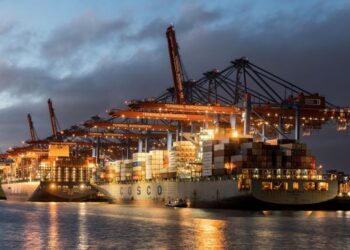
What distinguishes Oman’s approach is its diplomatic architecture. Unlike Saudi Arabia’s inward-facing corridor activation or the UAE’s technocratic velocity model, Oman has positioned its ports as neutral, rules-based platforms accessible to all stakeholders—including competitors. It has signed Memoranda of Understanding with China’s COSCO, India’s Adani Ports, and Germany’s HHLA to co-develop specialized terminals, ensuring technical interoperability and regulatory predictability. Crucially, Oman has maintained strict neutrality in regional conflicts, allowing it to serve as a trusted custodian for cargo from parties unwilling to route through politically aligned jurisdictions. This neutrality is codified in law: the Oman Maritime Law prohibits port authorities from denying access based on nationality or origin, provided vessels meet IMO safety and environmental standards. As a result, international shippers report significantly faster turnaround times at Omani ports—not because of superior technology alone, but because of procedural certainty. When every hour of port delay carries escalating insurance and demurrage costs, Oman’s consistent, apolitical execution becomes a decisive competitive advantage. In essence, Oman has transformed its geopolitical positioning into a logistical value proposition: geography without agenda.
Interoperability Gaps and the Hidden Cost of Sovereign Redundancy
Despite the impressive scale of these national initiatives, a sobering reality persists: true cross-GCC supply chain resilience remains hampered by persistent interoperability gaps—not in hardware, but in governance, data, and regulatory alignment. While Saudi Arabia, the UAE, and Oman have each activated robust domestic corridors, their systems operate largely in parallel rather than in concert. Customs documentation formats differ across jurisdictions; electronic cargo tracking platforms use incompatible APIs; border crossing protocols lack standardized digital verification mechanisms; and even trucking license reciprocity remains limited to bilateral agreements rather than a unified GCC framework. A container moving from Fujairah to Jeddah via land may clear UAE customs digitally in under two hours—but face manual document verification, inconsistent weight inspections, and uncoordinated phytosanitary checks at the Saudi border, adding 18–24 hours of non-productive dwell time. These frictions compound exponentially when multi-leg journeys involve three or more jurisdictions. Industry analysts estimate that the cumulative administrative drag across GCC borders adds 12–15% to landed logistics costs—eroding much of the efficiency gain achieved through port diversification.
Compounding these challenges is the absence of a unified risk intelligence layer. Each nation maintains proprietary maritime domain awareness systems—Saudi Arabia’s Mawani Maritime Surveillance Center, UAE’s National Emergency Crisis and Disasters Management Authority (NCEMA) maritime division, and Oman’s Maritime Safety and Security Directorate—but none share real-time threat data feeds with one another. Consequently, a vessel rerouted from Bandar Abbas to Salalah due to Iranian naval activity may still encounter unexpected delays at Sohar because Omani authorities lack visibility into the same intelligence stream. This siloed intelligence architecture undermines the very premise of regional corridor coordination. Furthermore, private sector actors—freight forwarders, NVOCCs, and multinational shippers—face steep learning curves navigating divergent digital customs portals, varying e-documentation mandates, and inconsistent enforcement of ESG compliance requirements (e.g., carbon reporting thresholds differ across ports). Without harmonized data standards, API-level integration, and joint regulatory sandboxes, the GCC’s collective logistics response risks becoming three powerful but disconnected engines pulling in slightly different directions—generating noise, heat, and friction, but not net forward momentum.
Long-Term Implications: From Crisis Response to Structural Realignment
The activation of alternative logistics corridors by Saudi Arabia, the UAE, and Oman marks more than a tactical adaptation to war-related disruption—it heralds a structural realignment of Gulf trade architecture with profound implications for global supply chain strategy. First, it accelerates the fragmentation of the ‘global shipping lane’ myth: the notion that maritime routes are universally accessible, predictable, and cost-optimized is giving way to a reality of jurisdictionally segmented, risk-tiered corridors. Shippers will increasingly price routes not solely on distance and fuel, but on sovereign assurance premiums—factoring in political stability indices, port transparency scores, and real-time conflict exposure metrics. Second, this shift validates the strategic logic of ‘port-led industrialization’: NEOM Port isn’t just handling containers—it’s anchoring a $500 billion cognitive city project; Duqm isn’t just receiving ships—it’s catalyzing Oman’s ambition to become a hydrogen export hub; Fujairah isn’t just diverting cargo—it’s reinforcing the UAE’s position as a global commodities trading nexus. Ports are evolving from transactional nodes into sovereign economic platforms that drive national industrial policy.
Third, and perhaps most consequential, is the precedent set for multilateral infrastructure cooperation without formal political union. The GCC has struggled for decades to achieve meaningful economic integration—yet here, three independent states have coordinated infrastructure activation at unprecedented speed and scale. This suggests that functional, problem-driven collaboration—focused on concrete outcomes like cargo velocity, customs clearance time, and insurance cost reduction—may prove more durable than ideological or bureaucratic integration. Looking ahead, the next frontier will be the institutionalization of this cooperation: a GCC Logistics Interoperability Council, a shared maritime risk dashboard, and harmonized digital trade certificates backed by blockchain. If realized, such mechanisms would transform today’s emergency corridors into tomorrow’s permanent, high-efficiency trade arteries—rendering the Strait of Hormuz less indispensable not through diminished importance, but through the successful creation of credible, sovereign alternatives. In that sense, the current crisis isn’t destabilizing Gulf logistics—it’s finally forcing their long-delayed maturation into a truly resilient, diversified, and strategically autonomous system.
Source: zawya.com
This article was AI-assisted and reviewed by our editorial team.