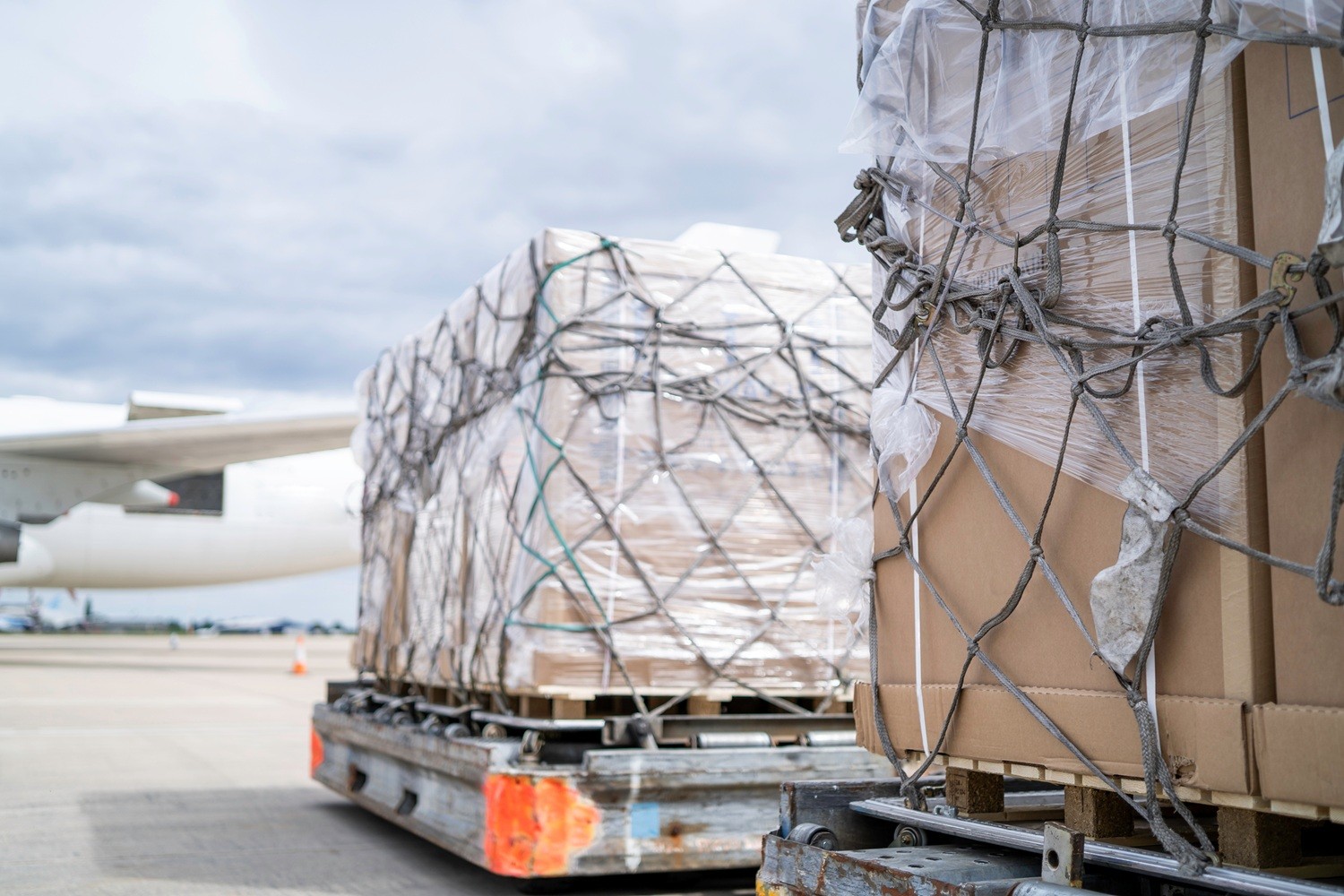
According to www.aircargonews.net, US passenger airlines reported divergent air cargo financial performance in the first quarter of 2026 amid persistent geopolitical strain and rising operational costs.
Mixed Financial Performance Across Major Carriers
United Cargo’s air cargo revenue declined 1.6% year-on-year to $422 million, down from $429 million in Q1 2025. The airline transported over 322 million pounds of cargo during the quarter, including nearly 9 million pounds of medical shipments and 257,000 pounds of military shipments.
In contrast, American Airlines Cargo posted stronger results: operating revenues rose 12.9% to $214 million, while cargo ton miles increased 9%. Delta Cargo also reported growth, with cargo operating revenue up 9% to $226 million.
Market-Wide Pressures and United’s New Fee
Global airfreight tonnage fell 4% year-on-year in March 2026, according to WorldACD data — a trend attributed to the ongoing conflict in the Middle East. Xeneta has warned that sustained high jet fuel prices may further dampen air cargo demand.
On 18 April 2026, United announced it would implement a ‘Market Disruption Fee’ on freight shipments for airway bills (AWB) issued on or after 1 May 2026. The fee applies based on the chargeable weight of the shipment.
“The Market Disruption Fee reflects United Cargo’s increased cost of doing business globally. United Cargo faces the challenge of rising costs imposed on us by our suppliers, partners, and by the market.”
“United Cargo will continue to evaluate conditions closely and communicate any adjustments to this fee as conditions evolve.”
These statements were issued by United Cargo, as reported by Air Cargo News.
Broader Industry Context for Supply Chain Professionals
This development follows a pattern of cost-pass-through mechanisms adopted across global logistics networks in response to volatility. In early 2026, Maersk cited tariff measures as a factor affecting its 2025 airfreight volumes and initiated corporate job cuts; DSV reported only “modest demand growth” for airfreight in 2025 while advancing its Schenker integration; and DHL saw both airfreight volumes and revenue decline in 2025 due to geopolitical disruption and lower freight rates. These trends underscore how passenger airlines — which provide over 50% of global air cargo capacity via belly-hold space — are increasingly formalizing surcharges to offset external shocks. For supply chain professionals, this means greater need for real-time rate monitoring, contractual flexibility around fuel- and disruption-based fees, and proactive scenario planning for routing alternatives when regional conflicts constrain capacity — particularly across Middle East corridors and associated diversion routes.
Source: Air Cargo News
Compiled from international media by the SCI.AI editorial team.