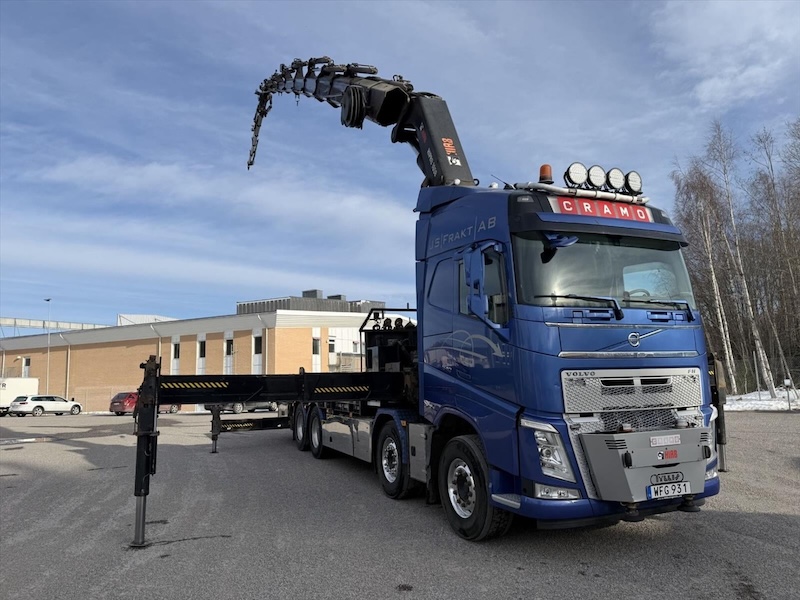
According to roboticsandautomationnews.com, heavy equipment manufacturers are integrating robotics and automation into truck-mounted cranes—not to eliminate human operators, but to enhance safety, precision, and fleet-wide decision-making in dynamic operational environments.
Assisted Operation, Not Full Autonomy
Automation in crane trucks is defined by human-in-the-loop systems rather than full autonomy. Modern truck-mounted loader cranes deploy integrated control systems that monitor boom location, load conditions, machine geometry, and stability in real time. This shifts the operator’s role from manual controller to supervisor of the lift—critical in non-ideal settings such as uneven terrain, urban delivery zones, or confined industrial sites. As Sam Francis notes in the original article:
“Automation in crane trucks is not about full autonomy… the trend is clearly toward assisted operation.” — Sam Francis, roboticsandautomationnews.com
Sensor Fusion and Stability Control as Core Robotics
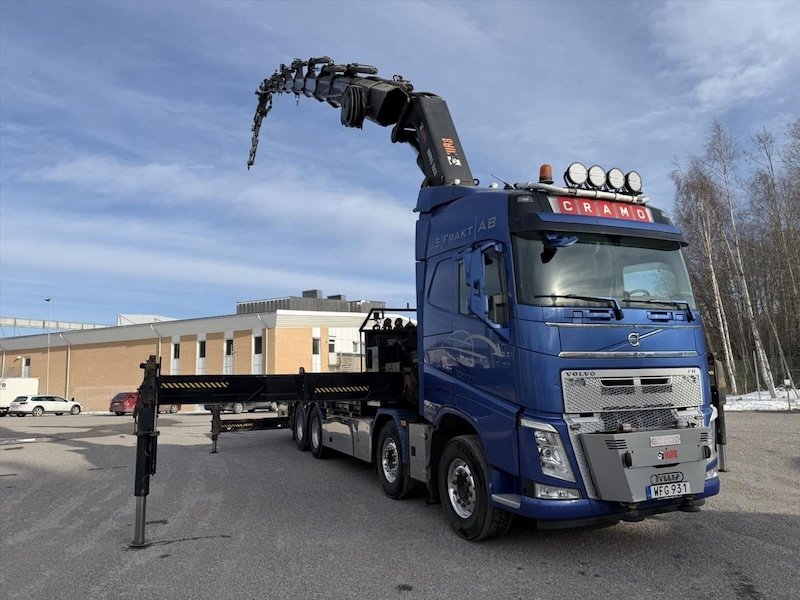
The most critical automation layer lies in safety logic driven by sensor fusion. Because crane capacity varies dynamically with boom length, angle, reach, and support conditions, stability control systems, load limiting devices, and motion limiters now actively constrain permissible movements. The software—not the operator—determines safe motion parameters, while the operator decides what to lift. This real-time, physics-based boundary enforcement exemplifies robotic behavior embedded in industrial machinery.
Remote Control Redefines Operator Ergonomics and Safety
Remote-controlled and digitally enabled interfaces are transforming on-site execution. Operators gain unobstructed line-of-sight to load paths, reducing guesswork near hazards or obstructions. Crucially, this shift elevates software design to a safety-critical function: interface clarity, feedback quality, response latency, and alarm logic directly impact operational safety. Unlike legacy fixed-station controls, remote systems demand robust digital architecture—making cybersecurity and system reliability essential supply chain considerations.
Digital Fleet Intelligence Changes Asset Valuation
Telematics and operational data collection are no longer add-ons—they’re integral to crane truck functionality. Fleet managers now track usage patterns, maintenance triggers, service due dates, and typical load profiles. This creates a closed-loop feedback mechanism linking field performance to procurement decisions. As a result, crane truck value is increasingly tied to electronic system integrity, diagnostic transparency, and compliance with current safety standards—not just mechanical age or visible wear. A smaller crane with high uptime and consistent control behavior may outperform a larger unit with poor deployment characteristics.
Procurement and Maintenance Implications for Supply Chain Professionals
For global supply chain professionals managing heavy equipment fleets—including those sourcing via platforms like Truck1—the evaluation criteria have expanded significantly. Buyers must now weigh lifting class, chassis type, control configuration, and service condition alongside sensor-fusion capability, stability control certification, remote interface compatibility, and telematics readiness. European loader-crane regulations already mandate minimum design, calculation, testing, and inspection requirements—and recent updates emphasize higher safety levels in control circuits. In practice, this means pre-purchase due diligence must include verification of software update history, cybersecurity patch status, and interoperability with existing fleet management platforms. Maintenance protocols must also evolve: technicians require dual competency in hydraulics and embedded electronics, while spare parts strategies must account for obsolescence of control modules and sensor suites.
Source: Robotics & Automation News
Compiled from international media by the SCI.AI editorial team.