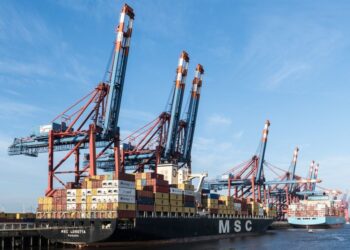
According to africa.businessinsider.com, global container shipping giant A.P. Moller–Maersk has temporarily suspended acceptance of new cargo bookings to and from the Port of Berbera in Somaliland, effective immediately, due to scheduling changes.
Immediate Operational Impact
The suspension directly affects a fast-growing inland trade corridor linking Berbera to Ethiopia’s import-reliant economy. While existing shipments already en route will still be delivered as planned, the move disrupts logistics planning for shippers relying on Berbera as a gateway for local cargo and regional connectivity — particularly to Ethiopia. Maersk confirmed that its services to Djibouti, Mogadishu, and Mombasa remain fully operational, offering continued regional coverage.
Regional Trade Consequences
The Berbera corridor has gained strategic importance in recent years as Ethiopia seeks to diversify maritime access beyond Djibouti — its historically dominant port partner. The corridor supports imports of fuel, consumer goods, and construction materials, while also enabling exports such as livestock. With Maersk’s withdrawal, short-term effects are expected to include:
- Higher freight costs
- Longer transit times
- A likely shift of cargo volumes back to Djibouti and Mombasa, both already handling significant regional traffic
Somaliland may experience reduced port activity at Berbera, potentially slowing momentum toward its broader ambition to become a regional logistics hub.
Broader Context for Supply Chain Professionals
This disruption occurs amid ongoing instability in Red Sea and Gulf of Aden shipping lanes, where carriers continue adjusting schedules and port calls. As a result, the Horn of Africa’s logistics system is increasingly sensitive to even temporary service changes. Although other global carriers — such as MSC and CMA CGM — could theoretically reroute cargo, structural constraints persist: Djibouti remains congested, and inland clearance and transport infrastructure limits rapid scaling elsewhere. For supply chain professionals managing Ethiopian or Horn of Africa trade flows, this means immediate reassessment of routing options, contingency planning for port congestion, and close monitoring of carrier capacity announcements across East African gateways.
“Further, our continued services to Djibouti, Mogadishu, and Mombasa remain available to support your logistics needs and ensure connectivity across the region.” — Maersk, in its customer notice
Source: africa.businessinsider.com
Compiled from international media by the SCI.AI editorial team.