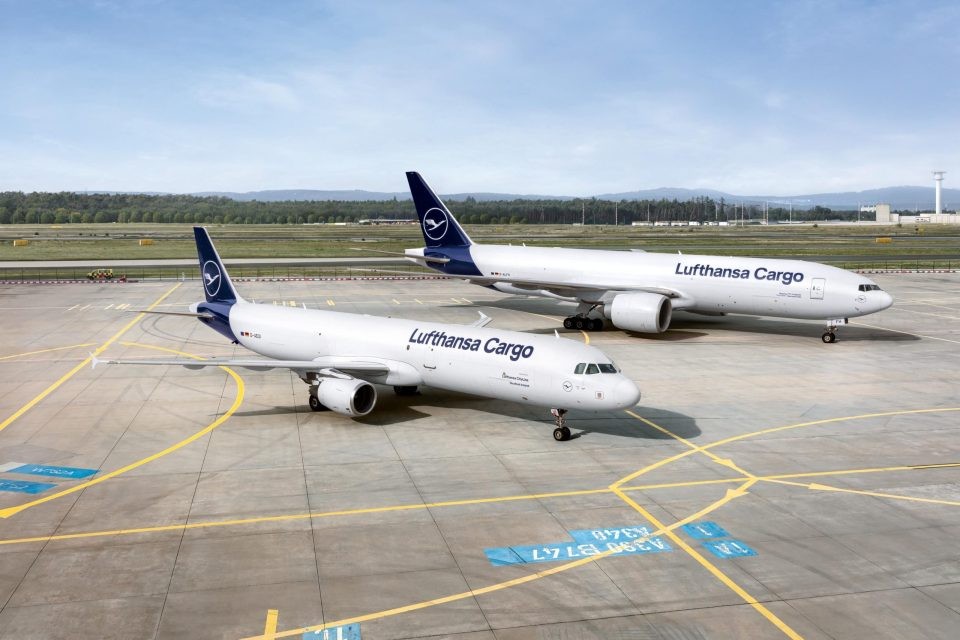
According to www.aircargonews.net, Lufthansa Cargo has issued an operational alert to customers warning of potential airfreight delays due to a two-day pilot strike beginning 13 April 2026 and scheduled to end at midnight on 14 April 2026. The industrial action involves pilots from Lufthansa Cargo, Lufthansa Airlines, and Lufthansa CityLine, organized by the Vereinigung Cockpit (VC) union over unresolved collective bargaining disputes — particularly concerning pension provisions.
Operational Impact on Cargo Capacity
The carrier stated that only limited cargo volumes may be available depending on strike participation levels and resulting flight cancellations. According to the report, Lufthansa Cargo is hoping to operate around two thirds of its flights on both days — a figure cited explicitly in the source as approximately 67%. All Lufthansa Cargo flights scheduled to arrive in Frankfurt on 13 April are planned to operate as scheduled, though transit embargoes have been imposed at key hubs.
Hubs Under Transit Embargo
- Frankfurt hub: Transit embargo for certain animal and emergency shipments
- Munich hub: Transit embargo for all live animals and certain other sensitive shipments
Lufthansa Cargo emphasized its commitment to minimizing disruption:
“Lufthansa Cargo is preparing for possible operational implications and is working to keep any disruption for customers and global supply chains to a minimum. We will provide timely updates on flight schedule confirmations.”
Union Rationale and Negotiation Stalemate
The VC union announced the strike on 11 April 2026 after stating that employers showed no discernible willingness to negotiate seriously during the Easter holiday period. VC President Andreas Pinheiro said:
“Vereinigung Cockpit feels compelled to take this step after the employers’ side shows no discernible will to find a solution in several collective bargaining disputes… Despite a deliberate renunciation of strike action over the Easter holidays, there were no serious offers. During this time, there was neither a reaction nor a recognisable willingness to talk on the part of the employers.”
Practitioner Implications for Global Supply Chains
For supply chain professionals managing time-sensitive or temperature-controlled consignments — especially pharmaceuticals, perishables, or live animals — the Munich and Frankfurt embargoes represent acute near-term risk. With only partial flight operations expected, alternative routing via non-Lufthansa partner airlines or ground transport intermodal options may be required within the EU. This event underscores how labor actions at single major carriers can ripple across global networks: Lufthansa Cargo handles over 1.5 million tonnes of airfreight annually and serves more than 300 destinations, making it a critical node in transatlantic and intra-European trade lanes. Notably, similar disruptions occurred in 2023 when VC strikes led to widespread cancellations across Lufthansa Group operations — reinforcing the need for multi-carrier contingency planning and real-time visibility tools. According to industry data from IATA, air cargo capacity on European routes remains only ~92% recovered to pre-pandemic levels, further constraining buffer capacity during unplanned events.
Source: Air Cargo News
Compiled from international media by the SCI.AI editorial team.