14% Emissions Reduction Achieved at Rodda & Son Ltd
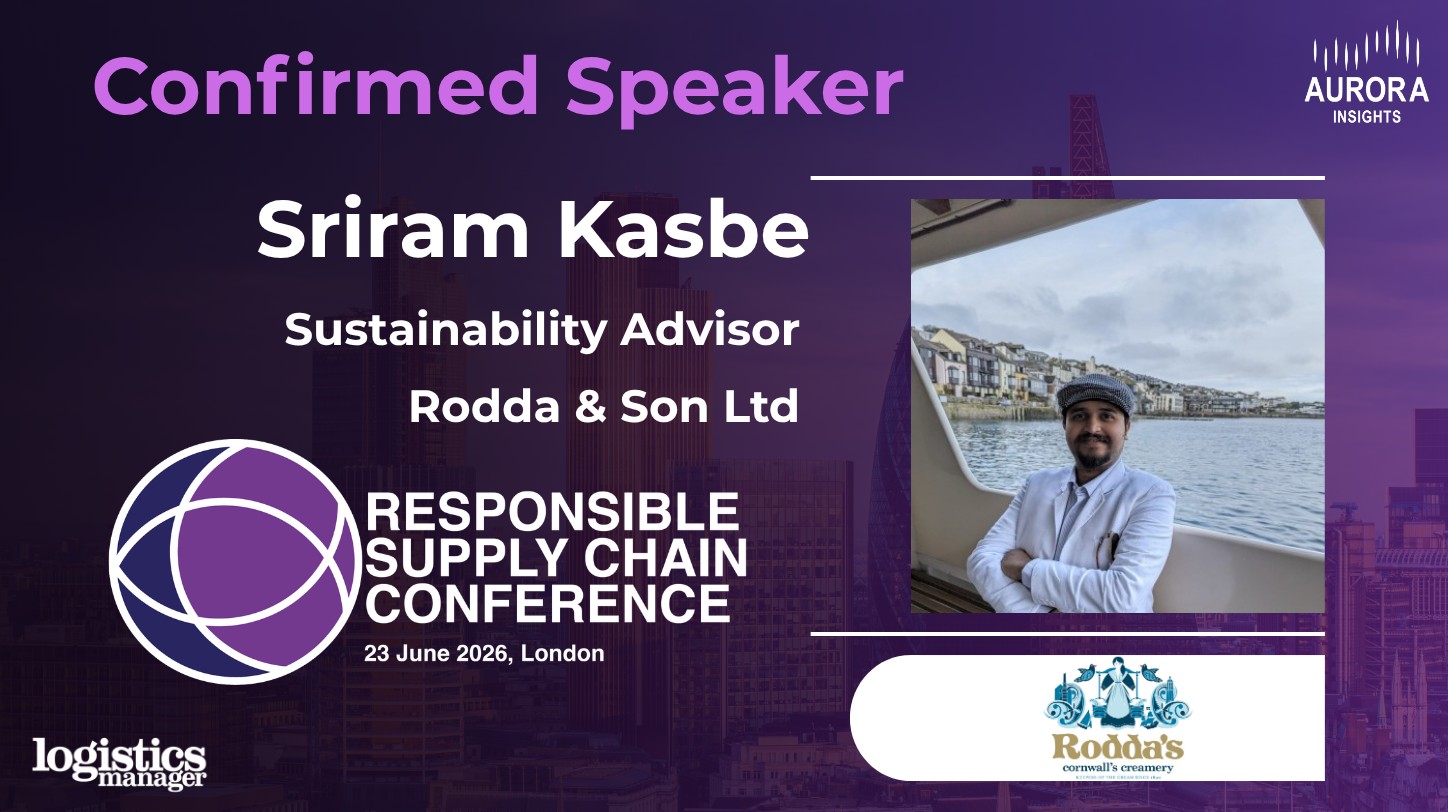
According to Logistics Manager, Sriram Kasbe, Sustainability Advisor at Rodda & Son Ltd, led a data-driven net-zero strategy at the company’s Cornish creamery that delivered a 14% reduction in Scope 1 and 2 emissions. This achievement is part of a broader effort to embed sustainability into operational execution across the supply chain. Kasbe’s work leveraged verified greenhouse gas (GHG) accounting frameworks, including ISO 14064 and TCFD, and he holds TÜV Rheinland certification as a Lead GHG Verifier.
Challenges in Translating Sustainability Commitments to Action
Kasbe identifies the primary challenge as the gap between board-level sustainability pledges and frontline operational reality. At Rodda & Son, despite being a heritage creamery with a relatively contained supply chain, the implementation of sustainability goals remains difficult due to limited capacity among procurement and logistics teams. According to Kasbe, most organizations are “commitment-rich and capacity-poor.”
“The net-zero pledge is made at the board level, and then the sustainability professional is expected to lead the way but the person actually buying raw materials or managing logistics has no carbon budget, no tools, and no incentive structure that rewards sustainable choices.” — Sriram Kasbe, Sustainability Advisor, Rodda & Son Ltd
This lack of operational tools and incentives undermines the ability to translate high-level commitments into daily decisions. Additionally, supplier readiness varies significantly, with Tier-1 suppliers capable of reporting data, while smallholder farms and lower-income processing facilities often lack the capacity for materiality assessments or emissions tracking.
Improving Scope 3 Data Reliability Through Targeted Engagement
Scope 3 emissions, which account for the majority of a company’s environmental footprint, are particularly challenging to measure. Most organizations default to spend-based emission factors, which can have error margins exceeding 50%. According to Kasbe, this approach often leads to “directionally wrong” emissions reporting despite appearing defensible on paper.
To improve data quality, Kasbe emphasizes hotspot analysis to identify the small number of suppliers responsible for 80% of Scope 3 emissions. At Rodda & Son, this means focusing on dairy farming practices and milk supply. He also developed automated sustainability reporting systems and supplier scorecards to drive continuous improvement and enable more accurate emissions tracking.
- 14% reduction in Scope 1 and 2 emissions at Rodda & Son Ltd
- 50%+ error margin in typical spend-based emissions estimates
- 80% of Scope 3 footprint driven by a small number of suppliers
- ISO 14064, TCFD, TNFD, and ISO 14001 frameworks used in reporting
- TÜV Rheinland-certified GHG verifier (Sriram Kasbe)
Supply Chain Sustainability at the Responsible Supply Chain Conference
Kasbe will speak at the Responsible Supply Chain Conference (RSCC) London, hosted at 30 Euston Square, a Grade II listed venue in central London. The event, organized by Aurora Insights with Logistics Manager, brings together experts to address real-world challenges in supply chain accountability, including product design, supplier due diligence, emissions reporting, and decarbonization strategies. The conference focuses on moving beyond pledges to measurable outcomes, particularly in complex, global supply chains.
According to the source, companies that can manage risk in their supplier base and convert sustainability goals into operational execution are better positioned to maintain market access and reputational resilience. Kasbe’s experience demonstrates that even in a geographically limited supply chain like Rodda & Son’s, data-driven tools and targeted supplier engagement are critical to progress.
Source: www.logisticsmanager.com
Compiled from international media by the SCI.AI editorial team.