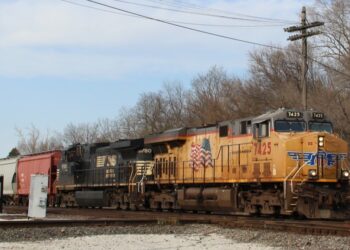
According to www.freightwaves.com, 37 freight-related companies filed for Chapter 11 bankruptcy protection in March 2026, extending a wave of financial distress across trucking, logistics, last-mile delivery, and marine transportation that began in January. The filings reflect persistent pressure from the ongoing freight downturn — marked by weak demand, elevated operating costs, and tightening credit conditions — and signal deepening restructuring across critical nodes of the global supply chain.
Trucking Carriers Under Financial Strain
Small- and midsize trucking carriers accounted for the majority of March filings, with most operating fleets of fewer than 25 drivers. These included:
- SP Trans Inc. (Illinois) — ~13 drivers; assets: $0–$50K; liabilities: $1M–$10M
- Harlow Enterprises LLC (West Virginia) — ~8 drivers; assets: $50K–$100K; liabilities: $0–$50K
- Dynamic Transport Service Inc. (Florida) — 1 driver; assets: $50K–$100K; liabilities: $100K–$500K
- W. Jackson Trucking LLC (Arkansas) — ~12 drivers hauling agricultural commodities; assets: $0–$50K; liabilities: $1M–$10M
- SN Transport Inc. (Puerto Rico) — ~23 drivers, including U.S. mail hauling; assets: $100K–$500K; liabilities: $1M–$10M
- G & R Systems LLC (New Jersey) — 1 driver and 1 truck; assets: $0–$50K; liabilities: $100K–$500K
A consistent pattern emerged: modest asset bases paired with disproportionately high liabilities — a hallmark of balance sheet stress among small operators unable to absorb prolonged rate compression and fuel volatility.
Broader Ecosystem Impacts
Bankruptcies extended beyond line-haul trucking into supporting segments. Logistics and delivery firms filing in March included:
- Cal Logistics Group LLC — freight brokerage; assets and liabilities both $100K–$500K
- Hyse Industries Inc. — third-party logistics and shipping brokerage; assets: $50K–$100K; liabilities: $0–$50K
- Patriot DSP LLC — Amazon Delivery Service Partner with 95–120 delivery associates and 35–45 vans; assets: $100K–$500K; liabilities: $1M–$10M
Marine and equipment services firms also entered Chapter 11, underscoring systemic strain:
- Crosby Marine Transportation LLC — marine towing operator with ~45 vessels; assets and liabilities both $100M–$500M
- Swiftships LLC — shipbuilding and repair company; assets and liabilities both $10M–$50M
- Sparhawk Truck and Trailer Inc. — heavy-duty truck and trailer maintenance firm; assets: $1M–$10M; liabilities: $10M–$50M
The spread of filings across these interdependent sectors confirms that financial distress is no longer isolated to over-leveraged carriers but is permeating infrastructure-support functions — from vessel operations to trailer maintenance — all vital to end-to-end freight execution.
Operational and Strategic Implications for Supply Chain Professionals
For global supply chain professionals, the acceleration in bankruptcies carries immediate operational consequences. Unpaid invoices, sudden service terminations, and fleet reallocations can disrupt tender acceptance, delay deliveries, and trigger cascading capacity shortages — especially in niche lanes or time-sensitive verticals like perishables or e-commerce fulfillment. Credit checks on brokers and DSPs must now include active bankruptcy monitoring, not just D&B scores. Contractual clauses around assignment, insurance verification, and performance bonds require renewed scrutiny, particularly for last-mile partners tied to major platforms like Amazon.
Historically, freight recessions have driven consolidation: the 2019–2020 downturn saw over 1,200 U.S. trucking firms exit, with surviving carriers gaining market share through acquisition or organic growth. With Crosby Marine and Swiftships — firms with multi-decade track records and specialized capabilities — now in restructuring, opportunities may arise for strategic M&A in marine support and equipment services. However, due diligence timelines lengthen when courts oversee asset sales, and integration risks increase where legacy IT systems or union agreements are entangled in proceedings.
Industry-wide, the March 2026 data aligns with broader trends. According to the American Trucking Associations, carrier profit margins fell to 1.2% in Q4 2025 — down from 4.7% in Q4 2023 — while average truckload spot rates remained 22% below 2022 peaks (FreightWaves SONAR, March 2026). Parallel pressures are evident elsewhere: Maersk reported a 19% year-over-year decline in container volumes handled in North America for Q1 2026, and J.B. Hunt’s intermodal revenue per load dropped 11% versus prior year. These macro indicators reinforce that the current restructuring cycle reflects structural demand recalibration — not merely cyclical softness.
Source: FreightWaves
This article was AI-assisted and reviewed by the SCI.AI editorial team before publication.