The landscape of global supply chains is undergoing a transformative shift as businesses grapple with the persistent uncertainty of trade and tariff policies. A recent survey by KPMG reveals that nearly half of U.S. companies are actively deploying AI to mitigate trade disruptions, highlighting the growing importance of supply chain agility in an increasingly volatile environment.
Supply Chain Agility: A Response to Uncertainty
According to KPMG’s 2026 U.S. CEO Outlook Pulse Survey, about four in ten U.S. companies plan to increase investment in supply chain agility over the next year. This strategic move is driven by the need to adapt to the shifting sands of trade and tariff policies. “Policy uncertainty is the baseline, and agility is the only way to stay ahead of it,” said KPMG U.S. Chair and CEO Tim Walsh. “CEOs are keenly aware that their customers are price sensitive right now. Leading companies are not just re-examining their supply chains. They are investing in technology and AI to gain every edge.”
This shift towards agility is not just a reactive measure; it is a proactive strategy to ensure long-term sustainability. Companies are recognizing that the traditional, linear supply chains are no longer sufficient to navigate the complex and dynamic global market. By embracing AI and other advanced technologies, businesses can enhance their ability to anticipate and respond to market changes, thereby reducing the impact of policy uncertainty.
The Supreme Court’s Decision and Its Implications
The recent U.S. Supreme Court decision invalidating sweeping tariffs imposed by the Trump administration has introduced new layers of uncertainty. “What we’re seeing now is uncertainty reentering the system at exactly the wrong time,” said Brian Higgins, US & consulting sector leader for industrial manufacturing at KPMG. “Companies are once again leaning harder on price increases to protect margins, pushing capital investments further out, and hesitating to make long-term commitments on jobs or reshoring.”
The Supreme Court’s ruling has removed a key legal mechanism used to impose tariffs, forcing the administration to consider alternative authorities. This shift has left companies facing a period of uncertainty as the government determines how to proceed. “While the Supreme Court decision renders the IEEPA tariffs invalid, significant questions remain unanswered,” said Baker McKenzie attorneys. “The shift could reshape the U.S. trade enforcement strategy and complicate planning for importers.”
AI as a Catalyst for Change
Despite the uncertainty, companies are turning to AI as a catalyst for change. Forty-one percent of respondents reported deploying AI to manage and optimize trade compliance. “AI is not just a tool; it is a transformative technology that can help companies navigate complex trade landscapes,” said Walsh. “By leveraging AI, businesses can gain real-time insights into global trade patterns, regulatory changes, and market dynamics, enabling them to make informed decisions and stay ahead of the curve.”
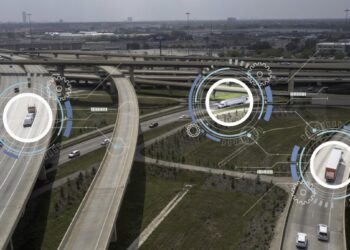
AI-powered tools can analyze vast amounts of data, identify patterns and trends, and predict potential disruptions. This predictive capability is crucial in a world where supply chain disruptions can occur at any time. By using AI to optimize their supply chains, companies can enhance their resilience and agility, ensuring that they can quickly adapt to changing conditions.
The Future of Supply Chains
The future of supply chains is being shaped by the intersection of technology, data, and policy. As companies continue to invest in AI and other advanced technologies, they will become more agile and responsive to market changes. “The key to success in the future will be the ability to adapt quickly and effectively to changing conditions,” said Higgins. “By embracing technology and data, businesses can create more resilient and agile supply chains that can withstand the test of time.”
The recent Supreme Court decision and the growing use of AI in supply chain management are just two examples of the complex and dynamic landscape that businesses must navigate. As the global trade environment continues to evolve, companies that invest in agility and technology will be well-positioned to thrive.
Key Findings
- Forty-one percent of companies in a KPMG survey are deploying AI to mitigate trade disruption.
- Nearly half (48%) of organizations are actively modeling and deploying tariff mitigation strategies.
- CEOs remain broadly confident in their companies’ growth prospects, with over 80% upbeat on the outlook for their organization.
Expert Insights
“Policy uncertainty is the baseline, and agility is the only way to stay ahead of it.” — Tim Walsh, KPMG U.S. Chair and CEO
“AI is not just a tool; it is a transformative technology that can help companies navigate complex trade landscapes.” — Tim Walsh, KPMG U.S. Chair and CEO
Source: www.supplychaindive.com
This article was AI-assisted and reviewed by our editorial team.