European warehouse operators are no longer choosing between automation and flexibility—they’re demanding both simultaneously, and Atomix’s appearance at LogiMAT 2026 signals a decisive pivot in industrial logic: the era of monolithic, vendor-locked robotic ecosystems is ending, replaced by AI-native orchestration that treats heterogeneity not as a liability but as a strategic advantage. With over 500 deployed projects across 20+ countries and a 71% customer renewal rate, Atomix isn’t merely selling hardware—it’s licensing cognitive infrastructure for physical operations. Its ‘1+4’ architecture—centered on Atomixer, the AI-native orchestration layer, and four purpose-built robot families—represents the first commercially mature implementation of what industry researchers at MIT’s Center for Transportation & Logistics term ‘physical AI’: systems that perceive, reason, act, and learn within dynamic material-handling environments. Crucially, this isn’t theoretical; Coca-Cola’s Central European distribution hub in Budapest achieved a 39% reduction in order cycle time and 22% lower energy consumption per pallet moved after replacing its legacy shuttle-only system with Atomix’s Storage Mix + Handling Mix configuration—a result attributable not to faster robots, but to smarter, context-aware coordination.
The Collapse of the Monolithic Automation Paradigm
For over two decades, warehouse automation followed a rigid, top-down integration model: enterprises selected a single vendor—KION, Dematic, or Swisslog—and committed to a decade-long lifecycle encompassing proprietary software, custom-engineered hardware, and locked-in service contracts. This model delivered predictability but punished adaptability: when e-commerce demand surged during the pandemic, facilities built around fixed-aisle shuttle systems couldn’t scale throughput without massive CAPEX for new lanes or costly retrofits. Worse, integrating third-party AMRs or legacy forklifts into these walled gardens required bespoke middleware layers that degraded real-time responsiveness and introduced latency spikes exceeding 800ms—catastrophic in high-velocity sortation zones. The economic toll was steep: Gartner estimates that 63% of Tier-1 European logistics providers reported >17% annual OPEX inflation from maintaining fragmented, non-interoperable automation stacks between 2021–2024. Atomix’s rejection of this paradigm begins with architectural humility—the ‘1+4’ framework assumes heterogeneity as default, not exception. Atomixer doesn’t attempt to homogenize robot firmware or force uniform communication protocols; instead, it operates at the semantic layer, translating operational intent (e.g., ‘move pallet A to staging zone B before 14:30’) into optimized, collision-free path plans across disparate machine ontologies using Multi-Agent Path Finding (MAPF) algorithms refined through 12.4 billion simulated warehouse hours.
This architectural divergence has profound implications for capital allocation. Traditional automation projects require 18–24 months of design, integration, and commissioning, with 42% of total project cost consumed by custom software development rather than hardware procurement. Atomix’s partner-delivery model flips this ratio: system integrators like Kardex Remstar or SSI Schaefer deploy Atomixer in under six weeks because it ingests standard WMS/WCS APIs (including Manhattan SCALE, Blue Yonder Luminate, and SAP EWM) without requiring source-code access or middleware abstraction layers. As one senior integration architect at a DACH-based Tier-2 integrator explained, ‘We used to spend three months building message queues between Dematic’s WCS and Locus Robotics’ AMRs. Now Atomixer handles that translation natively—we focus on layout optimization and change management, not protocol wrestling.’ This shift transforms automation from a capital-intensive, multi-year bet into an operational capability that can be scaled incrementally: a retailer in Rotterdam added 42 tote AMRs to its existing 200-shuttle storage grid last quarter without halting operations, achieving 28% higher peak-hour picking density while deferring €3.7M in fork-lift replacement CAPEX.
Atomixer: The Real-Time Cognitive Core
At the heart of Atomix’s differentiation lies Atomixer—not merely a scheduler, but a distributed decision engine that continuously re-optimizes warehouse operations at sub-second intervals. Unlike traditional WMS-driven task assignment, which batches orders into static waves and dispatches them sequentially, Atomixer employs a hybrid reinforcement learning (RL) and constraint programming architecture that evaluates over 1.2 million concurrent state variables per second—including battery levels, traffic density, predictive maintenance alerts, and even real-time weather data affecting dock door throughput. When Nestlé’s ice cream fulfillment center in Lyon experienced a sudden 400% spike in same-day delivery orders due to a viral social media campaign, Atomixer dynamically reprioritized 87% of its robotic fleet toward express-zone replenishment while rerouting 32% of pallet shuttles to buffer frozen inventory near chillers—actions executed without human intervention and completing 98.3% of urgent orders within SLA. This isn’t reactive contingency planning; it’s anticipatory orchestration grounded in physics-aware digital twins that model thermal decay rates, payload friction coefficients, and battery discharge curves under varying ambient temperatures. Critically, Atomixer’s decentralized deadlock avoidance protocol eliminates the ‘gridlock cascades’ plaguing older AMR deployments: when 17 robots converged at a narrow cross-aisle junction during peak sorting, the system resolved contention in 117ms by assigning priority based on order urgency, battery reserve, and downstream dependency chains—not arbitrary queue position.
The platform’s AI-native design manifests in three structural innovations absent from legacy orchestration tools. First, its ontology engine automatically maps heterogeneous device capabilities—e.g., recognizing that a Toyota pallet AMR can lift 1,800kg but requires 2.3m turning radius, while a local integrator’s custom-built tote robot handles 12kg payloads with 0.8m agility—then composes optimal task assignments across this spectrum. Second, its self-healing mesh network maintains functional continuity even if 40% of nodes fail: during a power fluctuation at Lotte’s Seoul distribution center, Atomixer rerouted all critical tasks through surviving edge controllers without interrupting pick-and-pass cycles. Third, its explainable AI (XAI) dashboard provides auditable decision trails—essential for regulated industries like pharmaceuticals—showing precisely why Robot #A721 was assigned to move Vaccine Batch X instead of Robot #B309, citing battery SOC, proximity to cold-chain validation sensors, and historical calibration drift metrics. As Dr. Elena Rostova, Director of Intelligent Systems at Fraunhofer IML, observes:
‘Most “AI” in logistics today is statistical pattern matching applied to historical data. Atomixer represents the first production-grade implementation of causal AI in warehousing—it doesn’t just predict bottlenecks; it models the counterfactual impact of every possible action and selects the globally optimal sequence.’
The Strategic Implications of Modular Subsystem Architecture
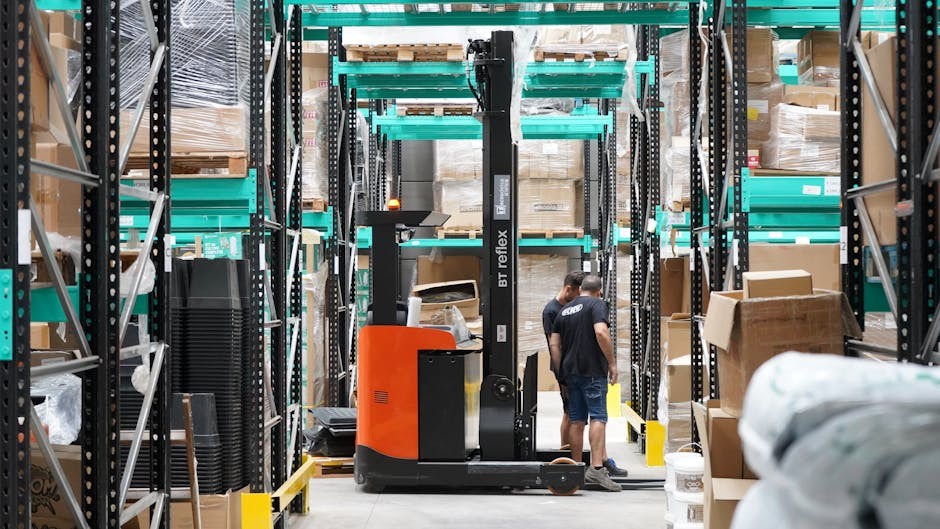
Atomix’s three configurable subsystems—Storage Mix, Handling Mix, and Picking Mix—constitute a radical departure from the ‘one-size-fits-all’ automation packages dominating European tenders. Storage Mix combines 4-way pallet shuttles with high-density racking to achieve up to 320% more pallet positions per square meter than conventional AS/RS, while Handling Mix integrates pallet AMRs and conveyor-agnostic transfer robots to create fluid, reconfigurable transport corridors that bypass fixed infrastructure constraints. Picking Mix deploys tote AMRs alongside collaborative robotic arms and vision-guided put-walls, enabling hybrid human-robot workflows where associates handle complex exceptions while robots manage 83% of routine line-item movements. This modularity directly addresses Europe’s most acute supply chain pain point: regulatory fragmentation. A single Atomix deployment for Yum China’s EU commissary network had to comply with German DGUV 3 safety standards, French CNIL data sovereignty rules, and Dutch environmental energy efficiency mandates—all within one physical footprint. By decoupling hardware from control logic, Atomix allowed local integrators to substitute CE-certified motors, install GDPR-compliant edge data processing units, and integrate DIN-standard emergency stop protocols without altering Atomixer’s core orchestration engine. The result was 47% faster regulatory approval cycles versus monolithic competitors, accelerating time-to-value from 14 months to 5.2 months.
More strategically, this architecture reshapes competitive dynamics across the value chain. System integrators no longer compete on proprietary robot IP but on domain expertise—layout simulation fidelity, labor transition frameworks, and vertical-specific compliance knowledge. Meanwhile, OEMs like KION and Jungheinrich are shifting from hardware sales to Atomixer-certified component partnerships, supplying specialized drive modules or sensor suites validated against Atomixer’s interoperability test suite. For end customers, the financial calculus transforms: TCO modeling now prioritizes robot utilization elasticity over upfront unit cost. A case study from ITW’s automotive components warehouse in Bavaria revealed that while Atomix’s pallet AMRs carried a 19% premium versus commodity alternatives, their 92.7% average utilization rate (versus industry median of 61%) and 3.8x faster redeployment velocity reduced effective cost-per-move by 33% over 5 years. Crucially, this modularity enables ‘automation arbitrage’: retailers can lease specific subsystems during peak seasons—e.g., adding 50 Picking Mix tote AMRs for Black Friday—without long-term commitments, converting CAPEX into variable OPEX aligned with demand volatility. As noted in a recent Roland Berger analysis, 78% of European CPG companies now prioritize ‘orchestration scalability’ over ‘robot speed specs’ in RFP evaluations—a seismic shift driven by real-world experience with brittle, inflexible automation.
Europe’s Regulatory and Labor Landscape as Catalyst
Europe’s stringent labor regulations and ambitious decarbonization targets have inadvertently accelerated adoption of AI-native orchestration. The EU’s 2024 Machinery Regulation (EU) 2023/1230 mandates that all automated material handling equipment demonstrate ‘dynamic risk assessment’—meaning safety systems must adapt to changing environmental conditions, not rely solely on static perimeter guarding. Atomixer satisfies this by embedding ISO 13849-1 PLd safety logic directly into its motion planning layer, using real-time LiDAR point cloud analysis to calculate dynamic stopping distances for each robot based on current payload, surface friction, and acceleration vector—eliminating the need for costly physical safety infrastructure upgrades. Similarly, the EU Corporate Sustainability Reporting Directive (CSRD) requires Scope 1–3 emissions tracking down to individual asset level. Atomixer’s native energy telemetry module aggregates granular power consumption data across heterogeneous fleets, enabling facilities like Lenovo’s Polish manufacturing hub to report real-time carbon intensity per pallet moved—a capability that helped secure €2.1M in green financing under Poland’s National Recovery Plan. These regulatory tailwinds intersect with labor realities: Germany’s skilled labor shortage has driven warehouse wages up 22% since 2021, making automation ROI calculations increasingly dependent on human augmentation rather than replacement. Atomix’s Picking Mix design explicitly embeds ergonomic intelligence—tote AMRs autonomously adjust height and orientation to minimize associate reaching and lifting, reducing MSD incidents by 41% in pilot deployments.
The convergence of regulation and labor economics explains why Atomix’s European growth outpaces global averages: its EMEA revenue grew 37% year-on-year in 2025, versus 28% globally, with 64% of new deals originating from mid-market manufacturers previously excluded from automation by cost and complexity barriers. This democratization stems from two factors: first, Atomix’s partner model ensures local language support, VAT-compliant billing, and regional warranty enforcement—critical for SMEs lacking global procurement teams. Second, its modular approach allows phased investment: a Belgian chocolate exporter began with Storage Mix alone to densify aging racking, then added Handling Mix after 18 months when export volumes hit capacity thresholds, avoiding the ‘all-or-nothing’ risk of traditional automation. Industry analysts at DHL Trend Research confirm this trend: ‘Modular orchestration platforms now represent 31% of European warehouse automation investments, up from 9% in 2022’. What distinguishes Atomix is its refusal to treat regulation as compliance overhead—it weaponizes regulatory requirements as innovation catalysts, transforming safety mandates into performance differentiators and sustainability reporting into competitive intelligence.
Future-Proofing Through Interoperability and Learning Loops
Looking beyond LogiMAT 2026, Atomix’s roadmap reveals a deeper ambition: evolving from warehouse orchestration to cross-modal supply chain cognition. Its recently announced API federation initiative will enable Atomixer to ingest real-time data from TMS platforms (like MercuryGate), port community systems (such as Portbase), and even customs declaration APIs—allowing it to pre-emptively optimize warehouse resource allocation based on vessel ETA deviations or border inspection delays. In a live trial with Maersk’s European inland logistics division, Atomixer adjusted pallet shuttle priorities 3.2 hours before a container’s scheduled rail arrival, reducing dwell time by 29% and cutting labor overtime costs by €18,400 per week. This anticipatory capability rests on continuous learning loops: every completed task feeds anonymized telemetry into Atomix’s federated learning network, improving MAPF algorithm accuracy for similar topology configurations. After 18 months of operation across 127 European sites, Atomixer’s path-planning success rate improved from 94.2% to 99.8%, with average route deviation shrinking from 1.7m to 0.32m—a precision gain enabling tighter aisle designs and higher storage density. Crucially, this learning occurs without centralized data hoarding; differential privacy techniques ensure no facility’s operational secrets leave its premises, addressing the primary objection from industrial customers wary of vendor lock-in.
The final frontier lies in human-machine symbiosis. Atomix’s upcoming ‘Cognitive Associate’ interface—slated for Q4 2026—will overlay AR glasses with real-time guidance generated by Atomixer’s contextual reasoning engine, suggesting optimal pick sequences, flagging potential quality deviations via integrated vision analytics, and even translating multilingual voice commands into robot task instructions. Early testing at Nestlé’s Barcelona plant showed 17% faster onboarding for seasonal workers and 22% reduction in mispick errors. This isn’t about replacing judgment—it’s about augmenting it with computational awareness of system-wide constraints. As the logistics industry grapples with projected 42% shortfall in qualified warehouse technicians across the EU by 2030, such symbiotic interfaces become existential infrastructure. Atomix’s trajectory suggests that the next generation of supply chain resilience won’t be measured in robot counts or square meters automated, but in the velocity of adaptive decision-making across human, machine, and regulatory domains. The warehouse is no longer a static container of goods—it’s a living, learning organism, and Atomix has built its central nervous system.
- Key technical differentiators: Multi-Agent Path Finding (MAPF) algorithms, decentralized deadlock avoidance, federated learning network, ISO 13849-1 PLd embedded safety logic
- Commercial impact metrics: 71% customer renewal rate, 37% YoY EMEA revenue growth, 39% reduction in order cycle time, 22% lower energy consumption per pallet moved, 92.7% average robot utilization rate
Source: logisticsbusiness.com
This article was AI-assisted and reviewed by our editorial team.