DHL’s “Insight 2030” Report Reveals a Strategic Inflection Point for North American Supply Chains
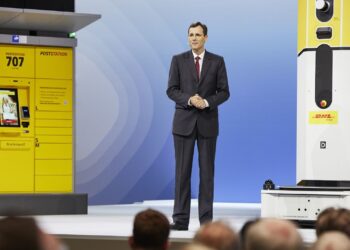
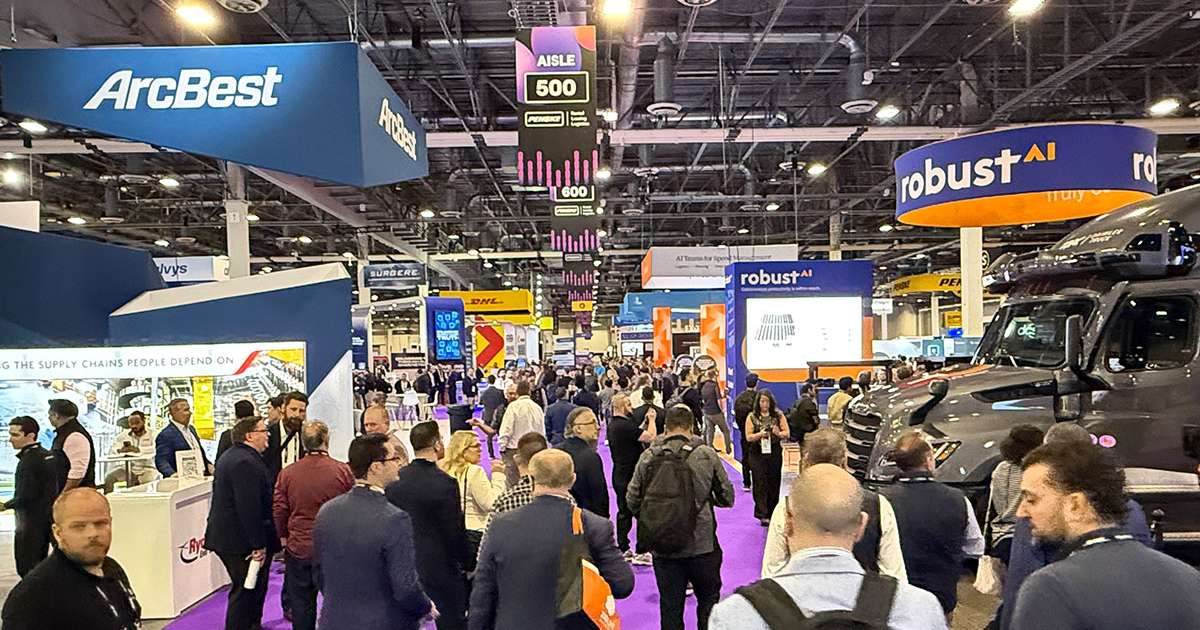
The Manifest 2026 supply chain conference, held February 9-11 in Las Vegas, drew more than 7,000 attendees and over 400 exhibitors, making it the largest gathering of supply chain professionals in North America this year. At the heart of the event was a landmark research report from DHL Supply Chain titled “Insight 2030,” which surveyed 350 North American supply chain leaders to map the industry’s trajectory over the next five years. The findings paint a picture of an industry in rapid transformation, where artificial intelligence, automation, and nearshoring are no longer aspirational technologies but operational necessities. Will Heywood, DHL Supply Chain’s chief customer officer, captured the significance: “What stood out in this research is just how strongly leaders now view supply chain’s strategic role in their overall business success.”
The report arrives at a critical juncture for the global logistics industry. Three years of cascading disruptions — from pandemic-era bottlenecks and the Suez Canal blockage to semiconductor shortages and escalating US-China tariffs — have fundamentally altered how C-suite executives perceive supply chain management. What was once a back-office cost center has become a boardroom-level strategic function. DHL’s data confirms this shift: supply chain leaders are now anticipating bigger and more complex networks, higher transportation and labor costs, and a risk environment “that’s not easing up.” Gretchen Torres, DHL Supply Chain’s VP of marketing and engagement, distilled the mandate: “We need more speed; we need more visibility; we need smarter orchestration without all of the exacerbated costs to get there.”
The Nearshoring Imperative: 65% of Leaders Bet on Supply Chain Localization
Perhaps the most consequential finding in DHL’s survey is that 65% of North American supply chain leaders expect increased investment in nearshoring to manage trade uncertainty and build resilience. This is not a marginal trend — it represents a structural realignment of North American manufacturing and logistics networks. The drivers are clear: escalating US tariffs on Chinese goods, the deepening implementation of the USMCA trade framework, and persistent geopolitical tensions that show no sign of abating. Mexico has emerged as the primary beneficiary, with its manufacturing corridors in Monterrey, Guadalajara, and the Bajío region attracting record levels of foreign direct investment from companies seeking to de-risk their China-dependent supply chains.
Complementing this nearshoring push, the survey found that 62% of enterprises expect international tensions to impact their operations through 2030. This elevated risk perception is driving companies beyond simple production relocation toward comprehensive supply chain network redesigns that encompass supplier diversification, logistics corridor optimization, and regulatory compliance restructuring. The US-Mexico cross-border trade relationship, already valued at over $800 billion annually, is projected to grow by 20-30% over the next five years as nearshoring accelerates. For supply chain strategists, the challenge lies in balancing the cost efficiency of established Asian supply networks against the resilience benefits of shorter, more controllable North American supply chains — a calculus that is increasingly tilting toward the latter.
AI-Powered Demand Forecasting: From National Averages to ZIP Code Precision
Two compelling case studies presented at Manifest 2026 demonstrated the transformative power of AI in supply chain operations. Scotts Miracle-Gro, the lawn and garden products giant, delivered perhaps the most striking data point of the conference: through AI-powered predictive analytics, the company reduced its year-ending average inventory by $600 million. David Huskisson, head of enterprise transformation, was candid about the complexity involved: “Frankly, the math equation was not something a human could solve, and we really leaned in on AI there.” This achievement illustrates how machine learning algorithms can extract demand signals from vast datasets — consumer behavior patterns, weather data, economic indicators — that traditional statistical models simply cannot process at scale.
Equally impressive was the case of American Eagle Outfitters (AEO), which has implemented AI demand forecasting down to the ZIP code level across its American Eagle, Aerie, Todd Snyder, and Unsubscribed brands. Brandon Friez, SVP of global logistics and supply chain intelligence, explained how this granular forecasting enables the company to dynamically reposition inventory and optimize mode selection based on real-time capacity and cost data. When new tariffs hit last year, AEO ran simulations across its entire network to determine optimal response strategies. Friez articulated a philosophy that resonates across the industry: “A static supply chain is a dead supply chain, because it’s always evolving.” These cases represent a paradigm shift from reactive supply chain management to predictive, AI-driven orchestration — and the competitive advantages for early adopters are proving substantial.
The Robotics Deployment Gap: 73% Expect Transformation, Only 44% Have Deployed
One of the most thought-provoking findings from DHL’s research is the stark gap between expectation and reality in robotics adoption: 73% of decision-makers expect robotics to shape their operations, yet only 44% have deployed them today. This nearly 30-percentage-point “deployment gap” reveals the deep structural challenges facing supply chain automation. The barriers extend far beyond capital expenditure — though the cost of a single warehouse robot system can run into hundreds of thousands of dollars. More significant obstacles include system integration complexity, the difficulty of retrofitting existing facilities and processes, workforce training requirements, and uncertainty about return on investment timelines.
Dave Yoder, group director for product development and innovation at Ryder Supply Chain Solutions, offered a crucial insight that many technology vendors overlook: “If you don’t already have a decision-making framework in place, AI automation or agentic AI is not going to provide you value.” This observation strikes at the heart of a common industry pitfall — companies investing in cutting-edge technology without first establishing the data infrastructure, process documentation, and organizational readiness to deploy it effectively. The North American warehouse robotics market is projected to exceed $15 billion by 2028, with a compound annual growth rate above 25%. But closing the expectation-deployment gap will require a fundamental shift in approach: from treating robotics as isolated technology projects to embedding them within comprehensive operational transformation strategies that address people, processes, and systems holistically.
Cargo Security and Autonomous Trucking: Technology Solutions for the “New Never Normal”
BlueWorld Supply Chain Consulting CEO Jake Barr coined what may become the defining phrase of this era in supply chain management: “the new never normal.” His message was clear — companies should stop waiting for a return to pre-pandemic stability. Continuous disruption is now the baseline operating environment. In this context, two technology showcases at Manifest 2026 stood out for their potential to address critical operational pain points. Trailer manufacturer Wabash unveiled its TrailerHawk.AI cargo security system, which integrates digitally connected trailer doors, intelligent locking mechanisms, driver and carrier identity verification, chain-of-custody data tracking, and real-time alerts into a unified platform. Brett Suma, Wabash managing director, delivered a sharp diagnosis: “This industry can no longer afford to rely on disconnected cargo security tools that lack true access control and don’t verify who is touching the freight.”
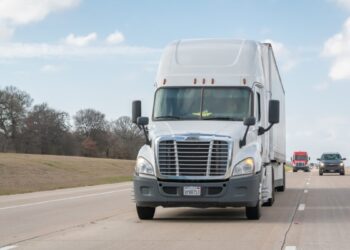
On the autonomous vehicle front, both Aurora Innovation and Torc Robotics displayed Class 8 trucks equipped with self-driving systems, signaling that autonomous long-haul trucking is moving closer to commercial reality. Meanwhile, Pickle Robot demonstrated an innovative automated trailer unloading system where operators use a gamelike controller to guide a robot into a trailer, after which computer vision and a robotic suction arm automatically identify and move packages onto a conveyor belt. Senior product director Mike Fair noted the system addresses “the dull, dirty and dangerous” warehouse jobs that are increasingly difficult to staff. Together, these innovations illustrate how technology is being deployed across every link in the supply chain — from predictive intelligence and warehouse automation to cargo security and autonomous transportation — to build the resilience that the “new never normal” demands.
Strategic Implications: From Survival Mode to Competitive Evolution
Synthesizing the key messages from Manifest 2026, North American supply chains are undergoing a structural transformation driven by three converging forces. First, AI is graduating from decision support tool to decision-making core — the Scotts Miracle-Gro $600 million inventory optimization and AEO’s ZIP code-level forecasting demonstrate that AI is now handling complex decisions that exceed human cognitive capacity. Second, nearshoring is evolving from tactical risk mitigation to strategic network redesign — with 65% of leaders investing in supply chain localization, this represents not just a logistics shift but a fundamental restructuring of North American manufacturing ecosystems. Third, robotics is transitioning from pilot projects to scaled deployment — the 73% vs. 44% deployment gap will narrow significantly over the next three years as costs decline, labor shortages intensify, and integration technologies mature.
For global supply chain participants — including Asian exporters, European logistics providers, and multinational corporations with North American operations — understanding and adapting to these structural shifts will be essential for maintaining competitive positioning. The companies that thrive in the “new never normal” will not be those with the largest fleets or the most warehouse square footage, but those with the smartest algorithms, the most agile networks, and the deepest integration of AI into their operational DNA. As Manifest 2026 made abundantly clear, the future of supply chain management is being written in code — and North America is leading the charge.
Source: Transport Topics