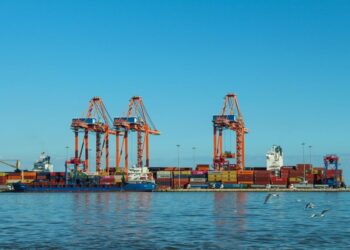
According to container-mag.com, vessel transits through the Strait of Hormuz have fallen 95%, from an average of 129 per day in February to just six in March 2026. UNCTAD warns this shutdown will halve global merchandise trade growth — down from 4.7% to between 1.5% and 2.5% in 2026 — and push consumer price inflation higher across both developing and developed economies.
Oman Emerges as the Gulf’s Default Gateway
With Hormuz effectively closed, Omani ports — especially Salalah, Sohar, and Khor Fakkan — are functioning as de facto discharge hubs for containerized cargo destined for the Gulf Cooperation Council (GCC) states and beyond. These ports are now handling surge volumes previously routed via Jebel Ali or Bahrain, supported by expanded customs coordination with Dubai Customs and accelerated cross-border trucking corridors into Saudi Arabia and the UAE’s eastern emirates.
The Workaround Economy Takes Shape
The container industry is constructing an improvised, land-bridged logistics network across three primary axes:
- Gulf of Oman corridor: Discharge at Salalah or Sohar, followed by overland transport via TruKKer-managed fleets to inland destinations;
- UAE eastern seaboard: Use of Fujairah and Khor Fakkan as transshipment points, leveraging existing deepwater infrastructure and proximity to key road networks;
- Mediterranean transshipment: Increased reliance on Tanger Med in Morocco and Piraeus in Greece for re-routed Asia–Europe services diverting around the Cape of Good Hope.
This workaround is unprecedented in scale and regional scope. As container-mag.com notes:
“The container industry has never had to construct an entirely land-bridged workaround at this scale in this region.”
Practical Implications for Supply Chain Professionals
While functional, the new routing adds 12–18 days to transit times and lifts freight rates by 35–50% on affected lanes. Port congestion at Salalah and Tanger Med is now chronic, with dwell times exceeding seven days. Trucking capacity across the GCC–Oman border remains tight, requiring advance booking windows of 72+ hours. Carriers are formalising bilateral agreements with Omani authorities and EU-based terminal operators to stabilise slot allocation and documentation flows. For supply chain professionals, this means revising lead time buffers, stress-testing inland transportation SLAs, and validating customs pre-clearance protocols with Oman’s National Centre for Statistics and Information (NCSI) and Dubai Customs’ e-portal.
Source: container-mag.com
Compiled from international media by the SCI.AI editorial team.